Finding your personal purpose

Jessica Skon, Madeline Renov, and Lee Sears discuss defining personal — and better yet, and organizational — purpose.
November 2, 2018
5
min read
Subscribe to the BTS newsletter
Follow us on Linkedin
Follow BTS on Linkedin
Share

Leading with Purpose, Part 2

As we discussed in the first post of this blog series, purpose is an essential ingredient for business success and employee engagement today. Yet purpose is a nebulous concept, and often difficult to pinpoint. I know this firsthand. Around twelve years ago, a consultant in his early 20s joined the BTS San Francisco office where I was working, and I took him out to lunch. Within ten minutes of sitting down to lunch, he asked me, “So what’s your purpose? Why have you been at the firm for so long?” I’ll never forget it. I’d been at the company over six years, and that was the first time somebody asked me that. I felt it was a fair question, and yet I didn’t have an eloquent answer at the ready.

Coming up with a response, I started to talk about some of my guiding principles, things like learning and having fun, how I’m proud of the impact our work has on clients, and how I love building a team of leaders (or a business) that grows every year. The question from this new hire, though, who was probably ten years younger than me, put me on the spot and made me feel a bit inadequate as a leader. At first I did not have a crisp, compelling answer.

Since then I’ve been in many dinners with other executives from Fortune 500 companies to tech startups, who more and more frequently are being expected to lead their organizations with a clear purpose… and at the same time understand that each employee’s purpose and what motivates them is going to be slightly different than theirs, the firm’s and their peers’, and that’s okay. Once a leader or a firm has clarity of purpose it can be a beautiful energy and driving force, and should be the first lens with which leaders run their business.

So, how does one find a sense of purpose?

In truth, many people assume that only those who follow a vocation like medicine, teaching or work in the charitable sectors can have a true sense of purpose at work. Our experience, as well as much current research and writing, would suggest otherwise.

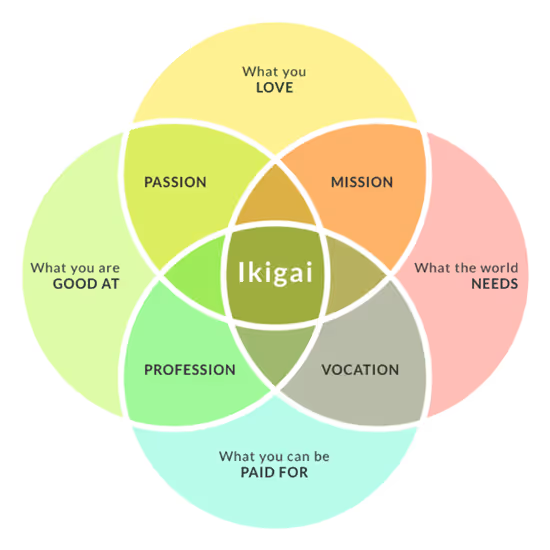
One simple way of looking at this is captured elegantly by the Japanese concept of Ikigai, or ‘The reason for being.’ The idea of Ikigai is that one’s sense of purpose lies at the intersection of the answer to four questions:

  1. What do I love?
  2. What am I good at?
  3. What can I get paid for?
  4. What does the world need?

Balance

Image from Forbes.com

Take these four questions and look at the organization you are already a part of. Use them to see if you are in touching distance of doing more purposeful work, whether it be at the core of what you do or as a part of work that sits slightly outside the current definition of your job. Whilst we may not get the ultimate answer to the purpose question from our current work, once we have identified our own Ikigai we can go in search of the more meaningful elements of our jobs and start shaping the agenda at work in a new way. In the next installment in this blog series, we will discuss how to use your personal purpose to shape your organizational purpose and lead with meaning.

Get the report
Download the report

Related content

No items found.

Related content

Insights
March 17, 2026
5
min read
Conversazioni incentrate sul cliente abilitate dall’IA
Perché la maggior parte delle riunioni di vendita non riesce a creare valore e come costruire intenzionalmente urgenza, fiducia e slancio in ogni conversazione.

La maggior parte delle riunioni di vendita non fallisce.
Semplicemente non porta a una decisione.

Ed è lì che si perde valore.

I clienti di oggi sono più informati, più selettivi e hanno meno tempo.
Non hanno bisogno di altre presentazioni di prodotto.

Hanno bisogno di conversazioni che li aiutino a stabilire le priorità, decidere e andare avanti.

Eppure, il 58% delle riunioni di vendita non riesce a creare valore reale.
Non perché i venditori manchino di capacità, ma perché le conversazioni non sono progettate per far avanzare le decisioni.

“I clienti non agiscono su ogni esigenza che riconoscono.
Agiscono quando qualcosa diventa una priorità.”

In questo breve executive brief scoprirai:

  • Perché la maggior parte delle conversazioni informa… ma non porta all’azione
  • Cosa spinge davvero i clienti a stabilire priorità e muoversi
  • Come creare urgenza senza compromettere la fiducia
  • Il passaggio dal presentare soluzioni al facilitare decisioni
  • Cosa distingue le conversazioni che si bloccano da quelle che accelerano il progresso

Se i tuoi team stanno affrontando trattative bloccate, decisioni ritardate o un pipeline lento, questo brief ti aiuterà a capire il perché e cosa fare in modo diverso.

Scarica l’executive brief e scopri come progettare conversazioni che portano davvero a decisioni.

Insights
March 17, 2026
5
min read
Conversas centradas no cliente impulsionadas por IA
Por que a maioria das reuniões de vendas não consegue gerar valor e como construir intencionalmente urgência, confiança e momentum em cada conversa.

A maioria das reuniões de vendas não fracassa.
Elas simplesmente não levam a uma decisão.

E é aí que o valor se perde.

Os clientes de hoje estão mais informados, mais seletivos e com menos tempo.

Eles não precisam de mais apresentações de produto.
Precisam de conversas que os ajudem a priorizar, decidir e avançar.

Ainda assim, 58% das reuniões de vendas não conseguem gerar valor real.

Não porque os vendedores não tenham capacidade, mas porque as conversas não são desenhadas para impulsionar decisões.

“Os clientes não agem sobre todas as necessidades que reconhecem.
Eles agem quando algo se torna prioridade.”

Neste breve material executivo, você vai descobrir:

  • Por que a maioria das conversas informa… mas não gera ação
  • O que realmente faz os clientes priorizarem e avançarem
  • Como criar urgência sem prejudicar a confiança
  • A mudança de apresentar soluções para viabilizar decisões
  • O que diferencia conversas que estagnam daquelas que aceleram o progresso

Se suas equipes estão enfrentando negócios estagnados, decisões atrasadas ou um pipeline lento, este material vai ajudar você a entender o porquê — e o que fazer de diferente.

Baixe o material executivo e aprenda como desenhar conversas que realmente impulsionam decisões.

Insights
March 17, 2026
5
min read
Conversaciones centradas en el cliente potenciadas por IA
Por qué la mayoría de las reuniones de ventas no logran generar valor y cómo construir de forma intencional urgencia, confianza y momentum en cada conversación.

La mayoría de las reuniones de ventas no fracasan.
Simplemente no llevan a una decisión.

Y ahí es donde se pierde el valor.

Los clientes de hoy están más informados, son más selectivos y tienen menos tiempo.

No necesitan más presentaciones de producto.
Necesitan conversaciones que les ayuden a priorizar, decidir y avanzar.

Y, sin embargo, el 58% de las reuniones de ventas no logra generar un valor real.

No porque los vendedores carezcan de capacidad, sino porque las conversaciones no están diseñadas para impulsar decisiones.

“Los clientes no actúan sobre cada necesidad que reconocen.
Actúan cuando algo se convierte en una prioridad.”

En este breve informe ejecutivo descubrirás:

Por qué la mayoría de las conversaciones informan… pero no generan acción

  • Qué es lo que realmente hace que los clientes prioricen y avancen
  • Cómo crear urgencia sin dañar la confianza
  • El cambio de presentar soluciones a facilitar decisiones
  • Qué diferencia a las conversaciones que se estancan de las que aceleran el avance

Si tus equipos están experimentando acuerdos estancados, decisiones retrasadas o un pipeline lento, este informe te ayudará a entender por qué y qué hacer diferente.

Descarga el informe ejecutivo y aprende a diseñar conversaciones que realmente impulsen decisiones.