Why we didn't wait: A CEO's field notes from two years of applied AI

Three decisions that changed everything.
Two years ago, we made three deliberate decisions about how BTS would move with Applied AI.
We would become our own Customer Zero.
While others were building strategies, defining governance, and waiting for clarity, we made a different call: we decided not to wait. Not because the stakes were low, but because they were high. And because in a space evolving this quickly, clarity wouldn’t come from planning. It would come from movement.
So instead of starting with a roadmap, we started with three principles:
- No top-down mandate. The people closest to the work figure it out.
- IT must evolve from gatekeeper to enabler - leading AI trials and fast experimentation.
- Don’t wait for certainty.
We set the organization in motion, and once we did, things started to move quickly.
What if we started this company today?
Waiting for certainty is itself a choice, and it’s costing companies more than they realize.
We started where we knew the work best: our simulations. No perfect plan, just teams moving, trying, and iterating.
Simulations are core to who we are at BTS. Companies that simulate don’t just make better decisions; they execute faster and build more engaged cultures.
The team asked a simple question:
"What if we were to start our company today?”
That question started the flywheel.
They asked IT for a few licenses and started building - vibe-coding, writing agents, and testing tools - moving at a pace that would make any VC-backed start-up smile.

The messy middle.
At first, the team was underwhelmed.
The early reports were blunt:
“Not good with math.”
“Poor graph capabilities.”
The team wasn't discouraged. They kept tinkering - jumping between tools, staying on top of new releases, experimenting constantly.
This was a small team, across 24 countries, building off each other’s ideas. Laughing at crazy creations. Breaking things. Iterating in a sandbox alongside real clientwork.
Each cycle produced something:
- A sharper scenario
- A faster build
- A more powerful simulation
The flywheel was turning, and it was generating something real.

When the diamond appeared.
Then something shifted.
The team moved into client trials across five countries. They figured out ISO compliance and built the architecture to handle the complexity, the “spaghetti.”
And what emerged wasn’t incremental:
- What used to take weeks started happening in days.
- Limited creativity started to feel like unlimited innovation.
- Clients became self-serving.
- Agentic simulations were built directly into client systems for real-time updates and preparation.
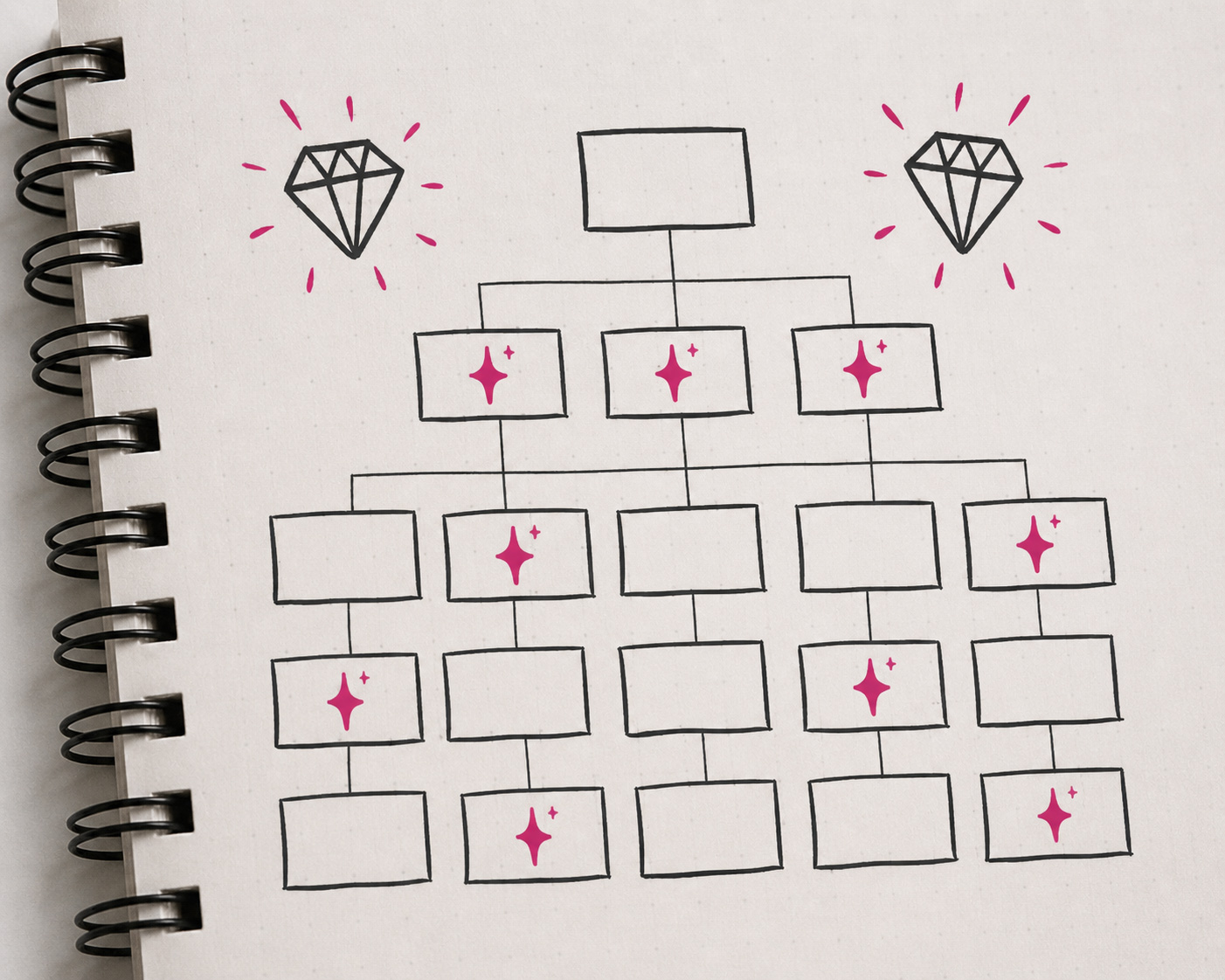
This was our first AI diamond - a high-impact outcome created by many cycles of experimentation compounding into real value.
It only appeared because we kept the flywheel turning, each cycle increasing the odds that something would break through.
95% adoption in eight weeks.
Then it was time to take the AI diamond global.
BTS is decentralized and highly entrepreneurial. We operate across 24 countries and 38 offices, where local teams have real autonomy.
And historically? That’s meant a low appetite for adopting something built somewhere else and pushed from the center.
So we expected resistance.
Instead, something surprising happened.
In the first eight weeks, we saw 95% adoption across our global footprint.
It felt completely different from our own digital initiatives, ERP implementations, top-down rollouts of the past.
This moved on its own. Why?
We realized it didn’t start with a framework or a model, it started with a feeling.
The feeling of being at the leading edge of one’s craft and profession.
- Joy
- Excitement
- Pride
As we watched this play out across teams it stopped feeling like isolated wins.
There was a pattern to it. A repeatable, organic, innovation motion.
And the flywheel didn’t stop with simulations.
It spread across finance, sales enablement, legal, operations, and client delivery. Some cycles led to small improvements, and others revealed new diamonds.
Not becausewe planned for them, but because we built the conditions for people to find them.
The question I'd ask any CEO right now: Is your flywheel turning, or are you still waiting for the perfect plan?
In part 2, I’ll share the key success factors behind the breakthrough, and what we’re now seeing across more than 120 global clients.
Applied AI FAQs
What is applied AI, and how can it drive strategy execution?

How do you move from AI strategy to real business impact?
How do you identify where to start with applied AI in your organization?
Related content