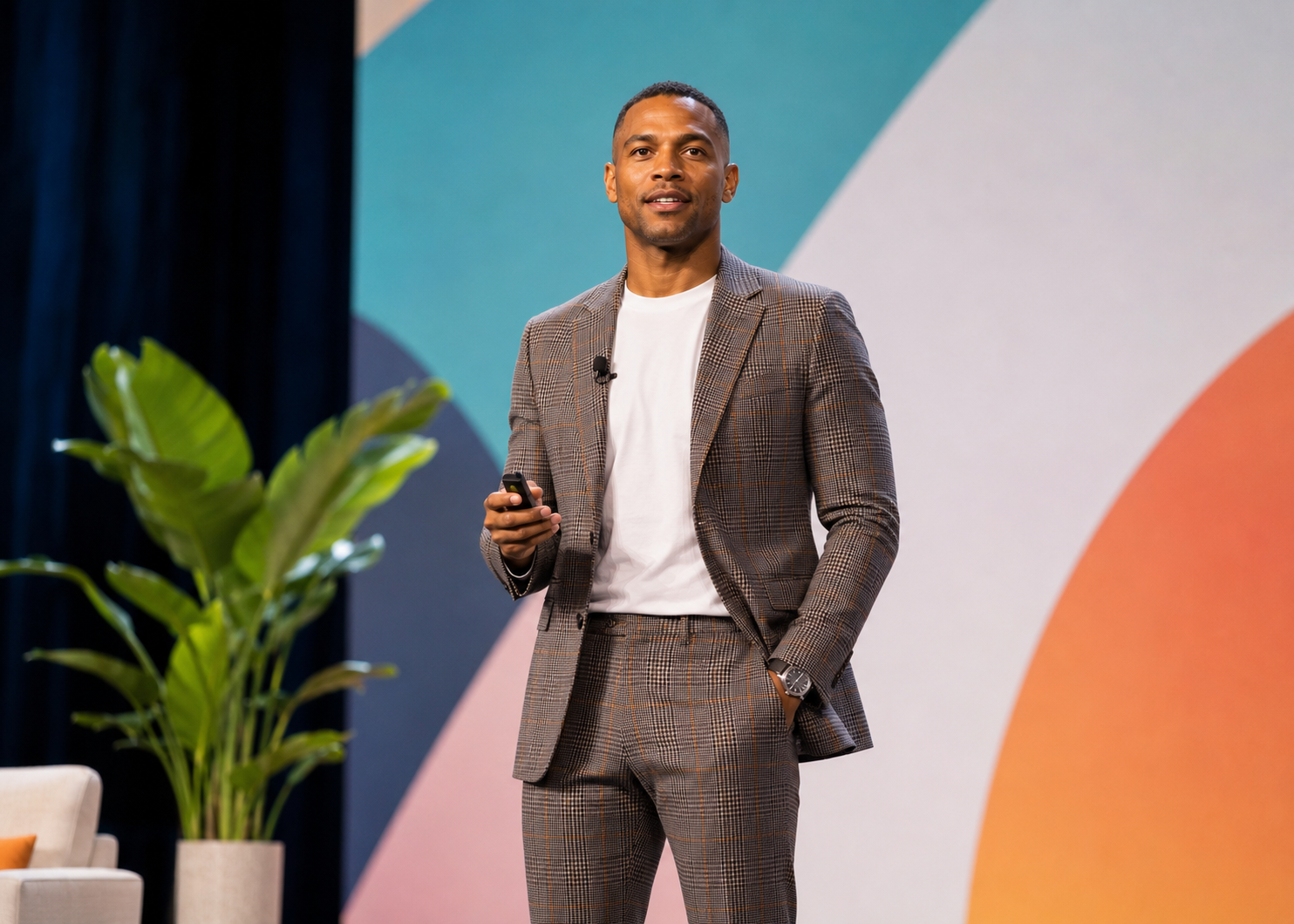
Meetings as culture, Part 3: Your behavior matters

At a large nonprofit, the team’s schedules were packed—weekly staff meetings were one of the few times they could connect and align on big priorities. Having just gotten Board approval of an ambitious strategic plan, the leadership team saw this as a high-leverage moment and made bold changes to improve the structure: clear purposes, defined outcomes, and assigned ownership.
But after a high-stakes budget conversation fell flat, it became clear that structure wasn’t enough. The behavior in the room—who spoke, who listened, how decisions were made—mattered just as much.
Every habit embedded in the nonprofit’s culture—good and bad—was showing up somewhere in their meetings. Rather than ignore it, the team used it. They turned meetings into a mirror (and a tool) for culture change.
This is the third post in our Meetings as Culture series. Part 1 explores how meetings reflect your organization’s culture. Part 2 offers practical solutions to five common meeting pitfalls. Now, in Part 3, we focus on the five individual and team behaviors that drive lasting culture change—one meeting at a time.
Meetings as the crucible of culture
Meetings are where your company culture plays out in real time—where it’s tested, transformed, and forged under pressure. The more senior you are, the more meetings you attend. Your behavior in these meetings—whether you’re leading or participating—affects the culture of your organization. Each company has a unique approach to meetings that reflects their culture.
At BTS, we believe meetings are more than just structures—they’re part of your organization’s social fabric. The way people interact, pay attention, and respect each other’s time in meetings reflects your company’s values and mindsets. In short, a single meeting is the culture in concentrated form.
As simple as it sounds, there are five fundamental meeting behaviors:
- Listening
- Participating
- Efficiency
- Accountability
- Focus
These five meeting behaviors – defined in observable terms to ‘see’ what works - can be developed by individuals, teams, and organizations to transform your meeting culture. Individual behavior informs team dynamics, which aggregate to become organizational behaviors. To shift your culture, you need to progressively develop meeting behaviors with individuals, teams, and the organization.
Develop the five meeting behaviors—as individuals, teams, and organizations
Start by looking in the mirror. Individuals have a major impact on meeting productivity and inclusiveness. It starts with you—your actions shape the meeting environment, whether you are leading it or not.
Considering your last meeting, ask yourself: How many times did I reschedule this meeting? Was I on time? How well did I listen? Did I ask questions for clarity, or did I talk over others? Did I come to the meeting having done what I said I would do? Did I leave knowing and committing aloud what I will do next? The fixes are all simple, but not always easy.
- Quick tip: A BTS client aiming to improve their meetings found that reminding individuals of the power of asking more probing questions helped foster better listening, which helped with their strategic goal of building a culture of stronger collaboration. A probing question is one that opens up the conversation, clarifies the discussion for everyone, and increases ideas generation.
Once individuals are aware of and start improving their behaviors, look at how the team works. Here, you will start to notice that individual behaviors seep into team patterns: Are the same voices always leading the conversation? Does everyone feel free to speak up? Do we reward diverse perspectives and debate? How many conversations do we have at the same time? Do the triggers that often derail us have discernable tells?
- Quick tip: Consider how you allocate time during meetings. One team made a rule to save the last five minutes of any important topic for quieter members to speak, sending a strong message: everyone’s voice matters. It’s often easier to change meeting structures (like the agenda) than it is to change behaviors. So, use structures to support the team behaviors you want.
Cumulatively, meetings have a huge organizational impact. If you look closely, you can see how meetings reflect and shape company-wide cultural values. Are your meetings aligned with the strategic priorities of the business and the values you want to see across the organization?
- Quick tip: When the meeting invite and materials you send in advance overtly connect the meeting’s purpose and outcomes to broader business goals, people are more aligned and productive. As a side benefit, people should question any meeting that cannot be tied to a broader business goal—it is the litmus test of a meeting agenda.
Assess your meeting effectiveness
If you’re not paying attention to how you and your team behave during meetings, you won’t have a sense of how effective your meetings are, and they won’t improve.
At the nonprofit in our earlier example, leaders tracked their progress with a simple anonymous post-meeting poll. After each meeting, participants gave a thumbs up if the meeting hit the five fundamental observable behaviors or a thumbs down if it didn’t. This quick feedback helped them stay on track.
Reflect on your most recent meeting using the framework below.
How to do it:
Start with assessing your most recent meeting at Level 1 in the list below. If you can’t answer “yes” to the fundamental meeting behaviors at Level 1, then this is an area to practice intentionally next meeting. To level up to Level 2 and 3, answer “yes” for all five meeting behaviors for three meetings in a row (to ensure it’s not a fluke).
Level 1
Listening: Did we have ‘one conversation’?
Participating: Did everyone stay present – no multi-tasking or checking out?
Efficiency: Did we begin and end on time?
Accountability: Were all the action items clear and claimed?
Focus: Did we stay on topic for each agenda item?
Put it into practice
At the nonprofit, assessing meeting behaviors over time led to better individual behaviors, stronger team results, and a shift in the way staff meetings contributed to the mission. As old behaviors that previously dominated or derailed staff meetings declined, the meetings became an even more valuable time for organization-wide connections and storytelling. This approach and discipline to meetings was adopted by the individual leaders’ meetings. Meetings all around the organization improved. While getting there took longer than predicted, the shifts lasted, and the organization’s outcomes improved. People began to expect good meetings that were productive and contributed to action and success.
Meetings are more than just a tool for getting things done—they’re a powerful reflection of a microcosm of your organization’s culture. When approached with intention, they can drive behavior change, foster collaboration, and align teams with strategic goals. Simply by developing five fundamental behaviors, the way you and your teams show up in meetings can transform how your company works together and accelerates progress. Ultimately, meetings are where culture is built, one conversation at a time.
Related content

Related content

You can't predict the future. You can be disciplined about how you face it.
That's where Future Storming comes in. Future Storming is a process for looking at the trends and signals already visible in the market, understanding how those forces connect, and thinking more clearly about where they may lead.
Recently, we've been applying that lens to talent strategy, running Future Storming sessions with talent leaders across industries to understand which forces are already reshaping how organizations find, develop, and retain the people they need. When you look across those conversations, one thing is hard to miss: AI runs through almost all of the most significant trends, and not as a future scenario. It's already reworking the talent systems most organizations have leaned on for years, often quietly, and often faster than leadership teams have had time to respond.
From these sessions, five high-likelihood, high-impact shifts have emerged as the ones every talent leader needs to be watching right now. What follows is what each of them may mean for your organization.
1. The frameworks most organizations use to define great leadership were built for a different era
Skills and competency models describe work that no longer exists in many roles or that AI now performs alongside, or instead of, humans. The gap between what organizations say they're selecting and developing for, and what the work actually requires, is widening quietly.
This creates a real problem. Organizations that don't redefine what great looks like now will be developing the wrong people for the wrong future optimizing for capabilities that are becoming less predictive while under-investing in the ones that matter most.
- Rebuild leadership profiles from a future-back perspective, starting with where the business is heading, not where it has been.
- Focus on the distinctly human capabilities AI cannot replicate judgment in ambiguous conditions, relational intelligence, ethical reasoning, the ability to set direction when there is no precedent.
- Increase the use of behavioral observation in selection and development. It's the only methodology that shows how someone actually thinks and decides under real pressure.
The signal worth chasing isn't on a resume, it's in the room in how someone handles a real situation, under genuine pressure. It's the only place where someone can't prepare their way out of being themselves.
2. Human differentiators are the last mile AI cannot close
Judgment. Empathy. Creativity. The ability to navigate genuine ambiguity. These are increasingly what separates human contribution from AI output and they're precisely the things most talent systems have always found hardest to measure.
For a long time, organizations could afford to treat these as qualities that would emerge naturally with experience. That's no longer an option. The human differentiators are becoming the job. And most organizations still aren't measuring them well.
The methods exist behavioral assessment, simulation, structured observation. And AI is now making them accessible at scale in ways that simply weren't possible before. The question isn't whether to use them. It's how to deploy them thoughtfully, with the governance and transparency that -stakes talent decisions require.
- AI-powered behavioral observation that surfaces how people actually perform in the flow of work, (i.e. judgement, decision-making, adaptability) not self-report
- Assessment that evaluated how people work with AI, not just without it because that's increasingly what the role looks like
- Simulation-based approaches that reveal thinking in action - the kind of evidence no credential or output can provide
3. The talent pipeline is broken
AI is displacing the early-career work that has traditionally served as the on-ramp into organizational life. Those tasks once gave emerging employees something more valuable than work product. They gave them foundational experiences, relationships, and judgment. The kind of judgment that eventually grows into leadership.
The impact won't show up immediately. That's exactly what makes it worth paying attention to now. Within three to six years, benches will thin and succession pipelines will require far more intentional investment. Organizations will find themselves asking why their internal talent isn't developing the way it used to.
The organizations that get ahead of this have a real opportunity to build something more deliberate, more equitable, and better suited to the capabilities the future actually requires.
- Invest in real, simulation-based experiences, putting emerging leaders into the decisions and pressures that build genuine organizational judgment, not just task exposure.
- Redefine what early-career development is, building toward the capabilities the future requires, not the ones the old job description described.
- Build feedback into the flow of work. AI behavioral observation and practice AI role plays make continuous development possible at scale. The experience that used to happen informally has to be designed now.
4. People need to re-skill faster than any development model was built to support
People need to reskill faster than any development model was built to support. Most organizational development infrastructure was built around a longer, more stable arc of skill acquisition. AI is compressing that arc significantly.
The implication isn't just that training needs to be faster. It's that the whole architecture of how organizations identify, develop, and deploy talent needs to be built for continuous recalibration not periodic refresh.
- Prioritize adaptability and learning agility over static expertise. The ability to acquire new capabilities quickly matters more than the specific capabilities someone holds today.
- Treat reskilling as a continuous organizational process, not an episodic program.
5. AI is absorbing leadership work and culture is losing it's anchor
This is the shift that's easiest to underestimate, and hardest to recover from once it arrives.
Culture is what people see leaders do. The behaviors leaders model how they make decisions, how they show up in hard moments, what they choose to reward and what they let go are how organizational culture gets transmitted. It doesn't travel through stated values. It travels through visible human behavior.
AI is absorbing the work that used to make leaders visible as humans making choices. Performance reviews written by AI. Communications drafted by AI. Coaching conversations mediated by AI. When the distinctly human work disappears, so does the signal. People don't know what to watch anymore. And culture which depends on that watching starts to fray.
The organizations that navigate this well won't be the ones that use less AI, they'll be the ones most intentional about which leadership behaviors remain visibly human, and why.
The behaviors that held culture together need to be rebuilt around what humans uniquely contribute now and that starts with getting the success profile right. That's exactly what the Future Ready Profile is built for.
Strengthen empathy-centered leadership capabilities. The human dimensions of leadership matter more, not less, as AI takes on more of the technical work.
- Strengthen empathy-centered leadership capabilities. The human dimensions of leadership matter more, not less, as AI takes on more of the technical work.
- Reinforce organizational purpose and human-centered culture as anchors.
- Treat culture as something you design, not something you inherit.
What this means
The organizations that navigate this well won't be the ones that adopted AI fastest, they'll be the ones that invested just as deliberately in the human systems around it.
These five shifts aren't warnings. They're design problems, and design problems have answers. The talent systems that come out of this moment can be more intentional, more equitable, and more fit for purpose than anything we've built before.
At BTS, this is the work we're doing every day. If you'd like to think through what any of it means for your organization, we’d love to talk.
The thinking in this article was shapped by Future Storming sessions, including a SIOP 2026 workshop, and by ongoing conversations with talent leaders navigating these shifts in real time.

Hace unos meses terminé una sesión con un equipo de ejecutivos comerciales de una institución financiera mediana. Dos días intensos: cómo prospectar, cómo estructurar conversaciones centradas en el cliente, cómo crear valor en cada interacción. El grupo salió inspirado del taller.
Tres semanas después le pregunté a uno de los mejores participantes sobre cómo le había ido aplicando las nuevas herramientas. Me miró un segundo y me dijo, con total honestidad:
“La verdad... la semana siguiente fue igual que siempre, volví al viejo sistema”
El entrenamiento de capacidades es necesario. Pero sin una cultura comercial que lo sostenga, es un esfuerzo poco rentable para las empresas.
1. Las capacidades sin contexto no sobreviven al día a día
Un ejecutivo de ventas puede salir de un taller sabiendo exactamente qué preguntar, cómo estructurar una conversación de valor, cómo posicionarse como asesor estratégico en lugar de vendedor de productos. La semana siguiente, el peso de las métricas de corto plazo, la presión por resultados y las urgencias del día a día terminan arrastrándolos de vuelta a la rutina de siempre.
McKinsey (2024) encontró que más del 70% de las iniciativas de transformación comercial no logran sus objetivos — y la principal causa no es el diseño del programa, sino la falta de condiciones organizacionales para sostener los nuevos comportamientos.
El problema no es el taller. Es lo que existe o no existe en la realidad de la estructura comercial.
2. El cambio requiere alinear seis pilares
Lo que diferencia a las empresas que realmente transforman su modelo comercial de las que solo capacitan, está relacionado con seis pilares que operan simultáneamente.
1. Patrocinio de la alta dirección que empodera en lugar de solo exigir
2. Disciplina en gestión de cuentas/clientes estratégicos, con metodología y seguimiento
3. Conversaciones centradas en el cliente, no en el portafolio de productos
4. Cada interacción con relevancia estratégica, preparadapara crear valor medible
5. Nuevos comportamientos integrados al ritmo operativodiario y la cadencia del negocio
6. Líderes comerciales presentes que sostienen la cultura, no solo la expresan
Cuando falta uno, los demás no escalan y terminan provocando un círculo vicioso.
3. El liderazgo que sostiene vale más que el que exige
El patrocinio de la alta dirección y la presencia de los líderes comerciales sonlos pilares que más frecuentemente fallan. No porque los líderes no crean en el cambio, sino porque el día a día los jala de vuelta a revisar resultados, no a construir comportamientos.
Gartner (2024) señala que los equipos comerciales cuyos líderes hacen coaching activo y visible tienen hasta un 28% mayor probabilidad de adoptar nuevos comportamientos de manera sostenida.
El entrenamiento define el rumbo y entrega el mapa; el liderazgo es lo que realmente ayuda a navegar y sostener el cambio.
Conclusión
Si tu empresa está invirtiendo en transformar la forma en que sus equipos comerciales se relacionan con los clientes, la pregunta ya no es si el entrenamiento funciona. La verdadera pregunta es: ¿qué tan preparada está la organización para sostener el cambio?
Porque el talento existe. Las habilidades se desarrollan. Pero la cultura no se improvisa; se construye todos los días, con liderazgo, alineación y consistencia.
¿Cuál de estos seis pilares es hoy el más débil en tu organización?

É possível mudar a cultura de uma organização?
Hoje em dia, poucas organizações não estão envolvidas em um (ou vários) processos de transformação cultural. Novas formas de trabalhar em organizações mais horizontais e adaptativas, melhorias na cultura de segurança, orientação ao cliente, transformações nas áreas comerciais e excelência operacional, entre outros.
E é aqui que surge uma das grandes perguntas:
É possível mudar a cultura de uma organização? E, se sim, como fazer isso?
Para ajudar a responder a essas perguntas—frequentes entre nossos clientes e amplamente discutidas—gostaria de compartilhar o que aprendemos na BTS ao longo dos últimos 38 anos sobre o que funciona e o que não funciona (até agora, pois em transformação cultural estamos sempre aprendendo).
A boa notícia é que a resposta é sim.
A dificuldade está na segunda pergunta: como fazer isso?
Um projeto? Uma iniciativa?
Um ponto importante é que a transformação cultural não é um projeto com início e fim, mas sim um processo contínuo e em evolução. Isso muitas vezes gera tensão em organizações acostumadas a uma lógica de projetos.
O que é crítico e frequentemente ignorado?
Existem elementos que, quando considerados e aplicados corretamente, tornam a transformação muito mais eficaz. No entanto, muitas vezes são ignorados.
Esses elementos são:
- Envolver as pessoas. Quanto maior o envolvimento em todos os níveis, maior a probabilidade de implementação das mudanças.
- Tornar a mudança tangível e vivida no dia a dia, conectando teoria e prática. Transparência é fundamental.
- Toda mudança tem impactos positivos e negativos — ambos devem ser comunicados com clareza.
- Mudança cultural exige tempo e transformação de mindsets e estruturas organizacionais.
- A cultura deve estar conectada à estratégia.
Como estruturamos a transformação cultural?
Nosso modelo se baseia em quatro etapas: definir resultados, criar líderes de mudança, incorporar mudanças e sustentar novas formas de trabalho.
1. Definir resultados
O primeiro passo é estabelecer resultados claros e alinhamento executivo. É necessário conectar propósito, visão e objetivos organizacionais.
Ações:
- Coleta de dados (entrevistas, focus groups, visitas)
- Diagnósticos culturais
- Definição de expectativas (Leadership Profiles
2. Criar líderes de mudança
Todos os líderes devem atuar como agentes de mudança. É fundamental engajá-los emocional e racionalmente.
Ações:
- Programas de liderança
- Playbooks
- Feedback contínuo
3. Incorporar mudanças
É essencial transformar mentalidades e sistemas organizacionais.
Ações:
- Coaching
- Sprints culturais
- Cascata organizacional
- Avaliações comportamentais
4. Sustentar o novo modelo
Garantir continuidade através de redes, dados e suporte contínuo.
Ações:
- Integração com processos de talento
- Uso de IA no dia a dia
- Monitoramento da transformação
- Comunidades de prática
A importância de ser paciente e impaciente ao mesmo tempo
Transformações culturais são complexas e não têm fórmula única.
Ser estrategicamente paciente e taticamente ágil é essencial para ajustar e evoluir continuamente.
Esse equilíbrio permite transformar a jornada em algo positivo e sustentável.
Este é apenas um resumo.
Se quiser aprofundar com exemplos e práticas:
Baixe o PDF completo e acesse todo o conteúdo.