
3 tips for a successful “un-conference”
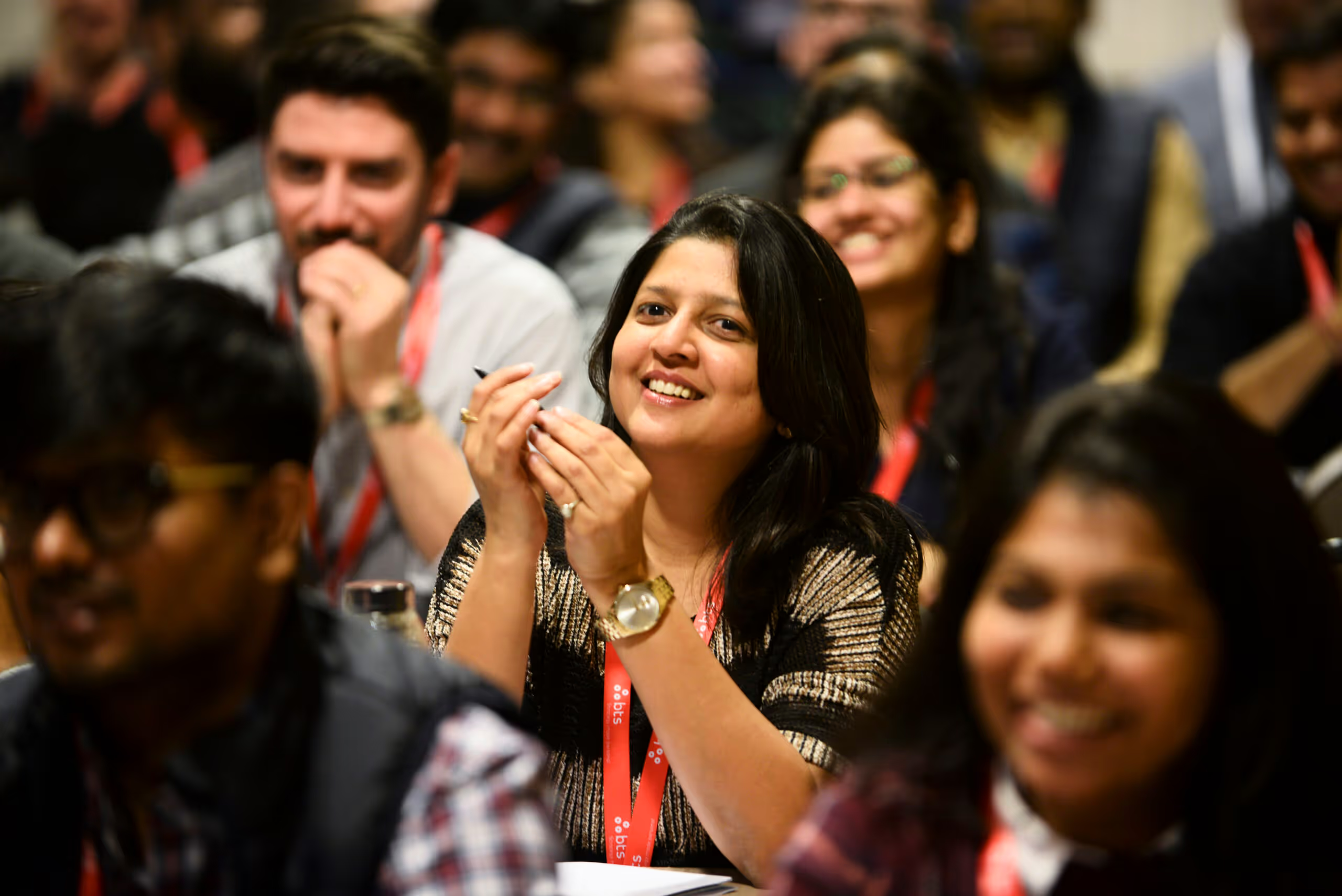
Given widespread economic uncertainty, why spend this time together instead of pursuing potential clients?
The time spent enabled leaders to gain inspiration, clarity, and confidence. They reflected on 2022’s client challenges and were humbled by their colleagues’ remarkable depth, expertise, and creativity. As a result of the event, leaders were refreshed. They returned to their markets with new ideas and insights that would enable them to make smarter, better sales.What made this conference so successful? It was the “un-conference” conference. Energizing and collaborative rather than dull and death by powerpoint, this “un-conference” utilized three critical factors that made it a success. These key tips are universally applicable and will make all the difference for your own organization-wide gatherings.
- Executive sponsorship that is constructive – not destructive.Jessica Skon, Global CEO of BTS, served as executive sponsor for the conference and was personally invested in its success. She recognized the opportunity for the gathering to ignite the organizations’ leaders, inspire new ways to partner with clients, and uncover opportunities for growth and better serving clients.Typically, executive sponsors serve on a steering committee, occasionally reviewing the event’s content and flow. Too often, executive sponsors are guilty of co-opting those meetings, requesting major last-minute changes that cause rework and stress.Jessica, however, consistently clarified priorities and surfaced gaps in alignment she’d noticed over the past two quarters. Through daily interaction, Jessica, her senior team, and the conference designers refined their goals for the gathering, ensured the flow of the programming, and defined outcomes that would justify the time investment.Also, in the weeks leading up to the meeting, Jessica held office hours during which facilitators could practice and get feedback. These mini working sessions drove dialogue about the firm’s future and strengthened consultants’ ownership of organization’s strategy.
- Intentional program design. Conferences are often a grab-bag of non sequitur presentations. To shift your conference to an “un-conference,” draw a red thread through all presentations by writing an explicit narrative.Jessica and the conference designers involved scores of their colleagues thoughout the content development process to co-create client stories, simulations, frameworks, lessons learned, and quick updates that would make sense to all attendees as a complete program.3. Embed opportunities for learning.Authorship is ownership. Strategy execution runs on conversation, not lengthy presentations by a sage on stage. Provide opportunities for people to share findings from their most challenging client work. Then, after each learning moment, build in opportunities for people to share thoughts, collaborate, and ideate together.Discussion is the key that will enable your team to process new information, internalize the learning, and come up with new approaches. You’ll be surprised and amazed by what your team is able to create. By providing ample opportunities for people to share challenges and discuss new approaches, you will create optimal conditions for learning, alignment, and growth.
By following these “un-conference” rules, BTS was able to create an experience that accelerated sales in 2023. Rather than starting from behind after taking a week to sit through a series of unhelpful PowerPoints, consultants left the experience ready to help clients solve problems in new ways – to help them create their own great “un-conference” memories.By leveraging your executive sponsor effectively, taking an intentional approach to program design, and building in opportunities for learning at every step, you too can hold a gathering that builds community and strengthens your company culture.
Related content
Related content

Hace unos meses terminé una sesión con un equipo de ejecutivos comerciales de una institución financiera mediana. Dos días intensos: cómo prospectar, cómo estructurar conversaciones centradas en el cliente, cómo crear valor en cada interacción. El grupo salió inspirado del taller.
Tres semanas después le pregunté a uno de los mejores participantes sobre cómo le había ido aplicando las nuevas herramientas. Me miró un segundo y me dijo, con total honestidad:
“La verdad... la semana siguiente fue igual que siempre, volví al viejo sistema”
El entrenamiento de capacidades es necesario. Pero sin una cultura comercial que lo sostenga, es un esfuerzo poco rentable para las empresas.
1. Las capacidades sin contexto no sobreviven al día a día
Un ejecutivo de ventas puede salir de un taller sabiendo exactamente qué preguntar, cómo estructurar una conversación de valor, cómo posicionarse como asesor estratégico en lugar de vendedor de productos. La semana siguiente, el peso de las métricas de corto plazo, la presión por resultados y las urgencias del día a día terminan arrastrándolos de vuelta a la rutina de siempre.
McKinsey (2024) encontró que más del 70% de las iniciativas de transformación comercial no logran sus objetivos — y la principal causa no es el diseño del programa, sino la falta de condiciones organizacionales para sostener los nuevos comportamientos.
El problema no es el taller. Es lo que existe o no existe en la realidad de la estructura comercial.
2. El cambio requiere alinear seis pilares
Lo que diferencia a las empresas que realmente transforman su modelo comercial de las que solo capacitan, está relacionado con seis pilares que operan simultáneamente.
1. Patrocinio de la alta dirección que empodera en lugar de solo exigir
2. Disciplina en gestión de cuentas/clientes estratégicos, con metodología y seguimiento
3. Conversaciones centradas en el cliente, no en el portafolio de productos
4. Cada interacción con relevancia estratégica, preparadapara crear valor medible
5. Nuevos comportamientos integrados al ritmo operativodiario y la cadencia del negocio
6. Líderes comerciales presentes que sostienen la cultura, no solo la expresan
Cuando falta uno, los demás no escalan y terminan provocando un círculo vicioso.
3. El liderazgo que sostiene vale más que el que exige
El patrocinio de la alta dirección y la presencia de los líderes comerciales sonlos pilares que más frecuentemente fallan. No porque los líderes no crean en el cambio, sino porque el día a día los jala de vuelta a revisar resultados, no a construir comportamientos.
Gartner (2024) señala que los equipos comerciales cuyos líderes hacen coaching activo y visible tienen hasta un 28% mayor probabilidad de adoptar nuevos comportamientos de manera sostenida.
El entrenamiento define el rumbo y entrega el mapa; el liderazgo es lo que realmente ayuda a navegar y sostener el cambio.
Conclusión
Si tu empresa está invirtiendo en transformar la forma en que sus equipos comerciales se relacionan con los clientes, la pregunta ya no es si el entrenamiento funciona. La verdadera pregunta es: ¿qué tan preparada está la organización para sostener el cambio?
Porque el talento existe. Las habilidades se desarrollan. Pero la cultura no se improvisa; se construye todos los días, con liderazgo, alineación y consistencia.
¿Cuál de estos seis pilares es hoy el más débil en tu organización?

É possível mudar a cultura de uma organização?
Hoje em dia, poucas organizações não estão envolvidas em um (ou vários) processos de transformação cultural. Novas formas de trabalhar em organizações mais horizontais e adaptativas, melhorias na cultura de segurança, orientação ao cliente, transformações nas áreas comerciais e excelência operacional, entre outros.
E é aqui que surge uma das grandes perguntas:
É possível mudar a cultura de uma organização? E, se sim, como fazer isso?
Para ajudar a responder a essas perguntas—frequentes entre nossos clientes e amplamente discutidas—gostaria de compartilhar o que aprendemos na BTS ao longo dos últimos 38 anos sobre o que funciona e o que não funciona (até agora, pois em transformação cultural estamos sempre aprendendo).
A boa notícia é que a resposta é sim.
A dificuldade está na segunda pergunta: como fazer isso?
Um projeto? Uma iniciativa?
Um ponto importante é que a transformação cultural não é um projeto com início e fim, mas sim um processo contínuo e em evolução. Isso muitas vezes gera tensão em organizações acostumadas a uma lógica de projetos.
O que é crítico e frequentemente ignorado?
Existem elementos que, quando considerados e aplicados corretamente, tornam a transformação muito mais eficaz. No entanto, muitas vezes são ignorados.
Esses elementos são:
- Envolver as pessoas. Quanto maior o envolvimento em todos os níveis, maior a probabilidade de implementação das mudanças.
- Tornar a mudança tangível e vivida no dia a dia, conectando teoria e prática. Transparência é fundamental.
- Toda mudança tem impactos positivos e negativos — ambos devem ser comunicados com clareza.
- Mudança cultural exige tempo e transformação de mindsets e estruturas organizacionais.
- A cultura deve estar conectada à estratégia.
Como estruturamos a transformação cultural?
Nosso modelo se baseia em quatro etapas: definir resultados, criar líderes de mudança, incorporar mudanças e sustentar novas formas de trabalho.
1. Definir resultados
O primeiro passo é estabelecer resultados claros e alinhamento executivo. É necessário conectar propósito, visão e objetivos organizacionais.
Ações:
- Coleta de dados (entrevistas, focus groups, visitas)
- Diagnósticos culturais
- Definição de expectativas (Leadership Profiles
2. Criar líderes de mudança
Todos os líderes devem atuar como agentes de mudança. É fundamental engajá-los emocional e racionalmente.
Ações:
- Programas de liderança
- Playbooks
- Feedback contínuo
3. Incorporar mudanças
É essencial transformar mentalidades e sistemas organizacionais.
Ações:
- Coaching
- Sprints culturais
- Cascata organizacional
- Avaliações comportamentais
4. Sustentar o novo modelo
Garantir continuidade através de redes, dados e suporte contínuo.
Ações:
- Integração com processos de talento
- Uso de IA no dia a dia
- Monitoramento da transformação
- Comunidades de prática
A importância de ser paciente e impaciente ao mesmo tempo
Transformações culturais são complexas e não têm fórmula única.
Ser estrategicamente paciente e taticamente ágil é essencial para ajustar e evoluir continuamente.
Esse equilíbrio permite transformar a jornada em algo positivo e sustentável.
Este é apenas um resumo.
Se quiser aprofundar com exemplos e práticas:
Baixe o PDF completo e acesse todo o conteúdo.
Si può cambiare la cultura di un’organizzazione?
Oggi, poche organizzazioni non sono immerse in uno (o più) processi di trasformazione culturale. Nuovi modi di lavorare in organizzazioni più piatte e adattive, miglioramenti nella cultura della sicurezza, orientamento al cliente, trasformazioni delle aree commerciali e miglioramento dell’eccellenza operativa, per citarne alcuni.
Ed è qui che nasce una delle grandi domande:
Si può cambiare la cultura di un’organizzazione? E, se sì, come si fa?
Per aiutare a rispondere a queste domande—che i nostri clienti ci pongono spesso e su cui esiste molta letteratura—vorrei condividere ciò che in BTS abbiamo imparato negli ultimi 38 anni su ciò che funziona e ciò che non funziona (finora, perché nel cambiamento culturale non si smette mai di imparare).
La buona notizia è che la risposta alla domanda se si possa cambiare la cultura di un’organizzazione è sì.
La difficoltà sta nel rispondere alla seconda: come si fa?
Un progetto? Un’iniziativa?
Un aspetto importante da considerare è che i processi di cambiamento o trasformazione culturale non sono progetti con un inizio e una fine; sono processi in continua evoluzione. Questo spesso genera tensione nelle organizzazioni abituate a un approccio basato sui progetti.
Cosa è critico e spesso viene ignorato?
Esistono diversi elementi che, se considerati e utilizzati correttamente, rendono gli sforzi di trasformazione molto più efficaci. Purtroppo, spesso vengono ignorati.
Questi elementi critici sono:
- Coinvolgere le persone. Più le persone (a tutti i livelli) sono coinvolte nella trasformazione, maggiori sono le probabilità che implementino i cambiamenti richiesti.
- Per comprendere il cambiamento, bisogna renderlo tangibile e sperimentarlo. Ciò significa collegare il quadro teorico alle azioni quotidiane. Spiegare il quadro completo con trasparenza è fondamentale.
- Tutti i cambiamenti portano aspetti positivi, ma anche impatti negativi. Spiegare il quadro completo con trasparenza è fondamentale.
- Cambiare la cultura richiede tempo e implica identificare e modificare i “mindset” e le strutture quotidiane (simboli) che definiscono come si fanno le cose nell’organizzazione.
- La cultura deve essere fortemente connessa alla strategia.
Come consigliamo di strutturare i processi di cambiamento culturale?
Il nostro approccio si compone di quattro fasi: definire i risultati, creare leader del cambiamento, incorporare i cambiamenti chiave e sostenere i nuovi modi di lavorare.
1. Definire i risultati
Il primo passo in qualsiasi processo di trasformazione è stabilire risultati chiari. È fondamentale identificare i driver della trasformazione e definire i risultati desiderati in modo da ottenere un vero allineamento a livello esecutivo. Man mano che si procede, è necessario collegare lo scopo e la visione, comprendendo da dove si viene, dove si è e dove si vuole andare. Inoltre, è essenziale collegare la trasformazione agli obiettivi organizzativi.
Alcune azioni rilevanti in questa fase sono:
- Raccolta di informazioni (interviste, focus group, visite operative, …)
- Diagnosi culturali
- Definizione delle aspettative (Leadership Profiles
2. Creare leader del cambiamento
In BTS crediamo che tutti i leader siano anche leader del cambiamento. Adottare una mentalità da “leader del cambiamento” richiede che i leader sperimentino e vedano ciò che ci si aspetta da loro. Fin dall’inizio è fondamentale promuovere l’azione attraverso il “lavoro reale”, come stabilire nuove priorità e comunicare in modo trasparente ed efficace.
I leader devono essere coinvolti (emotivamente e razionalmente) nel cambiamento e devono capire come possono influenzare la cultura attraverso azioni concrete quotidiane.
Infine, è necessario fornire supporto continuo per i cambiamenti più difficili di mentalità e comportamento e raccogliere feedback su ciò che funziona e ciò che non funziona in questa fase.
Alcune azioni rilevanti in questa fase sono:
- Sviluppo di playbook per ruoli critici
- Implementazione di programmi di leadership e cambiamento
- Feedback loops con i livelli esecutivi
3. Incorporare i cambiamenti chiave
Per ottenere un cambiamento significativo, è essenziale identificare i modelli mentali attuali e introdurne di nuovi che supportino lo stato desiderato. Creare routine e simboli che rafforzino il cambiamento, così come identificare processi, pratiche, eventi o norme ancorate ai vecchi modi di lavorare, è fondamentale.
Co-creare nuovi modi di lavorare per un’attivazione immediata aiuta a consolidare questi cambiamenti. Con il progresso, modificare sistemi e processi che supportano e rafforzano i cambiamenti è essenziale per il successo a lungo termine.
Alcune azioni rilevanti in questa fase sono:
- Coaching per leader
- Cultural sprints
- Cascading del cambiamento nell’organizzazione
- Assessment per misurare i cambiamenti comportamentali
4. Sostenere i nuovi modi di lavorare
Il cambiamento non è solo uno sforzo individuale, ma anche un fenomeno sociale. Per questo è necessario creare reti sociali che supportino i cambiamenti di mentalità e comportamento. Interventi con supporto individuale per ruoli critici e momenti specifici, così come l’integrazione dei nuovi modi di lavorare, garantiscono la continuità del cambiamento.
Infine, è necessario utilizzare i dati per analizzare ciò che funziona e ciò che non funziona, permettendo di definire nuove azioni e interventi.
Alcune azioni rilevanti in questa fase sono:
- Integrazione dei playbook nel ciclo di talent management
- Pratica dei nuovi comportamenti con bot basati su IA
- Creazione di un ufficio per monitorare il cambiamento e definire nuove azioni
- Creazione e lancio di Comunità di Pratica (CoP)
L’importanza di essere pazienti e impazienti allo stesso tempo
I processi di trasformazione culturale sono tra i più complessi, poiché non esiste una ricetta unica.
Essere strategicamente pazienti (con risultati chiari ed evitando cambiamenti erratici), ma tatticamente impazienti (agendo nelle fasi descritte e adattando in base a ciò che funziona e ciò che non funziona) è fondamentale.
Questo approccio permette di trasformare questi percorsi in esperienze arricchenti per l’organizzazione, e non in processi dolorosi che lasciano cicatrici nella memoria collettiva.
Questo è solo un riassunto.
Se vuoi approfondire l’approccio completo, esempi e chiavi pratiche:
Scarica il PDF completo e accedi a tutti i contenuti.