Redesigning critical workflows in Health Insurance with Claude

Client challenge
A large U.S.-based health insurance organization operating within a complex national healthcare ecosystem had made a significant investment in enterprise AI, including an organization-wide Microsoft Copilot deployment.
AI capability was developing unevenly. AI capability development was underway, and most employees were using it for personal productivity. Only a few employees were applying Claude to more complex workflows and business problems, prompting leaders to ask what they were doing differently and how those practices could be scaled.
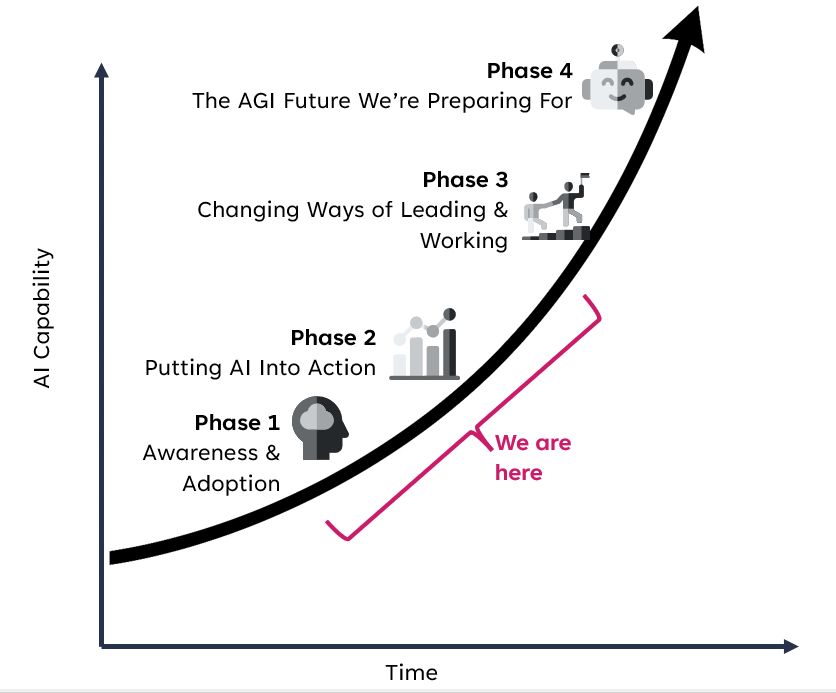
The opportunity extended beyond efficiency. Specialized teams were spending significant time synthesizing complex information, preparing data, reviewing documents, and connecting inputs across rapidly changing business environments. Leadership recognized that AI licenses alone would not transform this work. The organization needed to move from AI-assisted individuals to redesigned workflows.
Solution
Use case discovery and qualification
To kick off the project, BTS interviewed every participating team to understand its business problem, intended use of Claude, required inputs, desired output, and definition of success.
This gave each team a clearly scoped use case tied to a real business priority.
Focused design sprints
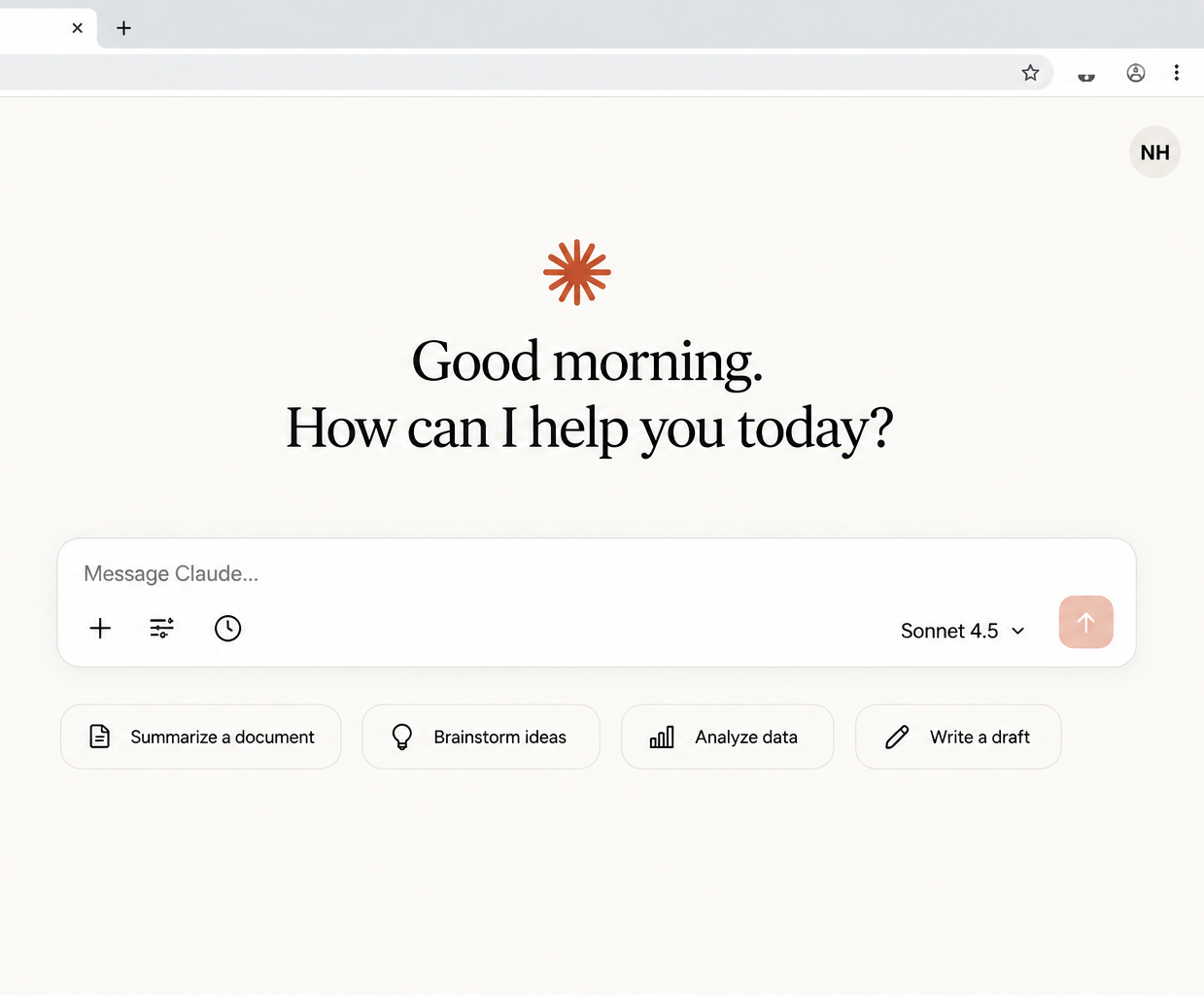
BTS delivered five hands-on design sprints involving multiple intact teams. Participants used Claude Sonnet 4.5 directly on live business challenges, alongside the organization’s existing Microsoft Copilot environment.
Teams brought their actual analytical frameworks, documents, research questions, risk inputs, and data workflows. The experience focused on real work rather than generic demonstrations or hypothetical exercises.
Workflow design and prototyping
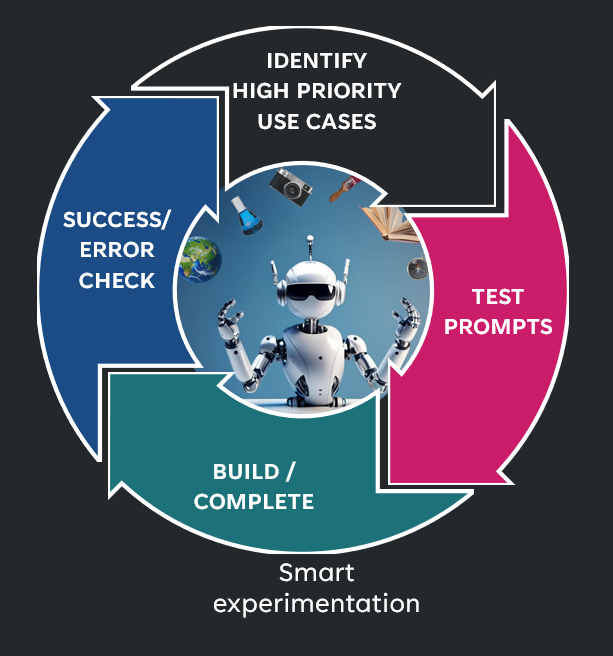
BTS guided teams through its Grounding, Experiment, Build, and Amplify methodology:
- Establish the business context and desired outcome
- Test Claude against real content
- Develop the strongest approach into a practical workflow
- Define what would be required for implementation
Some teams produced working prototypes. Others developed detailed workflow blueprints. Across the five design sprints, teams advanced approximately 30 Claude use cases.
Enterprise activation
The organization’s IT team participated in every session, connecting business experimentation with technical feasibility, privacy, security, and governance.
The engagement brought learning and development, talent, and IT together around a shared approach to Claude adoption. Its success also led to expanded sessions for the senior leadership team and the Top 200, bringing the strongest lessons into the organization’s broader large language model strategy.
Impact
Across the organization, teams advanced approximately 30 priority use cases across the organization, including:
- Streamlining actuarial analysis and repeatable data work
- Synthesizing cyber threat intelligence
- Accelerating clinical evidence review
- Strengthening government markets and policy research
- Improving communications research and drafting
- Applying AI to human resources workflows
Together, these use cases demonstrated how Claude could support critical work across the business, not just individual productivity. Some teams left with working prototypes. Others developed detailed workflow blueprints and clearer implementation paths aligned with enterprise privacy and security requirements.
Across five design sprints, the program directly engaged about 100 employees and delivered early outcomes including:
- Less manual research synthesis and data preparation
- Faster, more structured competitive intelligence
- Clearer pathways from experimentation to implementation
- A repeatable model for continued Claude-enabled workflow redesign
One participant who developed a data dashboard captured the immediate potential:
“I just accomplished in two hours what used to take my team weeks.”
The larger impact was a shift in how teams viewed AI. Claude was no longer seen primarily as a tool sitting outside the work. Participants began treating it as part of how critical workflows could be redesigned.
The success of the initial sessions led the organization to expand the work beyond its original scope. BTS brought the strongest lessons into a senior leadership team session and a Top 200 leadership event, placing Claude adoption at the center of the organization’s broader large language model strategy conversation.
Ready to partner with us? Contact us today.

Related content



Related content