Why tomorrow’s top leaders are relying on business simulation for decision making
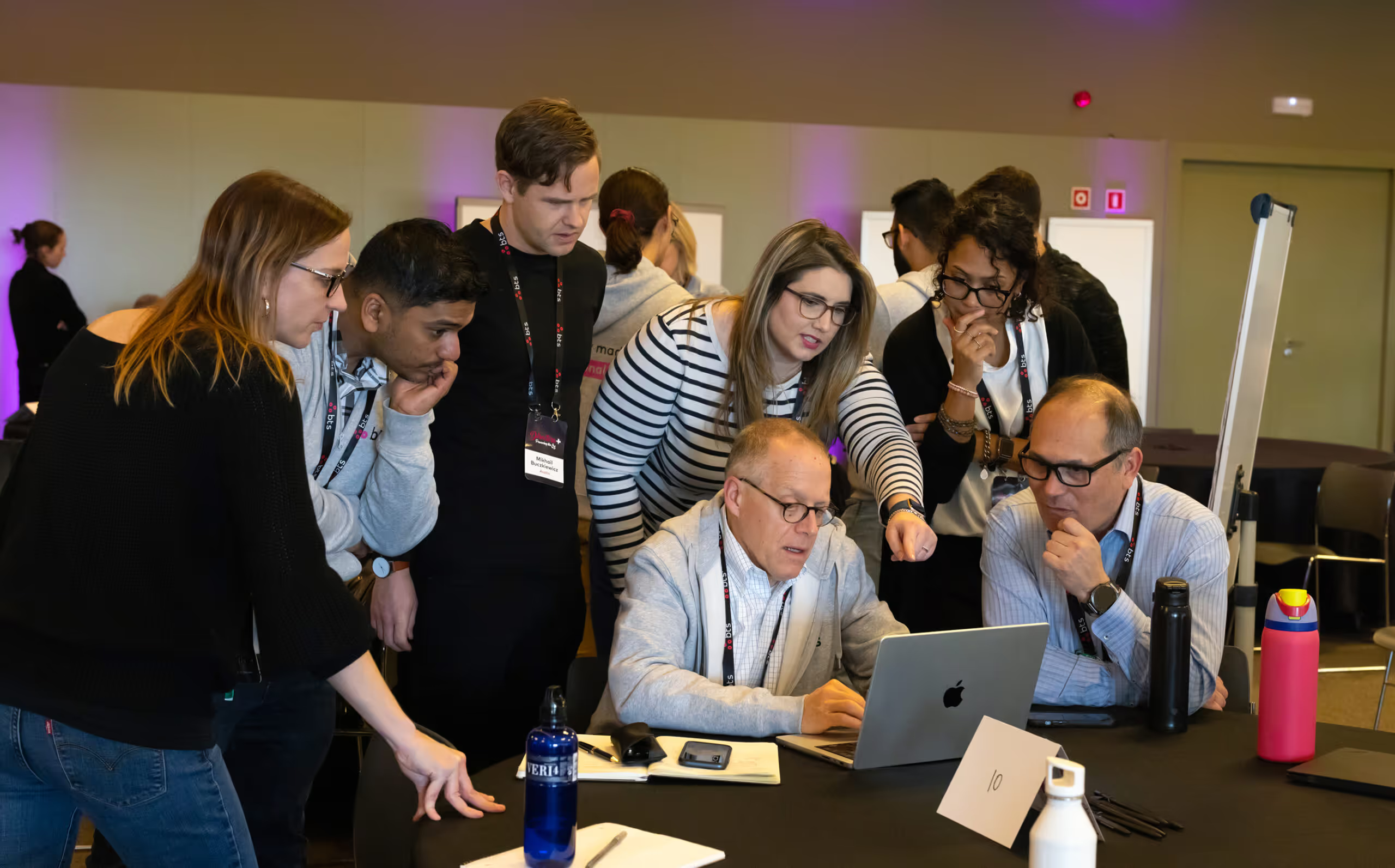
Today, businesses have access to endless data and analytics that enable informed decision-making. Despite the abundance of measurement resources, critical decision making remains challenging for leaders. While drawing on past experiences and intuition is helpful, it can also be risky as the pace of change accelerates infinitely. Bridging the gap between strategy and execution, simulations are the secret sauce that future-ready organizations are pouring into their learning cultures. In this post, we'll explore the advantages of using simulations to influence business decision making and how they can help organizations stay ahead of the curve.
Simulations reduce risk and cost
Simulations allow businesses to predict the outcome of various scenarios without having to take any remissible action. When leaders participate in simulations, they gain new critical insights that help them with scenario-planning and alignment. Simulations are a tool through which businesses can easily identify potential roadblocks and pitfalls before committing large amounts of resources or funds.
Real-world simulations provide real-time feedback
Simulations are designed to mirror real life workplace situations; they make it possible for individual contributors to test a myriad of scenarios safely in a controlled, risk-free environment. By running simulations, decision-makers can get real-time feedback on their decisions that boosts confidence and promotes creative problem-solving. As an opportunity for practice, simulation helps leaders to build a learning culture that promotes better-informed decision-making practices that are more likely to yield positive results.
Employee growth
A safe and controlled simulation environment creates an opportunity for employees to level-up and practice better decision making, communication, and collaboration. This experience prepares teams to handle challenging, unforeseen situations in the with confidence. As participants engage in the simulated experience, they are able to “learn-by-doing” and practice new techniques and methodologies that they can bring with them into their day-to-day operations.
Increased productivity and support of strategic planning
Simulations help to increase productivity by providing nuanced insights. This tinkering promotes skills that help top teams quickly identify the best course of action in any given scenario. Simulation helps streamline business process, resulting in increased efficiency, reduced costs, a more productive workforce, and effective long-term strategy formulation and deployment.
Improve communication
Simulations are a great tool to help decision-makers communicate more effectively in cross-functional collaboration scenarios. Leveraging this technology helps managers learn to effectively to share better data stories across team boundaries, improve collaboration, and overcome communication barriers. Simulations also bring transparency to your decision-making culture, which helps stakeholders throughout the business feel aligned and to the greater vision, mission, and strategy of the organization.
Using simulations to make business decisions reduces risk, saves time, and improves communication broadly. These competitive advantages gained through simulated practice help organizations make informed decisions in a variety of scenarios to ultimately realize the best path forward. The future of business decision-making relies on simulation. Without it, making informed decisions that improve productivity, efficiency, and, ultimately, profits will become increasingly impossible. Are your stakeholders ready to lead your organization into a thriving future? Consider your simulation strategy as the cornerstone of that preparedness.
Related content

Related content

La maggior parte delle riunioni di vendita non fallisce.
Semplicemente non porta a una decisione.
Ed è lì che si perde valore.
I clienti di oggi sono più informati, più selettivi e hanno meno tempo.
Non hanno bisogno di altre presentazioni di prodotto.
Hanno bisogno di conversazioni che li aiutino a stabilire le priorità, decidere e andare avanti.
Eppure, il 58% delle riunioni di vendita non riesce a creare valore reale.
Non perché i venditori manchino di capacità, ma perché le conversazioni non sono progettate per far avanzare le decisioni.
“I clienti non agiscono su ogni esigenza che riconoscono.
Agiscono quando qualcosa diventa una priorità.”
In questo breve executive brief scoprirai:
- Perché la maggior parte delle conversazioni informa… ma non porta all’azione
- Cosa spinge davvero i clienti a stabilire priorità e muoversi
- Come creare urgenza senza compromettere la fiducia
- Il passaggio dal presentare soluzioni al facilitare decisioni
- Cosa distingue le conversazioni che si bloccano da quelle che accelerano il progresso
Se i tuoi team stanno affrontando trattative bloccate, decisioni ritardate o un pipeline lento, questo brief ti aiuterà a capire il perché e cosa fare in modo diverso.
Scarica l’executive brief e scopri come progettare conversazioni che portano davvero a decisioni.

A maioria das reuniões de vendas não fracassa.
Elas simplesmente não levam a uma decisão.
E é aí que o valor se perde.
Os clientes de hoje estão mais informados, mais seletivos e com menos tempo.
Eles não precisam de mais apresentações de produto.
Precisam de conversas que os ajudem a priorizar, decidir e avançar.
Ainda assim, 58% das reuniões de vendas não conseguem gerar valor real.
Não porque os vendedores não tenham capacidade, mas porque as conversas não são desenhadas para impulsionar decisões.
“Os clientes não agem sobre todas as necessidades que reconhecem.
Eles agem quando algo se torna prioridade.”
Neste breve material executivo, você vai descobrir:
- Por que a maioria das conversas informa… mas não gera ação
- O que realmente faz os clientes priorizarem e avançarem
- Como criar urgência sem prejudicar a confiança
- A mudança de apresentar soluções para viabilizar decisões
- O que diferencia conversas que estagnam daquelas que aceleram o progresso
Se suas equipes estão enfrentando negócios estagnados, decisões atrasadas ou um pipeline lento, este material vai ajudar você a entender o porquê — e o que fazer de diferente.
Baixe o material executivo e aprenda como desenhar conversas que realmente impulsionam decisões.

La mayoría de las reuniones de ventas no fracasan.
Simplemente no llevan a una decisión.
Y ahí es donde se pierde el valor.
Los clientes de hoy están más informados, son más selectivos y tienen menos tiempo.
No necesitan más presentaciones de producto.
Necesitan conversaciones que les ayuden a priorizar, decidir y avanzar.
Y, sin embargo, el 58% de las reuniones de ventas no logra generar un valor real.
No porque los vendedores carezcan de capacidad, sino porque las conversaciones no están diseñadas para impulsar decisiones.
“Los clientes no actúan sobre cada necesidad que reconocen.
Actúan cuando algo se convierte en una prioridad.”
En este breve informe ejecutivo descubrirás:
Por qué la mayoría de las conversaciones informan… pero no generan acción
- Qué es lo que realmente hace que los clientes prioricen y avancen
- Cómo crear urgencia sin dañar la confianza
- El cambio de presentar soluciones a facilitar decisiones
- Qué diferencia a las conversaciones que se estancan de las que aceleran el avance
Si tus equipos están experimentando acuerdos estancados, decisiones retrasadas o un pipeline lento, este informe te ayudará a entender por qué y qué hacer diferente.
Descarga el informe ejecutivo y aprende a diseñar conversaciones que realmente impulsen decisiones.