Seguridad psicológica:

la pieza que falta en la cultura de seguridad organizacional
August 12, 2026
Guests
Subscribe to the BTS newsletter
Follow us on Linkedin
Follow BTS on Linkedin
Share

La seguridad no depende de un área. Depende de que cada persona pueda tomar una decisión segura, todos los días.

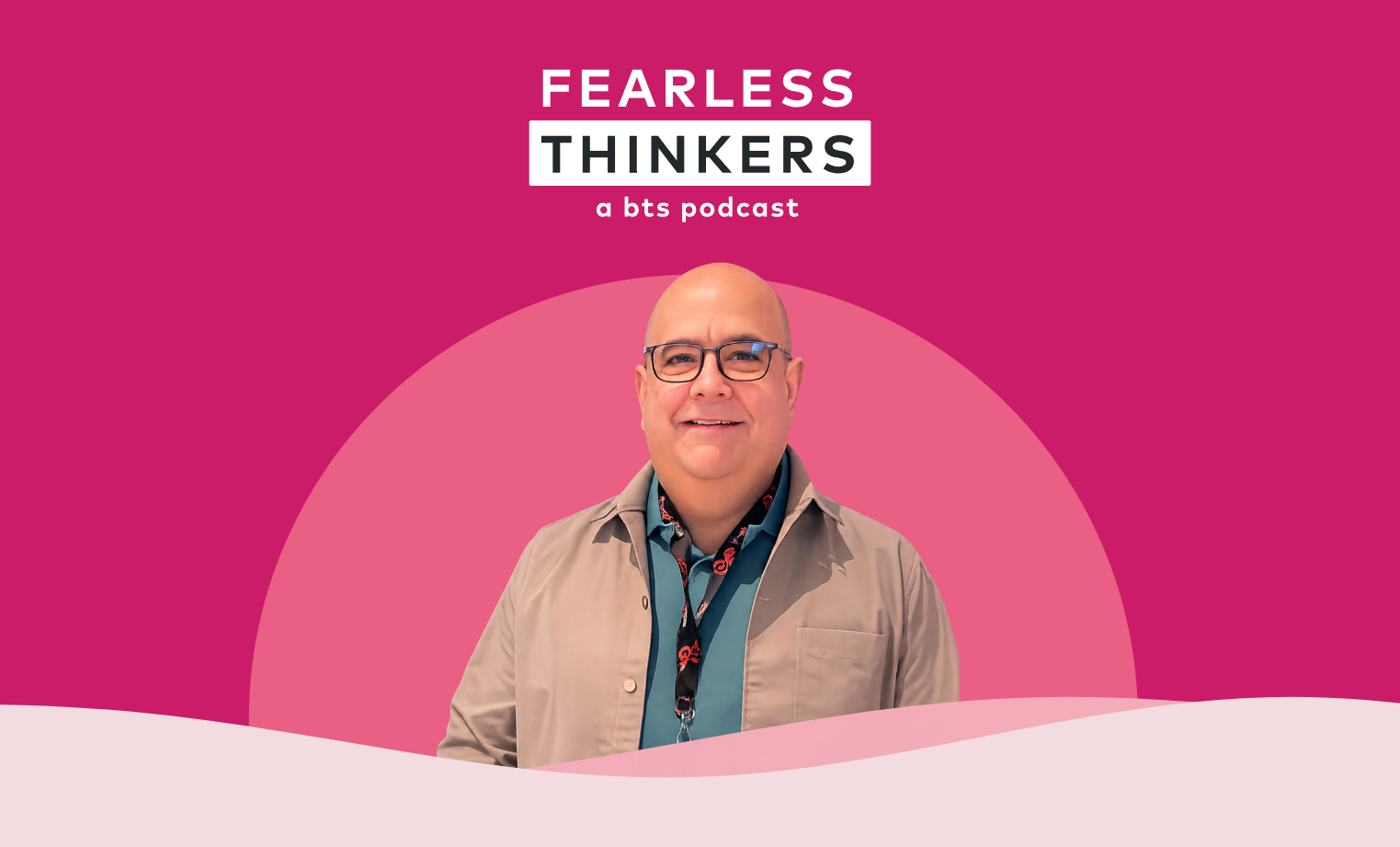
En este episodio de Fearless Thinkers México, Alejandra Garmilla conversa con Gonzalo Espinal López, Director de Supply Chain LATAM en Coca-Cola FEMSA, sobre cómo construir una cultura de seguridad real en una operación de 70,000 personas y 13,000 rutas diarias.

Gonzalo explica que la seguridad no puede depender únicamente de un área especializada: tiene que integrarse en las rutinas y en las evaluaciones de liderazgo de toda la organización. Para eso, la seguridad psicológica es la base: si las personas no pueden expresar sus preocupaciones sin miedo a represalias, ninguna métrica ni protocolo va a evitar el siguiente incidente.

La conversación aborda temas como:

Por qué la seguridad debe integrarse en las decisiones diarias de miles de personas, y no operar como un área aislada

Cómo la seguridad psicológica funciona como herramienta operativa: permite reportar riesgos antes de que se conviertan en incidentes

Qué papel juega el liderazgo en la seguridad psicológica: reconocer las condiciones detrás de una decisión insegura y responder de forma constructiva, no punitiva

Por qué medir seguridad solo contando accidentes no basta, y qué señales más débiles hay que empezar a captar

Cómo la cultura de seguridad también se construye celebrando lo que funciona, no solo corrigiendo lo que falla

“La seguridad no es solo evitar errores. Es crear las condiciones para que las personas tomen decisiones seguras.”

Escucha el episodio completo y descubre cómo Coca-Cola FEMSA construye una cultura de seguridad a escala.

About the show

Most of us want to lead in a way that matters; to lift others up and build something people want to be part of. But too often, we’re socialized (explicitly or not) to lead a certain way: play it safe, stick to what’s proven, and avoid the questions that really need asking.

This podcast is about the people and ideas changing that story. We call them fearless thinkers.

Our guests are boundary-pushers, system challengers, and curious minds who look at today’s challenges and ask, “What if there is a better way?” If that’s the energy you’re looking for, you’ve come to the right place.

Read Transcript

Related Content

Five diverse business colleagues smiling and discussing around a table with laptops and documents in a modern office.
Blog
May 20, 2025
5
min read
Demystifying culture change to unleash your momentum in the market
Is culture accelerating your strategy—or slowing it down? Learn how leaders turn invisible habits into momentum in this guide to culture change.

You already know strategy matters. You’ve likely spent months—maybe years—crafting one that’s bold, clear, and built to win. But when progress stalls, the issue often isn’t the strategy itself—it’s whether the organization can move with it.

That’s where culture comes in.

The culture that once fueled your success may no longer be fit for what’s next. And even if things look fine on the surface, early signals might be telling a different story—signs your culture isn’t accelerating your strategy the way it used to.

Culture is what turns intent into impact. It’s not the values on the wall or the message at a town hall—it’s the unwritten rules that shape how people decide, collaborate, and lead. It’s how things really get done.

When those patterns align with your direction, momentum builds. When they don’t, even the best strategy struggles to stick.

→ Let’s chat about leveraging culture to manage change fatigue at your organization.

You see it in:

  • The stories people tell about what gets rewarded
  • The choices teams make under pressure
  • The habits that show up when no one’s watching

And in the everyday:

  • How decisions get made
  • How people collaborate
  • How accountability is managed
  • How change is received

If your strategy has shifted but progress still feels stuck—or strained—it’s worth asking:

Is your culture still serving your business, or is it starting to slow you down?

A case in point

Two years ago, BTS partnered with a global organization that had just launched an ambitious growth strategy. Excitement was high—but results didn’t follow.

Leaders were frustrated by a lack of speed and ownership. Employees said they didn’t feel empowered. The word that kept surfacing? Bureaucracy.

That term became a catch-all for inefficiency, but no one could quite define it. So we helped them unpack what was really going on:

  • Unclear decision rights
  • Too many committees for too many decisions
  • Outdated knowledge-sharing systems
  • Manual processes slowing everything down

We visualized the findings in a “bureaucracy tree” to connect the dots. That clarity helped leaders prioritize where to focus first. And that’s when momentum returned.

The power of pivotal moments

The breakthrough didn’t start with a bold new initiative. It started with a shift in focus—from broad ideas to specific moments.

We worked with leaders to identify the everyday situations where culture is shaped and signaled: subtle, unscripted moments that reflect what’s truly expected and rewarded.

  • A decision point with no obvious answer: do we act, or wait for perfection?
  • A team member hesitates: do we jump in to solve, or create space for them to step up?

When leaders could name these moments, they could begin to shape them—making small, deliberate choices that sent a different signal. These weren’t one-time actions. They were repeatable patterns, practiced consistently.

And they’re just as available to you. Start by asking: where are the moments I tend to default to safety, silence, or control? And how could I begin to respond differently to shift the story?

Breaking old habits and building new ones

With these pivotal moments in mind, the leadership team reflected on their own patterns. How were they showing up? What were they reinforcing?

They focused on three shifts:

  1. Stop reinforcing slow, complex decision-making
  2. Start modeling clarity, ownership, and speed
  3. Shift systems that quietly rewarded caution over empowerment

These weren’t abstract goals. They were grounded in real behaviors:

  • How many people are involved in a decision?
  • Are roles and responsibilities clear?
  • Are our tools helping—or slowing us down?

By focusing on what people could see, track, and practice, change became tangible. It gave people something to act on—and believe in.

Scaling change through experimentation

The organization didn’t treat culture change as a campaign. They treated it as a learning process.

Top leaders ran small, coordinated experiments—turning abstract values into visible behaviors.

In one experiment, leaders committed to returning authority to managers who had “delegated decisions up” to them. In another, they redefined decision rights to cut through ambiguity and accelerate action.

These weren’t pilots. They were deliberate repetitions of new behaviors, designed to build muscle memory across the organization.

The results:

  • Decisions moved faster
  • Long-stalled initiatives were shut down
  • A new product feature launched in half the usual time
  • Employees reported feeling more empowered and accountable

If you’re wondering what this could look like for your organization, start here: What’s one behavior you could test out—or let go of—for a week? What’s one decision you could delegate? One moment you could coach instead of solve?

That’s how momentum builds—quietly, visibly, and fast.

Four common patterns to surface

Now that you’ve seen how small cultural habits shape (or stall) strategy, the next step is to spot where those habits are hiding in your organization. Here are four patterns we often see when momentum is missing—along with what they may be signaling.

   Element of Culture What It Shapes What It Might Look Like Today Why It Might Be Time to Rethink     Decision making Speed, ownership, and accountability Teams slow down not because the path is unclear, but because they’re unsure who’s empowered to choose it. Decisions stall in ambiguity—or escalate unnecessarily. Legacy approval structures often reflect yesterday’s risks. Today’s pace requires alignment over consensus, and trust in judgment at every level.   Meeting norms Focus, decision velocity, and participation Meetings are packed with updates, but few decisions get made. Real conversations happen in sidebars—after the meeting ends. When meetings become status dumps, they signal that the real work happens elsewhere. Reclaim meetings for collaboration and visible decisions to shift how teams show up—and move with more speed.   Leadership modeling Credibility and cultural integrity Leaders talk about agility or empowerment—but in high-stakes moments, default to control, caution, or top-down decisions. Culture isn’t shaped by slides—it’s shaped by what leaders do when it counts. If words and actions diverge, people follow the behavior. Find misalignments and try a new tack.   Feedback Learning, adaptability, and momentum Leaders see something misaligned—but let it go to avoid discomfort or protect relationships. Feedback is delayed, diluted, or disappears. Without feedback, small misalignments calcify. Cultures that learn fast don’t wait—they normalize feedback as a lever for shared growth.    

Which one shows up most in your team? That’s your next pivotal moment.

Shining a flashlight on your invisible “monsters”

When it comes to culture, the hardest part is often what you can’t see—or don’t know how to name.

Think back to childhood. Most of us, at some point, were convinced there was a monster in the closet or under the bed. In the dark, a pile of clothes becomes something menacing. A shadow turns into something to fear.

But then the light comes on. You see clearly. The fear fades. What once felt huge and scary becomes harmless—even a little silly.

That’s what culture can feel like inside an organization. Bureaucracy. Resistance. Complexity. These forces seem big and hard to define. They slow us down and sap momentum. But more often than not, they’re just old habits and assumptions lurking in the dark.

When leaders learn to spot the subtle, pivotal moments that shape behavior, they turn the light on. What felt intangible becomes specific. What felt impossible becomes actionable.

You don’t need a total reinvention. You need clarity—a way to see what’s really happening and where to shift, simply and deliberately.

When to bring in reinforcement

Not every culture challenge needs an outside partner. But some moments call for reinforcement—especially when change needs to stick at scale.

At BTS, we help organizations turn invisible cultural friction into visible forward motion. Whether you’re shaping a new strategy, integrating after a merger, or building a leadership culture that unlocks ownership—we help leaders shift from insight to impact.

Here are a few signs it might be time to partner

  • You’ve named the strategy—but execution keeps stalling.
  • You see the issues—but can’t align on how to shift behaviors.
  • Leaders are bought in intellectually, but behavior hasn’t changed.
  • Teams say the right things—but culture feels stuck in old habits.

If you’re facing one of these moments, it’s not a failure—it’s a signal. The good news? You don’t have to tackle it alone.

Let’s talk about what it would take to move from insight to sustained culture change.

Blog
July 28, 2023
5
min read
Training your way to culture change? Think again.
Andy Atkins, VP, shares reasons that training alone cannot sufficiently change culture across the organization.

How many times have you and your colleagues on the leadership team grappled with a culture problem?

The answer may not be obvious at first. Here are a few ways we see companies taking on culture change, often under the guise of a different name:

  • Adopting and socializing a new customer-first go-to-market strateg
  • Shifting from working heads-down in silos to formal, cross-functional collaboration
  • Turning the tide to incite more inclusive behaviors

When starting to make these shifts, the go-to answer is often: “Let’s talk to HR – maybe we can get some training so people will start doing things differently?” And HR responds with, “Great – let’s go!”

Then, months go by, and the needle hasn’t moved. This leaves you and your organization right back where you started. Despite the plethora of online courses, internal seminars, and team sessions available, you are frustrated by the lack of change. What gives?

Training individuals is not the answer. While training is critical for people to learn new things, it is not a comprehensive culture fix. Training alone is insufficient to change culture across the organization.

Research conducted by Kim Cameron and Robert Quinn from University of Michigan’s Ross Business School, and also by Edgar Schein from MIT’s Sloan School of Management has shown that effective culture change happens in groups because group norms, organizational mindsets, and team behaviors overpower individual desires. Just as strategic initiatives are born from a shared organizational vision, culture also cascades from collectively held mindsets, behaviors, and values.

When companies focus on individual development efforts to reinforce the culture they aspire to embody, they miss their biggest point of leverage. Changing your culture requires mobilizing both individuals and the collective behind a shared sense of urgency and responsibility.

Moving beyond the HR talent lens to deliver a culture shift

When making organizational changes, of course HR needs to be involved. However, to successfully enable culture shift, you need to go beyond training and address several other elements, such as: process engineering, information access, governance, and decision making, which can all be affected by culture change. If you are not thinking about these (and more), you are training your way to culture change.

To mobilize your organization and bring your culture shift to life, consider these three elements:

1. Cultural assessment and definition—creating the foundation for change

The first step in shifting your organizational culture is to ground yourself in the current one. If you don’t have a deep understanding of your existing culture, you may miss opportunities to identify and address major cultural roadblocks that will hinder your future state. You also might overlook key cultural strengths that you could leverage to propel the organization forward. (To learn more about cultural assessment, check out this white paper.)Assessing your current culture at the following four levels will enable you to uncover the nuances, behaviors, systems, and mindsets necessary to get you where you need to go:

  • Individual – relationship to self and others
  • Team – working in groups
  • Organization – what drives action
  • Business environment/context – view of change

When organizations lean on training as a band-aid, they miss the opportunity to toggle other systemic elements that profoundly impact culture, such as compensation alignment, process engineering, access to information, and feedback, among others.Here are a few game-changing questions that leaders can ask to define and build toward a strong culture:

  • How can we build momentum towards the desired business results?
  • What processes and systems are enabling or defeating the change?
  • Are the current performance management systems getting us where we need to go?
  • Am I assessing my team on the right capabilities?

2. Cultural scaling—creating alignment, processes, and systems

While shaping culture at the individual level is easier, people seldom produce their best work in siloes. To change culture, your organization must change the way people work in teams. This element, which can be done in concert with individual training, is about aligning team processes and embedding them in the organization.Changes in team effectiveness require supporting systems. To ensure your systems are aligned to your organization’s cultural vision, ask these two critical questions:

  • Do the current talent lifecycle activities, organizational capabilities, and work processes across your business support the changes you hope to see?
  • Which legacy systems and processes could derail the culture change you seek?

When leveraged correctly, processes and systems should create boundaries and provide guardrails that encourage culturally constructive behaviors, mindsets, and problem-solving methods.

3. Individual training—activating individuals to support the shift

The third element of shifting the culture is where training comes into play: activating individuals to do things differently. When asking HR to take the lead on training, consider these two aspects to ensure you are readying the whole organization for the culture shift you seek:

  • Change-ready leadership to help address individual readiness. In addition to broader efforts to assess, define, and scale organizational systems and capabilities that enable alignment and foster culture, it is critical to evaluate and enable individual readiness. Shifting the culture is a burden shared by not only business leaders and CHROs, but also by those leading talent management and leadership development who are responsible for preparing individual leaders.
  • Identify behavior shifts and lead accordingly. Change-ready leaders prioritize enduring behavioral shifts over “check-the-box” or surface level ones. When it comes to culture, quick fixes are often the enemy. Change-ready leaders also hold individuals accountable through feedback and by example. Leaders who model the behaviors they wish from their teams build trust and gain buy-in when it matters most. This might include challenging actions and decisions such as encouraging those who prefer not to shift their current behaviors to move on from the organization.

Organizational culture is a living, breathing, intangible thing. Just like a brand, we know it and feel it daily, despite its intangibility. Business leaders, you have the power to ignite the change you seek by leveraging assessment and definition, scaling, and individual training. Over time, these efforts will produce new behaviors and ways of working, ultimately creating the new organizational culture and a long-lasting legacy for your organization.

Sources

  1. Cameron, Kim S., and Robert E. Quinn (2011). Diagnosing and Changing Organizational Culture: Based on the Competing Values Framework. John Wiley & Sons, Hoboken.
  2. Schein, E.H. (2010) Organizational Culture and Leadership. Vol. 2, John Wiley & Sons, Hoboken.
Blog
January 10, 2022
5
min read
Embracing change – a reflection on 2021 and a preview for what’s in store for 2022
Fredrik Schuller explores how remote work, organizational purpose, and company culture played out in 2021, and what might change for 2022.

In 2020, COVID-19 radically changed everyone’s lives forever, with social distancing, mask mandates, and travel restrictions becoming our only means of survival. These measures, while lifesaving, crippled many businesses and accelerated the growth of others. The virus’s spread caused the global economy to plummet and then quickly rebound, inducing worldwide whiplash. We spent 2021 adjusting to this new world and bracing against new and unexpected shocks, such as global supply chain issues, the return of inflation, and severe labor shortages. So, what does next year have in store?

In early 2021, Executive Networks surveyed Chief Human Resources Officers from the world’s largest companies as part of a research project called the Back2Better Initiative. These 71 CHROs – who lead companies with a mean employee count of 69,000, and an average annual revenue of $19.5 billion – weighed in on the future of organizations, leadership, work, the workplace, and workers.

In this paper, we’ll explore how three of the themes from the Back2Better Initiative – remote and hybrid work, organizational and personal purpose, and company culture – played out in 2021, and how they’ll impact the world of work in 2022.

Client Stories
February 20, 2025
5
min read
From compliance to confidence: Empowering Ibercaja Bank’s teams to drive smarter decisions
Ibercaja Bank transformed RAROC from a compliance task into a strategic asset, helping employees make customer-centric financial decisions.

lorem ipsum

Client Stories
November 21, 2024
5
min read
Transforming leadership culture for enterprise alignment
A global energy company partnered with BTS to co-create an immersive simulation, transforming its ways of working.

lorem ipsum

Client Stories
October 24, 2024
5
min read
Developing biopharma leadership to fuel innovation in disease management
An American biopharma company partnered with BTS to transform leadership and overcome a culture stifling collaboration.

lorem ipsum

Podcast
August 12, 2026
5
min read
Seguridad psicológica:

la pieza que falta en la cultura de seguridad organizacional

lorem ipsum

Black-and-white photo of a smiling man with short dark hair wearing a collared shirt below the text 'bts FEARLESS THINKERS PODCAST' on a gray wavy background.
Podcast
July 10, 2024
5
min read
Global insights: The blueprint for aligning strategy and culture at Constellium
In this episode, Rick Cheatham hosts Martin Rahn, Director of Talent Development at Constellium, to discuss Multipliers culture and leadership development.

lorem ipsum

Whitepapers
August 24, 2021
5
min read
The upside of positive team disharmony
Working in perfect harmony is not what makes a team great. It is actually productive disharmony that leaders should seek.

lorem ipsum

News
May 9, 2023
5
min read
How Effective Coaching Can Improve Strategy Execution

Strategy execution is a common challenge across organizations. Effective coaching can remove obstacles, optimize workflows and achieve buy-in.

lorem ipsum

News
August 25, 2021
5
min read
The upside of positive team disharmony

Working in perfect harmony is not what makes a team great. It is actually productive disharmony that leaders should seek.

lorem ipsum