
What it really takes to unlock AI ROI


Global spending on AI is forecast to reach $2.52 trillion by 2026, a 44% year-over-year increase, according to Gartner. At the same time, only about 10% of AI pilots scale beyond proof of concept.
What’s the disconnect?
Why aren’t most organizations seeing the ROI they hoped for, despite making such large investments?
It’s not because the technology isn’t ready. And it’s not because the use cases are unclear.
The disconnect exists because many organizations are investing in AI as a technology upgrade and expecting a business transformation in return.
The tools are advancing at breathtaking speed, and most organizations already have AI in motion. But the work itself often stays the same. AI gets layered onto existing tasks instead of being used to rethink workflows end to end. Adoption metrics go up, while decisions, operating models, and value creation remain largely untouched.
When teams first start using AI, they do what makes sense. They try to recreate today, just faster. Can it help me write this? Analyze that? Save a bit of time?
That’s a smart place to begin. But it’s not where ROI, or reinvention, actually shows up.
Getting over the hump
Real returns begin when teams experience what we often call “getting over the hump.”
This is the moment when two things click at once:
- AI can fundamentally change how work gets done.
- People don’t need deep technical expertise to make that change happen.
When teams see weeks of work compress into hours, or watch an end-to-end workflow suddenly run in a new way, something shifts. Confidence replaces hesitation. Curiosity replaces caution. The questions change, from “How do I use this tool?” to “What’s possible now?”
That shift matters, because ROI doesn’t come from using AI more often, it comes from using it to work differently.
Why ROI stalls as AI scales
As AI initiatives expand, many organizations discover that the limiting factor isn’t the technology itself. It’s the environment surrounding the work.
ROI shows up when teams are able to explore and redesign workflows, not just automate steps. That requires clarity on outcomes and guardrails, but also room to experiment, learn, and iterate. When AI is tightly controlled or narrowly deployed, pilots stay pilots. When people are trusted to rethink how work happens, value starts to compound.
Organizations that unlock ROI don’t chase perfect use cases upfront. They focus on learning faster and applying those insights where they matter most.
The early signal that ROI is coming
Long before AI shows up in financial results, there’s an earlier indicator that organizations are on the right path.
People are energized by the work.
You see it when teams start sharing experiments, when ideas move across functions, and when learning becomes visible rather than hidden. Progress feels owned, not imposed.
That energy isn’t accidental. It’s a signal that people feel trusted to rethink how work happens, and that trust is essential to turning investment into impact.
Reinvention happens closer to the work than most expect
AI reinvention rarely starts with a sweeping rollout or a multi-year roadmap. More often, it begins with one meaningful workflow, one team close to the work, and a willingness to ask a different question.
With the right support, that team gets over the hump. What they learn becomes reusable. Patterns emerge. Over time, those insights connect, creating enterprise-wide impact and sustained ROI.
That’s how organizations move from isolated pilots to real returns.
What this means for AI investment
No organization feels fully “caught up” with AI, and that’s true across industries.
The organizations that will realize ROI aren’t waiting for certainty or the next breakthrough tool. They’re reinvesting their AI spend into new ways of working that scale human potential alongside technology.
Handled thoughtfully, AI doesn’t distance people from the work. It brings them closer - to better decisions, stronger collaboration, and better outcomes.
For many organizations, that’s where the real return begins.
Applied AI FAQs
Why aren’t most organizations getting ROI from AI investments?

What does AI reinvention mean?
What does “getting over the hump” mean in AI adoption?
Where should organizations start to improve AI ROI?
Related content

You can't predict the future. You can be disciplined about how you face it.
That's where Future Storming comes in. Future Storming is a process for looking at the trends and signals already visible in the market, understanding how those forces connect, and thinking more clearly about where they may lead.
Recently, we've been applying that lens to talent strategy, running Future Storming sessions with talent leaders across industries to understand which forces are already reshaping how organizations find, develop, and retain the people they need. When you look across those conversations, one thing is hard to miss: AI runs through almost all of the most significant trends, and not as a future scenario. It's already reworking the talent systems most organizations have leaned on for years, often quietly, and often faster than leadership teams have had time to respond.
From these sessions, five high-likelihood, high-impact shifts have emerged as the ones every talent leader needs to be watching right now. What follows is what each of them may mean for your organization.
1. The frameworks most organizations use to define great leadership were built for a different era
Skills and competency models describe work that no longer exists in many roles or that AI now performs alongside, or instead of, humans. The gap between what organizations say they're selecting and developing for, and what the work actually requires, is widening quietly.
This creates a real problem. Organizations that don't redefine what great looks like now will be developing the wrong people for the wrong future optimizing for capabilities that are becoming less predictive while under-investing in the ones that matter most.
- Rebuild leadership profiles from a future-back perspective, starting with where the business is heading, not where it has been.
- Focus on the distinctly human capabilities AI cannot replicate judgment in ambiguous conditions, relational intelligence, ethical reasoning, the ability to set direction when there is no precedent.
- Increase the use of behavioral observation in selection and development. It's the only methodology that shows how someone actually thinks and decides under real pressure.
The signal worth chasing isn't on a resume, it's in the room in how someone handles a real situation, under genuine pressure. It's the only place where someone can't prepare their way out of being themselves.
2. Human differentiators are the last mile AI cannot close
Judgment. Empathy. Creativity. The ability to navigate genuine ambiguity. These are increasingly what separates human contribution from AI output and they're precisely the things most talent systems have always found hardest to measure.
For a long time, organizations could afford to treat these as qualities that would emerge naturally with experience. That's no longer an option. The human differentiators are becoming the job. And most organizations still aren't measuring them well.
The methods exist behavioral assessment, simulation, structured observation. And AI is now making them accessible at scale in ways that simply weren't possible before. The question isn't whether to use them. It's how to deploy them thoughtfully, with the governance and transparency that -stakes talent decisions require.
- AI-powered behavioral observation that surfaces how people actually perform in the flow of work, (i.e. judgement, decision-making, adaptability) not self-report
- Assessment that evaluated how people work with AI, not just without it because that's increasingly what the role looks like
- Simulation-based approaches that reveal thinking in action - the kind of evidence no credential or output can provide
3. The talent pipeline is broken
AI is displacing the early-career work that has traditionally served as the on-ramp into organizational life. Those tasks once gave emerging employees something more valuable than work product. They gave them foundational experiences, relationships, and judgment. The kind of judgment that eventually grows into leadership.
The impact won't show up immediately. That's exactly what makes it worth paying attention to now. Within three to six years, benches will thin and succession pipelines will require far more intentional investment. Organizations will find themselves asking why their internal talent isn't developing the way it used to.
The organizations that get ahead of this have a real opportunity to build something more deliberate, more equitable, and better suited to the capabilities the future actually requires.
- Invest in real, simulation-based experiences, putting emerging leaders into the decisions and pressures that build genuine organizational judgment, not just task exposure.
- Redefine what early-career development is, building toward the capabilities the future requires, not the ones the old job description described.
- Build feedback into the flow of work. AI behavioral observation and practice AI role plays make continuous development possible at scale. The experience that used to happen informally has to be designed now.
4. People need to re-skill faster than any development model was built to support
People need to reskill faster than any development model was built to support. Most organizational development infrastructure was built around a longer, more stable arc of skill acquisition. AI is compressing that arc significantly.
The implication isn't just that training needs to be faster. It's that the whole architecture of how organizations identify, develop, and deploy talent needs to be built for continuous recalibration not periodic refresh.
- Prioritize adaptability and learning agility over static expertise. The ability to acquire new capabilities quickly matters more than the specific capabilities someone holds today.
- Treat reskilling as a continuous organizational process, not an episodic program.
5. AI is absorbing leadership work and culture is losing it's anchor
This is the shift that's easiest to underestimate, and hardest to recover from once it arrives.
Culture is what people see leaders do. The behaviors leaders model how they make decisions, how they show up in hard moments, what they choose to reward and what they let go are how organizational culture gets transmitted. It doesn't travel through stated values. It travels through visible human behavior.
AI is absorbing the work that used to make leaders visible as humans making choices. Performance reviews written by AI. Communications drafted by AI. Coaching conversations mediated by AI. When the distinctly human work disappears, so does the signal. People don't know what to watch anymore. And culture which depends on that watching starts to fray.
The organizations that navigate this well won't be the ones that use less AI, they'll be the ones most intentional about which leadership behaviors remain visibly human, and why.
The behaviors that held culture together need to be rebuilt around what humans uniquely contribute now and that starts with getting the success profile right. That's exactly what the Future Ready Profile is built for.
Strengthen empathy-centered leadership capabilities. The human dimensions of leadership matter more, not less, as AI takes on more of the technical work.
- Strengthen empathy-centered leadership capabilities. The human dimensions of leadership matter more, not less, as AI takes on more of the technical work.
- Reinforce organizational purpose and human-centered culture as anchors.
- Treat culture as something you design, not something you inherit.
What this means
The organizations that navigate this well won't be the ones that adopted AI fastest, they'll be the ones that invested just as deliberately in the human systems around it.
These five shifts aren't warnings. They're design problems, and design problems have answers. The talent systems that come out of this moment can be more intentional, more equitable, and more fit for purpose than anything we've built before.
At BTS, this is the work we're doing every day. If you'd like to think through what any of it means for your organization, we’d love to talk.
The thinking in this article was shapped by Future Storming sessions, including a SIOP 2026 workshop, and by ongoing conversations with talent leaders navigating these shifts in real time.

1. La Conversación Ha Cambiado
Durante los últimos dos años, el debate sobre la Inteligencia Artificial ha estado impulsado principalmente por proveedores tecnológicos y firmas de consultoría que animaban a las compañías a acelerar su adopción.
Hoy la conversación es distinta. Son los mercados financieros y los analistas quienes formulan la pregunta clave:
¿Dónde está el retorno?
Los datos muestran que los mercados apenas han incorporado expectativas de mejora de beneficios impulsados por IA en la mayoría de las compañías no tecnológicas. Mientras unas pocas grandes tecnológicas concentran las expectativas, el resto del mercado permanece bajo presión para demostrar impacto real en resultados.
Esto ya no va de ‘hype’ ni de titulares. Va de crear valor real, medible y sostenible.
Y el diagnóstico es claro: el reto no es la tecnología, sino la adopción organizativa.
Ahí es donde está la verdadera oportunidad.
2. Las organizaciones están chocando contra un muro — y lo saben
Tras dos años de programas amplios de IA: licencias masivas, sesiones de “IA para todos”, campañas de concienciación; muchas organizaciones se hacen la misma pregunta incómoda:
¿Y ahora qué?”
Se han lanzado iniciativas. Se han hecho pilotos. Pero el salto hacia un impacto escalable y medible no termina de llegar.
Los equipos utilizan herramientas de IA para ahorrar minutos. Algunos pilotos permanecen en fase de prueba durante meses, incluso años, sin escalar. Y la transición desde la “concienciación en IA” hacia la “IA que genera resultados de negocio” se convierte en un terreno para el que pocas organizaciones estaban realmente preparadas.
El desafío no es empezar. Es escalar.
3. Por Qué Existe Escepticismo: La Realidad Operativa
Cuando analizamos lo que ocurre en la práctica, la realidad operativa ayuda a entender el escepticismo del mercado. En distintos sectores se repiten los mismos patrones:
- Muchas iniciativas de IA se quedan atascadas en el piloto y nunca escalan.
- Un porcentaje importante no consigue generar impacto medible.
- Se produce una “curva J” de productividad: una fase inicial de disrupción antes de que aparezcan los beneficios.
- La “Shadow AI”, empleados utilizando herramientas personales sin gobernanza, se está convirtiendo en la norma, con los riesgos asociados.
El factor limitante no es el acceso a modelos o herramientas.
Es la capacidad y adopción organizativa: procesos, roles, gobernanza, habilidades y disciplina en la generación de valor.
4. Qué Hacen Diferente Las Organizaciones Que Sí Están Escalando La IA Con Éxito
Las compañías que están consiguiendo escalar la IA no necesariamente tienen más presupuesto ni más talento técnico. Lo que tienen es mayor disciplina organizativa.
Hay tres elementos marcan la diferencia:
- Desarrollan capacidades para cambiar comportamientos reales.
No se limitan a solo concienciar. No basta con webinars genéricos de “IA para todos”. Construyen capacidades estructuradas y basadas en roles:
- Directivos capaces de gobernar la estrategia de IA.
- Managers que saben rediseñar procesos y formas de trabajo.
- ‘Power users’ que lideran la identificación y el desarrollo de casos de uso.
- Y perfiles técnicos que llevan esos casos desde la idea hasta producción.
- Construyen cultura de datos, no solo infraestructura.
Los pipelines limpios importan. Pero también importa que exista una comprensión y entendimiento compartido sobre calidad del dato, gobernanza y uso responsable de la IA.
Sin ambas dimensiones, las iniciativas alcanzan rápidamente un techo: técnicamente viables, pero organizativamente bloqueadas.
- Gestionan la IA como una cartera de inversión, no como una lista de proyectos.
Cada iniciativa tiene un caso de negocio.
Los casos de uso se cualifican antes de asignar recursos.
El ROI se mide.
No persiguen cada tendencia. Priorizan con rigor —y detienen lo que no funciona.
Estos patrones no son teóricos ni aspiracionales. Son observables. Y replicables.
5. El Modelo de IA de Netmind: De la Adopción al Impacto a Escala
En Netmind hemos diseñado un enfoque precisamente para cerrar esta brecha entre intención y escala.
Nuestro modelo de IA es un marco integrado para ayudar a las organizaciones a transformar el potencial de la IA en resultados medibles, trabajando de forma coordinada en tres dimensiones interdependientes:
Pilar 1 — Valor De Negocio: Hacer Que Cada Iniciativa Justifique Su Inversión
La IA sin un caso de negocio claro es solo experimentación.
Trabajamos con equipos de liderazgo para establecer una disciplina sólida de generación de valor:
- Identificación de casos de uso de mayor impacto.
- Construcción rigurosa de business cases.
- Definición de métricas y marcos de medición.
- Diseño de estructuras de gobernanza que diferencian programas estratégicos de colecciones de pilotos desconectados.
La pregunta no es “¿qué puede hacer la IA?”, sino:
“¿Qué debería hacer para nosotros y cómo sabremos que está funcionando?”
Pilar 2 — Personas Y Organización: Construir Capacidades Que Perduren
La razón más habitual por la que la IA no escala no es técnica. Es humana.
Los equipos no saben cómo trabajar de forma diferente.
Los managers no saben cómo liderar en entornos híbridos humano-IA.
Los directivos no cuentan con marcos claros para decidir dónde invertir.
Nuestra arquitectura de desarrollo de capacidades cubre toda la organización en tres niveles:
- L100 — AI Fluency: Concienciación amplia: qué es la IA, qué puede y qué no puede hacer, y cómo impacta en cada rol. Es la base. Sin ella, el cambio no se consolida.
- L200 — AI Application: Capacitación práctica basada en roles para managers y responsables de negocio: identificación de casos de uso, rediseño de procesos y liderazgo de la adopción.
- L300 — AI Specialization: Itinerarios avanzados para ‘power users’, ‘champions’ internos y perfiles técnicos que llevan los casos desde concepto hasta producción y consolidan la capacidad a largo plazo.
Un principio clave de nuestro enfoque:
autosuficiencia por encima de dependencia.
No diseñamos programas que requieran soporte externo permanente. Construimos la capacidad interna para que las organizaciones puedan operar, adaptar y escalar por sí mismas.
Pilar 3 — Tecnología Y Datos: La Base Que Permite Avanzar Con Velocidad Y Seguridad
La estrategia y las capacidades necesitan una infraestructura adecuada.
Acompañamos a las organizaciones en el desarrollo de:
- Marcos de gobernanza del dato.
- Estándares de calidad.
- Guardrails de IA responsable
permitiéndolas avanzar de forma rápida y con seguridad, sin introducir nuevos riesgos.
No actuamos como integradores tecnológicos.
Trabajamos desde la perspectiva de negocio y organización, asegurando que las inversiones tecnológicas estén respaldadas por los procesos y capacidades necesarias para generar impacto real.
6. Cómo Trabajamos: Co-Crear En Lugar De Entregar
El modelo tradicional de consultoría en IA sigue siendo, en muchos casos, un modelo de entrega: se construye algo, se transfiere y el proyecto se da por cerrado.
La realidad de lo que suele pasar después es conocida: el traspaso falla, el equipo interno no puede sostenerlo y el piloto no escala.
En Netmind no construimos para las organizaciones. Construimos con ellas. Y desarrollamos sus capacidades para que puedan seguir construyendo sin nosotros.
Cada proyecto se diseña en torno a la co-creación. Nuestros expertos trabajan junto a los equipos internos. La metodología, las herramientas y los marcos de gobernanza se transfieren en tiempo real.
Eso es lo que hace que los resultados sean sostenibles.
Y también lo que convierte la inversión en capacidad en un activo estratégico, no en un coste recurrente.
The Bottom Line
Hoy los mercados dudan de que la mayoría de organizaciones logren capturar valor real de la IA.
Nosotros creemos que se equivocan, que esa predicción solo se cumplirá para quienes la aborden como una herramienta más o como un simple programa formativo y no como una transformación real de cómo se trabaja, cómo se toman decisiones y cómo se genera valor.
Las organizaciones que marcarán la diferencia serán aquellas que desarrollen capacidad organizativa en IA, no solo despliegue tecnológico.
La IA no es solo una herramienta: es una nueva capacidad organizativa.
El verdadero reto ya no es empezar, sino escalar con sentido y estrategia.

In Part 1, I told you about the three decisions we made two years ago and the simulation flywheel that produced our first Applied AI diamond.
Here’s the field-notes version.
Over 80% of our global business have now adopted a new Applied AI approach for doing simulations in the first eight weeks, across 24 countries and every practice.
The flywheel didn’t stop with simulations. It moved into finance, sales enablement, legal, operations, and client delivery. Teams started building agents and bringing them onto their own org charts. We didn’t plan for any of that. We built the conditions for people to find their own breakthroughs.
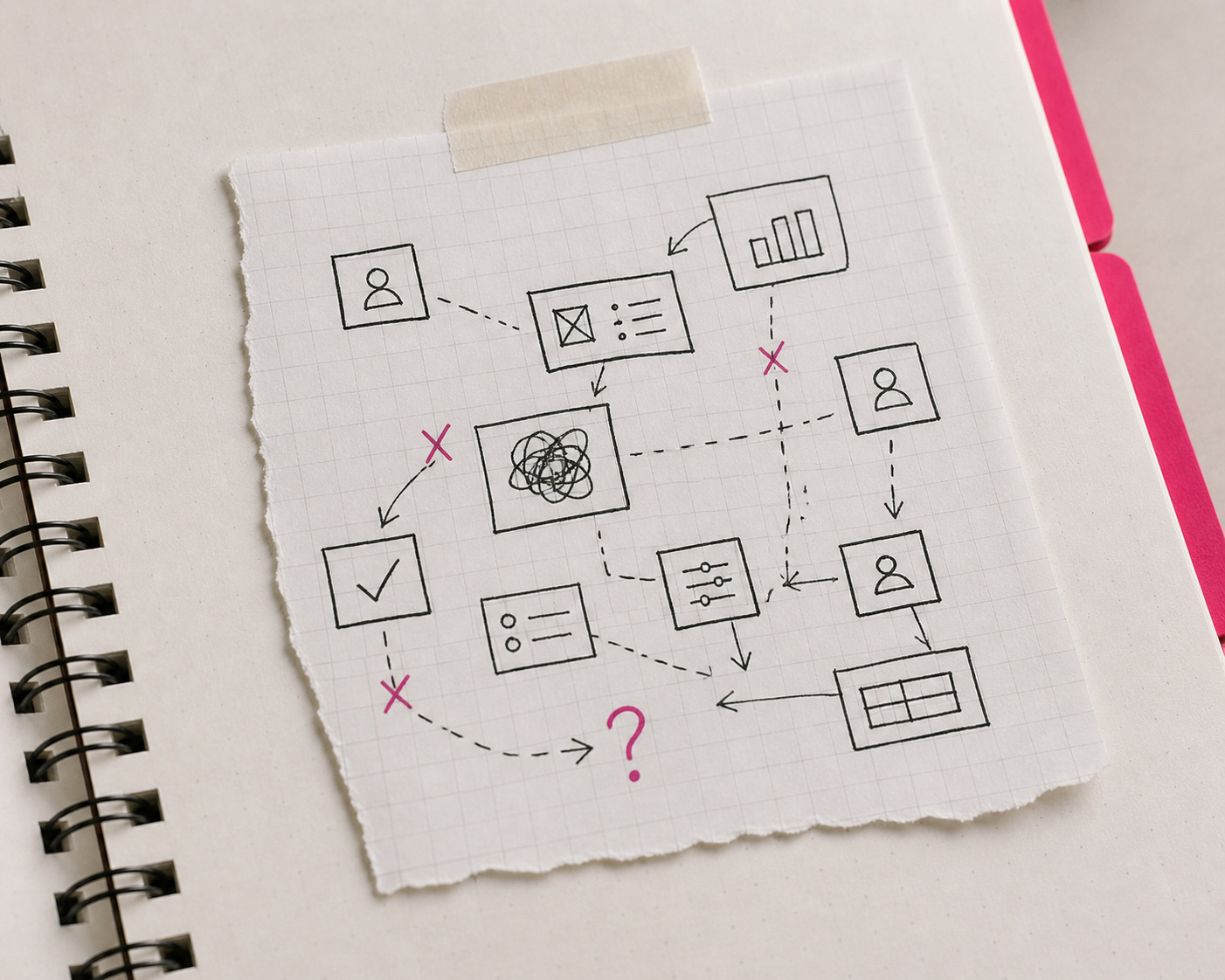
What it felt like inside the flywheel.
When the simulation team went live with their first clients on the new way of working, the lead person hit a wall. Their words:
“You’re asking too much. You’re making me be a full-stack developer. Up until this point I did a small part, and I sent it to the team, and they built off the back end, and they brought it back. And now I have to end-to-end soup to nuts, basically alone.”
There was graphic UI work nobody had been trained for, the fear of delivering quality below what BTS expects of itself, and the weight of not having a playbook. This was not the joyful adoption story most consultancies tell.
Then something shifted. Six members showed up for product testing, where the usual was two or three. The work created teamwork I hadn’t seen at BTS in years. The breakthrough was not an instantaneous change from skepticism to celebration. It was a breakdown in confidence, then rally, then bonding. If we didn’t make room for the breakdown, we would have lost the rally.
The other breakthrough was global teamwork; not yet a BTS core strength. Our culture is beautiful: high-freedom and entrepreneurial. But people’s first identities are to their countries. Almost every prior attempt we’ve made at a global initiative has failed. The one exception was Covid. So, when I say what happened next surprised me, I mean it.
I asked to join the simulation team’s Slack channel rather than pulling them into status meetings. What I got to watch in the mornings was someone in South Africa waking up, posting “I tried this and got stuck,” then London adding on, then San Francisco weighing in, then a surprise breakthrough overnight from Tokyo. We didn’t engineer that. Curious and determined BTS’ers did. The problem was interesting enough that the org chart didn’t matter. It was amazing to see and a glimpse into the next evolution of the BTS culture.

The pattern: Explore, expand, institutionalize, renew.
What we’ve now seen play out, both inside BTS and with clients, follows the same four-step pattern. Each step asks a specific decision of the leader.
Explore.
Stay stubborn on the aspiration and fluid on the path. Our breakthrough wasn’t the path we originally took. We changed tools and approaches. Nobody could have foreseen that. And if the team had taken the first six months of learnings from AI as their definitive “this is the detailed path we will follow,” we never would have gotten the disruption. Five different tool combinations were tried before we found the one that worked. Companies that lock into a single path or tool too early are betting against compounding capability that doubles roughly every seven months. That is not a bet I’d take.
Expand.
Run the old way and the new way side by side. When the simulation team’s breakthroughs got real, the instinct was to retreat into more internal testing. We did the opposite. They ran old way and new way in parallel on 6 or 8 live client projects across all three geographies. Every single one ended up going live the new way. The backup was always there. They didn’t need it.
Institutionalize.
Burn the boats. The simulation team committed that no new client work would be done the old way after January 1. The other practice leads then committed to dates within Q1, even though most of them had not yet experienced the new way themselves. They had to trust their colleagues. If you can do it for the most complex thing, you could probably do it for the less complex ones. By February 15, we had approaching 90% global adoption across 24 countries, across all practices. I was shocked and proud. We had spent years failing at exactly this kind of global rollout.
Renew.
Treat your agents as contractors. People on our diamond teams are now managing 30+ agents they built themselves. Our teams give agents performance feedback. We terminate their contracts when they don’t deliver. We expand the responsibility of agents when they outperform. The frontier question we’re wrestling with now is token budgeting. Two friends of mine running engineering-heavy companies believe that within 6 - 9 months, their token cost per engineer will exceed the cost of the engineer. Whether that’s the right framing is open. The question is real, and every CEO will be asked some version of it within the year.
What had to be true for this to scale.
Once we achieved this amazing global innovation, the leadership sat down to figure out what made it work. We named five things. None of them were about the technology.
Real pain points as the starting point. We had so many people frustrated from those ways of working, all the back and forth and all the wasted time, that this was gold for them. The old way was already painful. The new way wasn’t a forced disruption; it was relief. Find the workflow where the pain is loudest and start there.
The diamond unlocked creativity, it didn’t constrain it. This was the most differentiated insight, and the one most leaders miss. It wasn't "here's the new tasks and rules." It was, "once you learn how to do this, the sky's the limit. You can be even more creative." If your rollout feels like a new set of rules constraining your people, you’ve built the wrong thing.
Pair deep expertise with fresh eyes. The disproportionate share of our breakthroughs came from a tenured tinkerer with total command of the work, paired with someone new to the role who hadn’t yet built the muscle memory of how it had always been done. Without that pairing, you get incremental improvements to the work you already know how to do, instead of a reinvention.
Refuse the “people are too busy” reflex. When I brought the rollout to the global leadership team, the excuses came fast. “Our people are too busy. They’re burnt out. Q1 is going to be busy. No one’s going to have time.” My response: “This is a chance to eliminate the tasks you dread and expand what you love. I know it is a short push of extra work, and I think after the fact you and your team will feel joy and pride and say it was the best time we ever spent.” This is the moment most AI rollouts die.
Senior leaders must lead by example and do the work themselves. This is not middle manager’s job. This is not something you delegate. Even though you don’t build simulations anymore, you must know what this is. One of our partners proactively put time on senior leaders’ calendars and forced them to do the work. Once they started building, the excitement grew, and they could advocate for the rollout because they understood it. If your executives haven’t put their hands on the keyboard, you don’t have a rollout. You have a memo.
What we’re seeing across clients.
We’re now running this play with client organizations across industries and geographies. The companies whose flywheels are accelerating paired their A-players with their early-career talent, pulled IT and legal into the working sessions, refused the “too busy” reflex, and put their senior leaders’ hands on the keyboard. The companies whose flywheels are stuck almost always have a leadership pattern at the center of the stall. Not a tooling pattern. Not a governance pattern. A leadership pattern.
If this resonates, let’s talk.
If you read Part 1 and asked yourself whether your flywheel was turning, the question I’d add now is sharper: do you have the conditions in place for a diamond to appear? If yes, you’re already moving. If no, the technology will not save you.
Here's where we're starting with clients: a working session, half day to a full day, with a small group that owns one of your highest-friction processes. Together we map where your first diamond is most likely to land, how to set up the side-by-side trial, and what your version of "burn the boats" should look like.
The destination, if we do this right, is a self-reliant culture of applied AI inside your company. 5, 10, 15 diamonds compounding into a fundamentally different way of operating. From what I have experienced this is a once in a career opportunity for dramatic shareholder value creation if you get that muscle going. I say that because I'm watching it happen, in real time, inside our own company and across our client base.
If you want to get your flywheels spinning and map your first diamond, start here. Bring your hardest workflow. We'll bring the playbook.
Related content
You can't predict the future. You can be disciplined about how you face it.
That's where Future Storming comes in. Future Storming is a process for looking at the trends and signals already visible in the market, understanding how those forces connect, and thinking more clearly about where they may lead.
Recently, we've been applying that lens to talent strategy, running Future Storming sessions with talent leaders across industries to understand which forces are already reshaping how organizations find, develop, and retain the people they need. When you look across those conversations, one thing is hard to miss: AI runs through almost all of the most significant trends, and not as a future scenario. It's already reworking the talent systems most organizations have leaned on for years, often quietly, and often faster than leadership teams have had time to respond.
From these sessions, five high-likelihood, high-impact shifts have emerged as the ones every talent leader needs to be watching right now. What follows is what each of them may mean for your organization.
1. The frameworks most organizations use to define great leadership were built for a different era
Skills and competency models describe work that no longer exists in many roles or that AI now performs alongside, or instead of, humans. The gap between what organizations say they're selecting and developing for, and what the work actually requires, is widening quietly.
This creates a real problem. Organizations that don't redefine what great looks like now will be developing the wrong people for the wrong future optimizing for capabilities that are becoming less predictive while under-investing in the ones that matter most.
- Rebuild leadership profiles from a future-back perspective, starting with where the business is heading, not where it has been.
- Focus on the distinctly human capabilities AI cannot replicate judgment in ambiguous conditions, relational intelligence, ethical reasoning, the ability to set direction when there is no precedent.
- Increase the use of behavioral observation in selection and development. It's the only methodology that shows how someone actually thinks and decides under real pressure.
The signal worth chasing isn't on a resume, it's in the room in how someone handles a real situation, under genuine pressure. It's the only place where someone can't prepare their way out of being themselves.
2. Human differentiators are the last mile AI cannot close
Judgment. Empathy. Creativity. The ability to navigate genuine ambiguity. These are increasingly what separates human contribution from AI output and they're precisely the things most talent systems have always found hardest to measure.
For a long time, organizations could afford to treat these as qualities that would emerge naturally with experience. That's no longer an option. The human differentiators are becoming the job. And most organizations still aren't measuring them well.
The methods exist behavioral assessment, simulation, structured observation. And AI is now making them accessible at scale in ways that simply weren't possible before. The question isn't whether to use them. It's how to deploy them thoughtfully, with the governance and transparency that -stakes talent decisions require.
- AI-powered behavioral observation that surfaces how people actually perform in the flow of work, (i.e. judgement, decision-making, adaptability) not self-report
- Assessment that evaluated how people work with AI, not just without it because that's increasingly what the role looks like
- Simulation-based approaches that reveal thinking in action - the kind of evidence no credential or output can provide
3. The talent pipeline is broken
AI is displacing the early-career work that has traditionally served as the on-ramp into organizational life. Those tasks once gave emerging employees something more valuable than work product. They gave them foundational experiences, relationships, and judgment. The kind of judgment that eventually grows into leadership.
The impact won't show up immediately. That's exactly what makes it worth paying attention to now. Within three to six years, benches will thin and succession pipelines will require far more intentional investment. Organizations will find themselves asking why their internal talent isn't developing the way it used to.
The organizations that get ahead of this have a real opportunity to build something more deliberate, more equitable, and better suited to the capabilities the future actually requires.
- Invest in real, simulation-based experiences, putting emerging leaders into the decisions and pressures that build genuine organizational judgment, not just task exposure.
- Redefine what early-career development is, building toward the capabilities the future requires, not the ones the old job description described.
- Build feedback into the flow of work. AI behavioral observation and practice AI role plays make continuous development possible at scale. The experience that used to happen informally has to be designed now.
4. People need to re-skill faster than any development model was built to support
People need to reskill faster than any development model was built to support. Most organizational development infrastructure was built around a longer, more stable arc of skill acquisition. AI is compressing that arc significantly.
The implication isn't just that training needs to be faster. It's that the whole architecture of how organizations identify, develop, and deploy talent needs to be built for continuous recalibration not periodic refresh.
- Prioritize adaptability and learning agility over static expertise. The ability to acquire new capabilities quickly matters more than the specific capabilities someone holds today.
- Treat reskilling as a continuous organizational process, not an episodic program.
5. AI is absorbing leadership work and culture is losing it's anchor
This is the shift that's easiest to underestimate, and hardest to recover from once it arrives.
Culture is what people see leaders do. The behaviors leaders model how they make decisions, how they show up in hard moments, what they choose to reward and what they let go are how organizational culture gets transmitted. It doesn't travel through stated values. It travels through visible human behavior.
AI is absorbing the work that used to make leaders visible as humans making choices. Performance reviews written by AI. Communications drafted by AI. Coaching conversations mediated by AI. When the distinctly human work disappears, so does the signal. People don't know what to watch anymore. And culture which depends on that watching starts to fray.
The organizations that navigate this well won't be the ones that use less AI, they'll be the ones most intentional about which leadership behaviors remain visibly human, and why.
The behaviors that held culture together need to be rebuilt around what humans uniquely contribute now and that starts with getting the success profile right. That's exactly what the Future Ready Profile is built for.
Strengthen empathy-centered leadership capabilities. The human dimensions of leadership matter more, not less, as AI takes on more of the technical work.
- Strengthen empathy-centered leadership capabilities. The human dimensions of leadership matter more, not less, as AI takes on more of the technical work.
- Reinforce organizational purpose and human-centered culture as anchors.
- Treat culture as something you design, not something you inherit.
What this means
The organizations that navigate this well won't be the ones that adopted AI fastest, they'll be the ones that invested just as deliberately in the human systems around it.
These five shifts aren't warnings. They're design problems, and design problems have answers. The talent systems that come out of this moment can be more intentional, more equitable, and more fit for purpose than anything we've built before.
At BTS, this is the work we're doing every day. If you'd like to think through what any of it means for your organization, we’d love to talk.
The thinking in this article was shapped by Future Storming sessions, including a SIOP 2026 workshop, and by ongoing conversations with talent leaders navigating these shifts in real time.

Hace unos meses terminé una sesión con un equipo de ejecutivos comerciales de una institución financiera mediana. Dos días intensos: cómo prospectar, cómo estructurar conversaciones centradas en el cliente, cómo crear valor en cada interacción. El grupo salió inspirado del taller.
Tres semanas después le pregunté a uno de los mejores participantes sobre cómo le había ido aplicando las nuevas herramientas. Me miró un segundo y me dijo, con total honestidad:
“La verdad... la semana siguiente fue igual que siempre, volví al viejo sistema”
El entrenamiento de capacidades es necesario. Pero sin una cultura comercial que lo sostenga, es un esfuerzo poco rentable para las empresas.
1. Las capacidades sin contexto no sobreviven al día a día
Un ejecutivo de ventas puede salir de un taller sabiendo exactamente qué preguntar, cómo estructurar una conversación de valor, cómo posicionarse como asesor estratégico en lugar de vendedor de productos. La semana siguiente, el peso de las métricas de corto plazo, la presión por resultados y las urgencias del día a día terminan arrastrándolos de vuelta a la rutina de siempre.
McKinsey (2024) encontró que más del 70% de las iniciativas de transformación comercial no logran sus objetivos — y la principal causa no es el diseño del programa, sino la falta de condiciones organizacionales para sostener los nuevos comportamientos.
El problema no es el taller. Es lo que existe o no existe en la realidad de la estructura comercial.
2. El cambio requiere alinear seis pilares
Lo que diferencia a las empresas que realmente transforman su modelo comercial de las que solo capacitan, está relacionado con seis pilares que operan simultáneamente.
1. Patrocinio de la alta dirección que empodera en lugar de solo exigir
2. Disciplina en gestión de cuentas/clientes estratégicos, con metodología y seguimiento
3. Conversaciones centradas en el cliente, no en el portafolio de productos
4. Cada interacción con relevancia estratégica, preparadapara crear valor medible
5. Nuevos comportamientos integrados al ritmo operativodiario y la cadencia del negocio
6. Líderes comerciales presentes que sostienen la cultura, no solo la expresan
Cuando falta uno, los demás no escalan y terminan provocando un círculo vicioso.
3. El liderazgo que sostiene vale más que el que exige
El patrocinio de la alta dirección y la presencia de los líderes comerciales sonlos pilares que más frecuentemente fallan. No porque los líderes no crean en el cambio, sino porque el día a día los jala de vuelta a revisar resultados, no a construir comportamientos.
Gartner (2024) señala que los equipos comerciales cuyos líderes hacen coaching activo y visible tienen hasta un 28% mayor probabilidad de adoptar nuevos comportamientos de manera sostenida.
El entrenamiento define el rumbo y entrega el mapa; el liderazgo es lo que realmente ayuda a navegar y sostener el cambio.
Conclusión
Si tu empresa está invirtiendo en transformar la forma en que sus equipos comerciales se relacionan con los clientes, la pregunta ya no es si el entrenamiento funciona. La verdadera pregunta es: ¿qué tan preparada está la organización para sostener el cambio?
Porque el talento existe. Las habilidades se desarrollan. Pero la cultura no se improvisa; se construye todos los días, con liderazgo, alineación y consistencia.
¿Cuál de estos seis pilares es hoy el más débil en tu organización?
É possível mudar a cultura de uma organização?
Hoje em dia, poucas organizações não estão envolvidas em um (ou vários) processos de transformação cultural. Novas formas de trabalhar em organizações mais horizontais e adaptativas, melhorias na cultura de segurança, orientação ao cliente, transformações nas áreas comerciais e excelência operacional, entre outros.
E é aqui que surge uma das grandes perguntas:
É possível mudar a cultura de uma organização? E, se sim, como fazer isso?
Para ajudar a responder a essas perguntas—frequentes entre nossos clientes e amplamente discutidas—gostaria de compartilhar o que aprendemos na BTS ao longo dos últimos 38 anos sobre o que funciona e o que não funciona (até agora, pois em transformação cultural estamos sempre aprendendo).
A boa notícia é que a resposta é sim.
A dificuldade está na segunda pergunta: como fazer isso?
Um projeto? Uma iniciativa?
Um ponto importante é que a transformação cultural não é um projeto com início e fim, mas sim um processo contínuo e em evolução. Isso muitas vezes gera tensão em organizações acostumadas a uma lógica de projetos.
O que é crítico e frequentemente ignorado?
Existem elementos que, quando considerados e aplicados corretamente, tornam a transformação muito mais eficaz. No entanto, muitas vezes são ignorados.
Esses elementos são:
- Envolver as pessoas. Quanto maior o envolvimento em todos os níveis, maior a probabilidade de implementação das mudanças.
- Tornar a mudança tangível e vivida no dia a dia, conectando teoria e prática. Transparência é fundamental.
- Toda mudança tem impactos positivos e negativos — ambos devem ser comunicados com clareza.
- Mudança cultural exige tempo e transformação de mindsets e estruturas organizacionais.
- A cultura deve estar conectada à estratégia.
Como estruturamos a transformação cultural?
Nosso modelo se baseia em quatro etapas: definir resultados, criar líderes de mudança, incorporar mudanças e sustentar novas formas de trabalho.
1. Definir resultados
O primeiro passo é estabelecer resultados claros e alinhamento executivo. É necessário conectar propósito, visão e objetivos organizacionais.
Ações:
- Coleta de dados (entrevistas, focus groups, visitas)
- Diagnósticos culturais
- Definição de expectativas (Leadership Profiles
2. Criar líderes de mudança
Todos os líderes devem atuar como agentes de mudança. É fundamental engajá-los emocional e racionalmente.
Ações:
- Programas de liderança
- Playbooks
- Feedback contínuo
3. Incorporar mudanças
É essencial transformar mentalidades e sistemas organizacionais.
Ações:
- Coaching
- Sprints culturais
- Cascata organizacional
- Avaliações comportamentais
4. Sustentar o novo modelo
Garantir continuidade através de redes, dados e suporte contínuo.
Ações:
- Integração com processos de talento
- Uso de IA no dia a dia
- Monitoramento da transformação
- Comunidades de prática
A importância de ser paciente e impaciente ao mesmo tempo
Transformações culturais são complexas e não têm fórmula única.
Ser estrategicamente paciente e taticamente ágil é essencial para ajustar e evoluir continuamente.
Esse equilíbrio permite transformar a jornada em algo positivo e sustentável.
Este é apenas um resumo.
Se quiser aprofundar com exemplos e práticas:
Baixe o PDF completo e acesse todo o conteúdo.