Leadership development

Profiles, playbooks and experience maps

Define what great leadership looks like in your organization
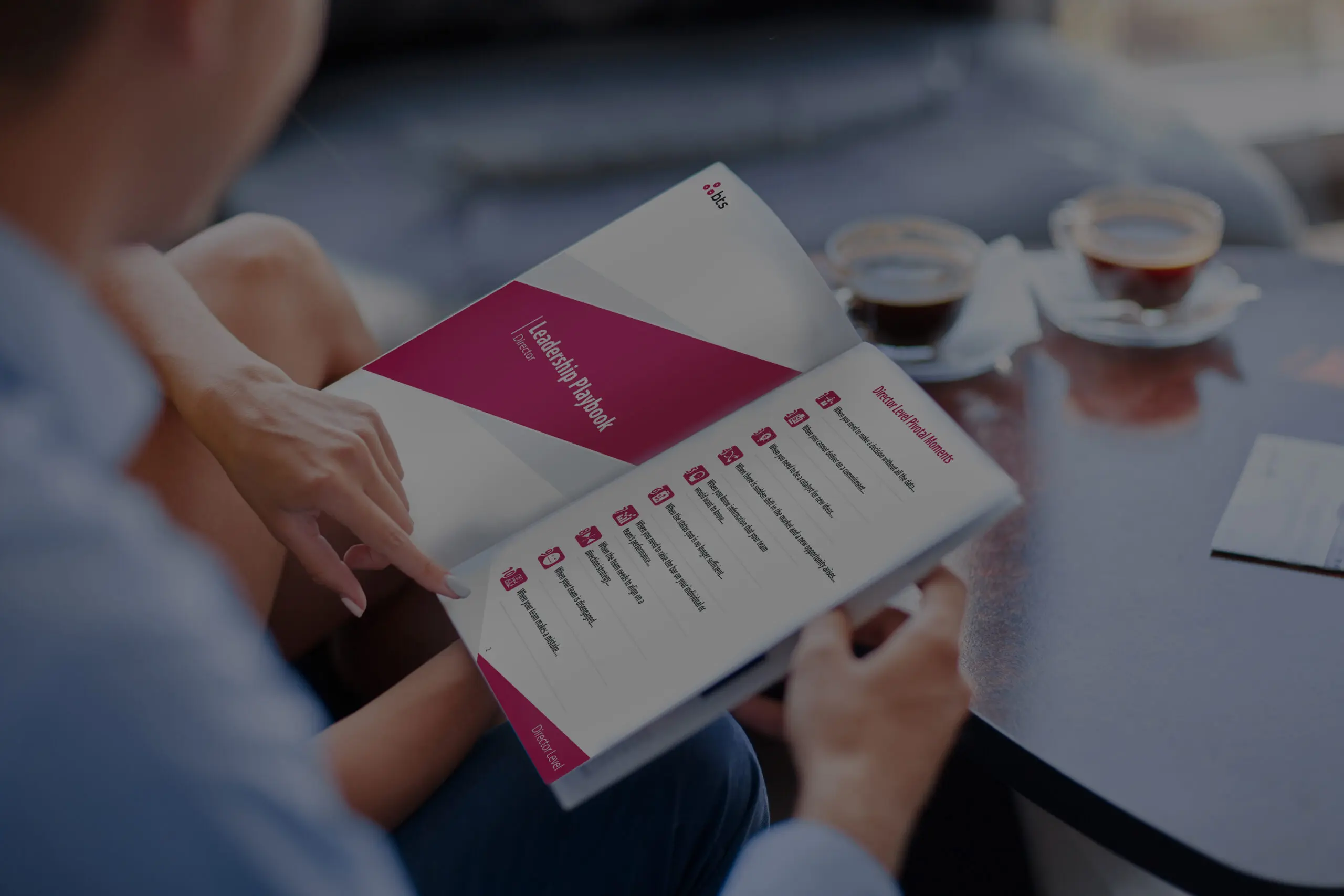
Person reading a Leadership Playbook booklet titled 'Director' with coffee cups on a table in the background.

Experience the BTS difference

I need my leaders to understand what capabilities and behaviors are needed for high performance in their role

I need my leaders to identify critical moments on the job where these capabilities are necessary

I need my leaders to help employees most effectively work toward gaining deeper functional expertise, as well as a strong leadership presence and influence

Program Details

Format
Virtual, in-person, or hybrid
Duration
multi-day

Program Elements

Leadership development
Leadership assessments
Post-workshop coaching journeys
How we help

Great profiles

Great Profiles define how a Great Leader shows up to work each and everyday to help the company execute against its strategy. They serve as the foundation to set the right leadership expectations and guide leaders on how to be great, yet still maintain their authentic style.


Two men sitting at a table reviewing documents and discussing, with tea and dessert on the table.
Smiling woman wearing glasses and a yellow shirt sitting at a table with a laptop, notebook, smartphone, and coffee cup in a bright modern office.
How we help

Great playbooks

Great Playbooks define what daily moments are most pivotal and what “Great Leaders” and what “Not-Yet-Great Leaders” do in those situations. They identify what moments are most pivotal to be successful and show leaders what to do and what not do in those pivotal moments.

How we help

Experience Maps

Experience Maps identify the foundational and leadership experiences an individual can seek throughout his/her career that will provide the opportunity to develop within a job family or career track. When we pair an Experience Map with a Great Profile and a Great Playbook, we help you paint a clear picture around what great performance looks like defined as capabilities, in what critical moments those capabilities show up, and how to help employees build those capabilities through targeted experiences.

Two women sitting at a table in an office, reviewing printed documents together with a laptop open nearby.

Related Content

Inisights
September 4, 2025
5
min read
From model to movement: Getting more from your leadership framework
A framework alone isn’t enough. Learn how to activate leadership behaviors, sustain momentum, and make culture a lever for transformation.

Leadership frameworks are introduced with good reason. Done well, they define what great leadership looks like, guide decisions under pressure, and give employees clarity on what’s expected. A strong framework can align leaders, speed up decision-making, and reinforce the culture an organization needs to grow. But too often, frameworks launch with energy and then fade. Behaviors are defined. Announcements are made. Posters go up. Resources are shared. For a while, it feels like momentum, but everyday habits don’t change. When frameworks fail to stick, it’s not just a missed opportunity. It puts strategy execution, talent alignment, and transformation outcomes at risk. The real challenge isn’t writing the right words. It’s embedding those words into how people work, lead, and decide especially under pressure. That’s where the true power of a framework lies: not in its creation, but in its activation. Our work with leadership teams has shown this again and again: to activate a framework, you must shift how people lead, how work gets done, and how the system reinforces it all.

Why one model can’t, and shouldn’t, do it all

Many organizations try to do too much with a single framework. They blur cultural aspiration with behavioral expectation, leaving people with something that sounds inspiring but isn’t practical. The result? A framework that lacks both inspiration and clarity. The most effective approach is to keep them distinct but connected:

  • Cultural principles provide direction and inspiration, creating a shared ethos and common language.
  • Behavioral expectations provide clarity and action, defining how leaders and teams are expected to behave especially under pressure.

Frameworks aren’t tested in calm moments. They’re tested when the stakes are high, during uncertainty, tension, or rapid change. That’s when leaders need clarity. Strong frameworks show up in three critical places:

  • In people decisions: influencing how leaders hire, promote, and reward talent.
  • In business decisions: serving as a lens for setting priorities, making trade-offs, and course-correcting.
  • In cultural moments: reinforcing how teams respond to change, uncertainty, or challenge.

Whether you’re shaping culture, driving transformation, or building systems for speed, your framework is either fueling progress or quietly holding it back. One framework should inspire with purpose and direction. The other should guide action, so people know how to lead, how to decide, and how to show up when it counts. When both are in place, and aligned with strategy and systems, culture becomes a lever for transformation, not a barrier.

Making it real

Too often, the launch of a framework feels like the finish line. Leaders put energy into designing the model, running workshops, and sharing materials but the follow-through is where momentum slips. Competing business priorities quickly take over. Senior leaders may see the framework as an HR initiative rather than their own responsibility. Employees can feel overwhelmed by change or confused if the framework is too complex. And if systems like performance reviews, hiring, or recognition don’t reflect the framework, it starts to feel optional. The result? Even strong frameworks can fade into the background, seen as “just another initiative” rather than something that truly guides how the organization leads and makes decisions. The difference comes when activation is intentional, and includes:

  • Practical tools that make it easy to use in the moment behavior guides, coaching templates, interview prompts, checklists.
  • Manager development that goes beyond awareness, giving leaders confidence to apply the framework in setting goals, giving feedback, and developing their teams.
  • Targeted communication that ties the framework to business priorities and brings it to life with senior leader stories and real examples.
  • Personalization so employees can see how the framework connects to their own roles, decisions, and impact.

Most importantly, frameworks stick when leaders own them. When senior leaders use the framework to guide their own choices and conversations, it stops being a program and starts becoming how the business runs.

Modernize without losing what matters

For organizations with deep histories, shifting long-standing leadership behaviors and ways of working is a balancing act. Move too fast, and you risk alienating the very leaders you need. Move too slow, and you risk falling behind evolving customer needs, strategic priorities, and market realities. Employees need to know that the values and behaviors that made them successful still matter even as new expectations take hold. That means working with senior leaders to clarify which attributes and behaviors are enduring, and which must shift. In its strongest form, this shows up as clearly defined leadership behaviors, translated across levels and roles. Employees need to know what’s expected of them whether they’re leading a team, managing a function, or working on the front line. Successful rollouts also:

  • Build awareness early and help people understand the “why” before embedding new systems.
  • Engage credible champions: leaders who model and reinforce new behaviors.
  • Create space for storytelling, peer coaching, and shared learning.
  • Ensure senior leaders are visible champions, not just passive supporters.

These moves build trust, belief, and momentum, the ingredients that make change real.

Activate leadership behaviors for agility and speed

In today’s environment, speed, efficiency, and cross-functional collaboration are urgent imperatives. In these contexts, alignment alone isn’t enough. What matters is driving real behavior change breaking down silos, reducing hierarchy, and accelerating decisions. That’s where leadership frameworks rooted in core behaviors become levers for agility. Behaviors like courage and care combined with consistent ways of working that promote collaboration, quick feedback, and rapid decisions enable teams to move faster and more effectively. These behaviors matter most in defining moments: when leaders speak up despite risk, prioritize team goals over silos, or give honest feedback instead of waiting for perfection. But they only stick when embedded into how teams actually operate. We’ve seen success when teams:

  • Adopt the two-part framework as part of their chartering process.
  • Use tools like teaming canvases and retros to define roles and spot friction.
  • Leverage technology to highlight wins, circulate feedback, and increase transparency.
  • Apply frameworks as a lens for setting goals, measuring success, and course-correcting in real time.

In agile environments, goals shift constantly. The best teams don’t see that as chaos—they see it as momentum. Clear, consistent behaviors keep them focused, adaptable, and confident.

3 activation tips every talent leader should remember

  1. Clarity beats complexity. You don’t need more capabilities or skills. You need fewer, clearer ones defined at every level of responsibility.
  2. Co-creation is essential. If employees don’t see themselves in the framework, they won’t use it. Involve them early and often.
  3. Systems must follow story. If hiring, performance, and recognition systems don’t reinforce the framework, it won’t stick. Story without system is a short-term boost. System without story is compliance. Neither lasts.

Our best advice: A quick checklist

  • Provide something useful on day one – Make sure people can apply the framework immediately in a meeting, feedback session, or hiring decision.
  • Set the right pace – Move fast if urgency and trust are high. If skepticism or fatigue is present, slow down and create space for dialogue.
  • Secure leader ownership – Frameworks don’t create change, leaders do. Ensure leaders model and reinforce the framework in how they lead every day.
Client Stories
October 23, 2024
5
min read
Building a pipeline of high-performing general managers in aviation
An aviation service provider partnered with BTS to create a leadership framework that set clear expectations and developed GM capabilities.

lorem ipsum

Client Stories
March 1, 2020
5
min read
Cascading a leadership framework
Learn how an international oil services organization propagated a new leadership framework to 5,000 of its managers.

lorem ipsum

Client Stories
January 1, 2020
5
min read
Driving a safety culture
An international oil and gas corporation partnered with BTS to create a leadership development program that improved safety culture by 75%.

lorem ipsum

Neon sign with pink circular symbols and white text 'bts' mounted on a wall covered in rows of vintage cassette tape images.

Ready to start a conversation?

Every successful transformation begins with a meaningful conversation. Connect with us to explore how BTS can partner with you to make the shift.