
Applied AI field guide 001: How to work with your AI consultant
Applied AI field guide 001 from BTS: when to hire an AI consultant, when to save your money, and how to tell the difference before you sign.
September 4, 2026
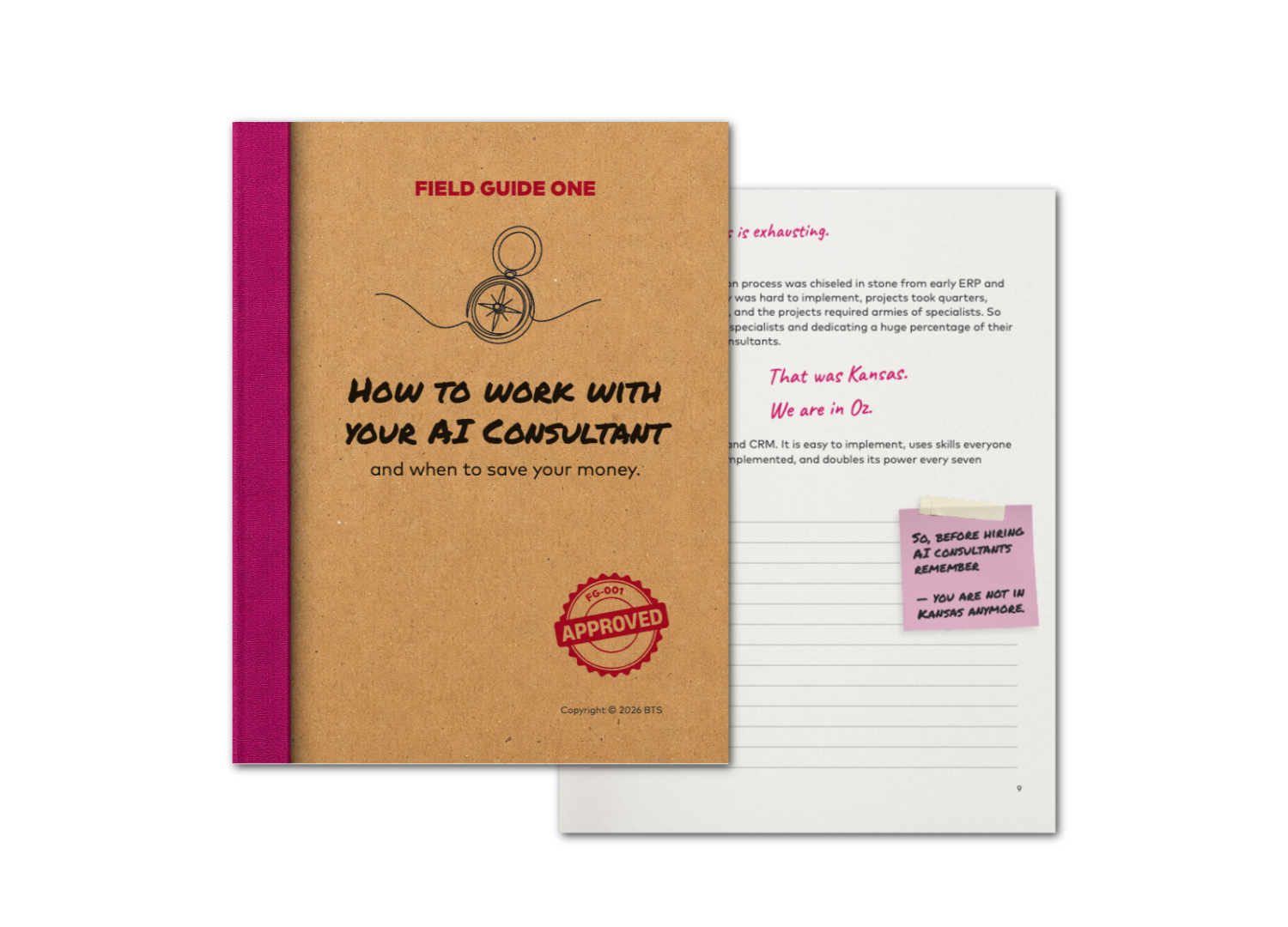
Most of what you would hire an AI consultant to build, your own team should build.
Field guide 001 contains 10 short observations for leaders who are committed, a little stuck, and wondering whether their AI consultant is part of the solution or part of the furniture. BTS wrote it to make the whole consulting profession better, including BTS.
What's inside
- Why AI is the opposite of ERP. The 20-step implementation routine you know from ERP and CRM was built for technology hard to deploy. AI deploys fast, needs no coding, and doubles in capability roughly every seven months (METR, 2025). A two-year roadmap goes live three generations behind.
- The napkin math. A side-by-side of traditional and applied AI rules of thumb. One consultant per user becomes one consultant per 100 users. Consulting at 80% of overall budget becomes under 20%. Consulting at three to 10 times software cost becomes under 1x the cost of licenses and tokens.
- Red light and green light words. A word list for reading a proposal. Assess, analyze, gap-fit, as-is, program office, approval process, end user training. Versus build, coach, hands-on, dive in, simulate, guardrails, days.
- Train, constrain, explain. The three guardrails keeping an initiative safe without killing momentum, plus the poster for your core team wall: find a way, not in the way.
- Agents as contractors. Why an AI use case has roughly the shelf life of an avocado, and when to stop the contract.
- Do not outsource joy. Teams building with AI themselves feel it, and tell their peers. Teams handed someone else's finished build push back.
- The exit question. After six months, and no later than a year: do you trust your people to take AI from here? Yes means your consultant did the job. No means they failed.
What you'll do differently
- Rewrite your scope so consulting spend builds skill in your team rather than in the consultant's.
- Price a proposal against the applied AI benchmarks before you sign.
- Spot slow, expensive workstreams in a pitch from the vocabulary alone.
- Set the exit expectation with your partner on day one.
Blank pages included, on purpose.
Download complete whitepaper
Authors
No items found.
Related content
.png)
Pyramid, kite, or house
AI is removing the work that once built expertise. See how the kite and the house shape your talent pipeline, and why the choice shouldn't be left to default.
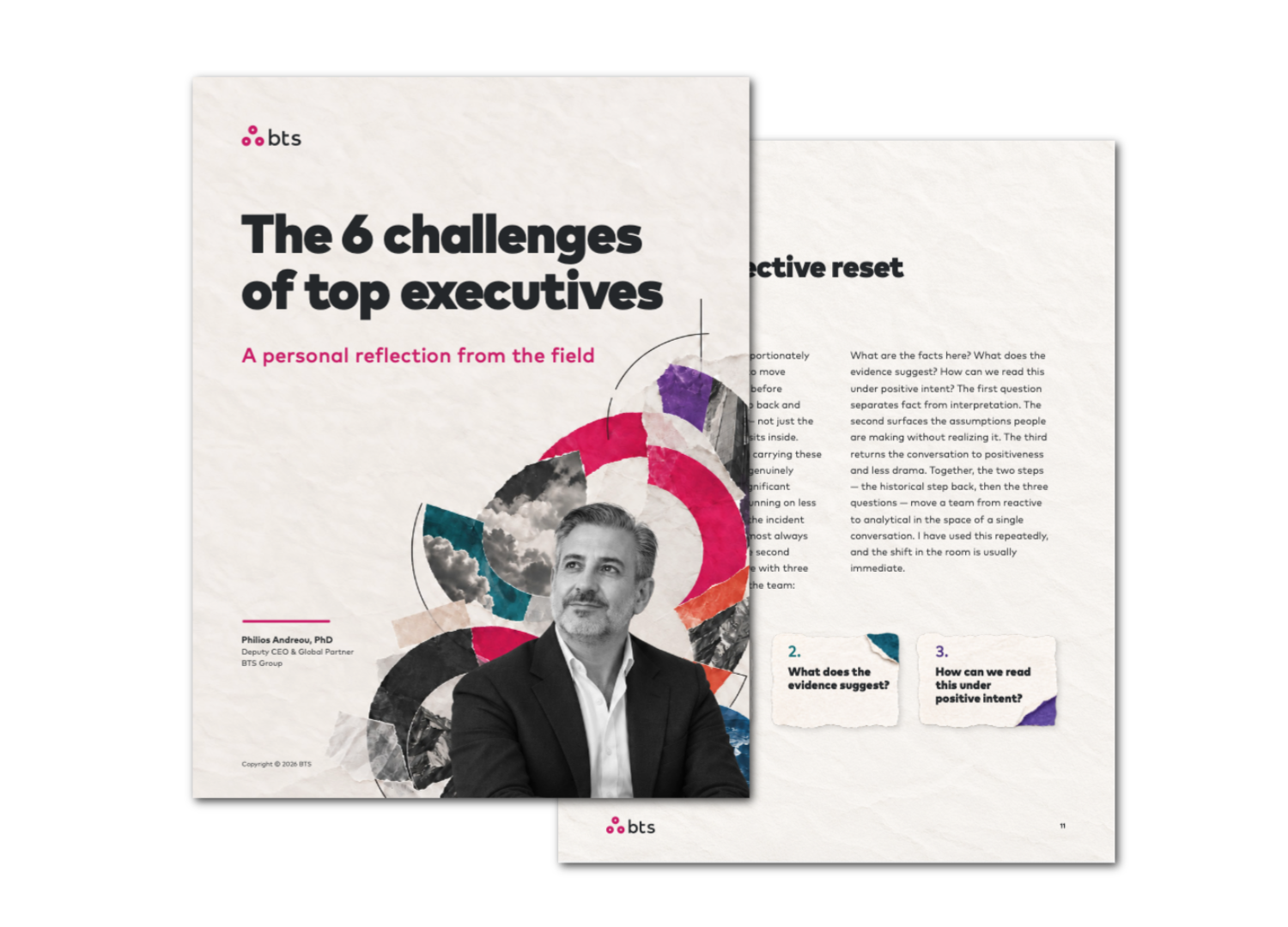
The 6 challenges of top executives
Two decades with senior leaders on four continents point to six people challenges shaping the executive agenda. Philios Andreou shares what works for each, from leading AI adoption to keeping your best talent.
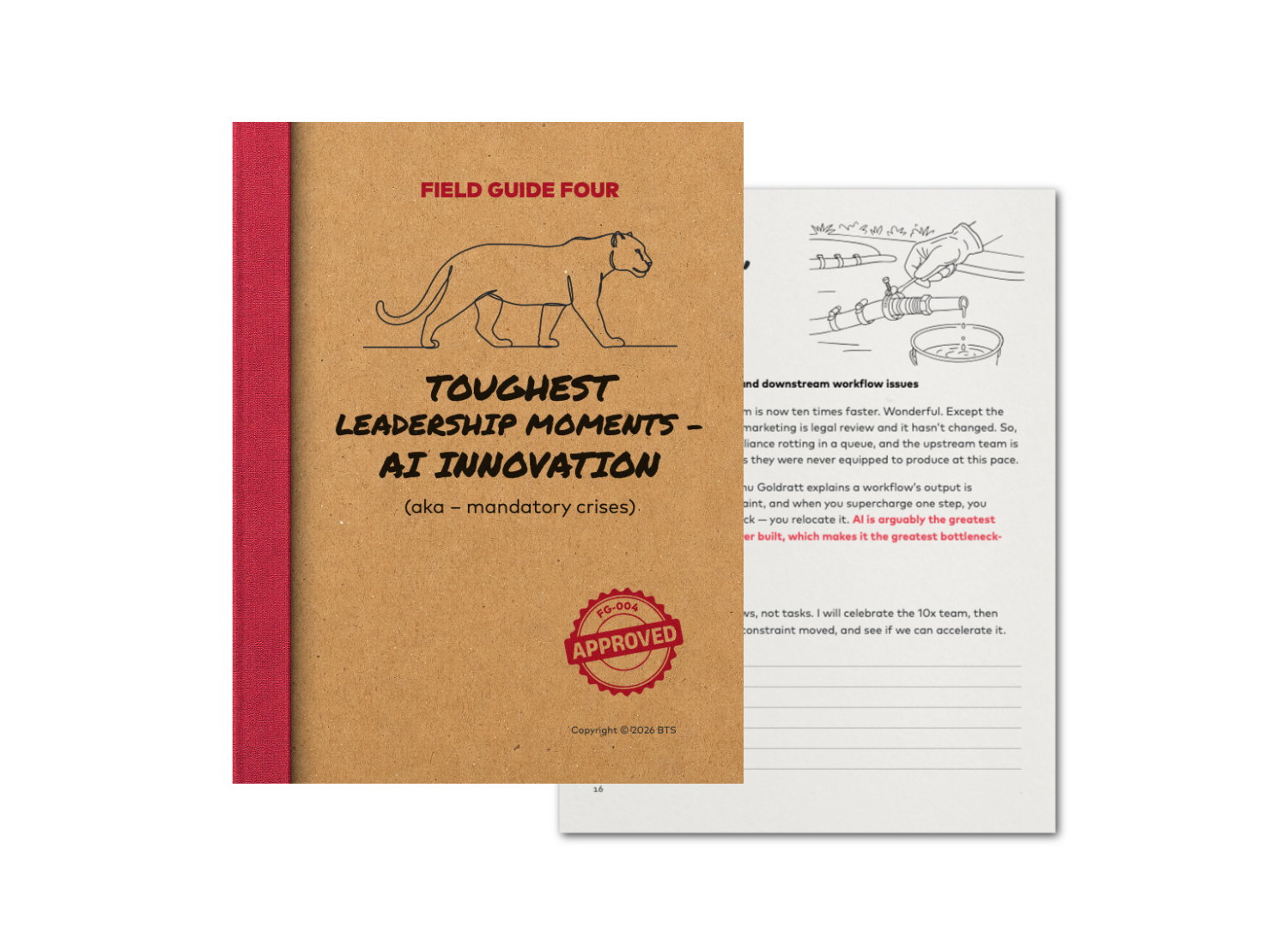
Applied AI field guide 004: Toughest leadership moments, AI innovation
Applied AI field guide 004 from BTS: 11 crises AI leaders face, from job insecurity to runaway token costs, with the mindset to hold and the moves for each one.
Related content
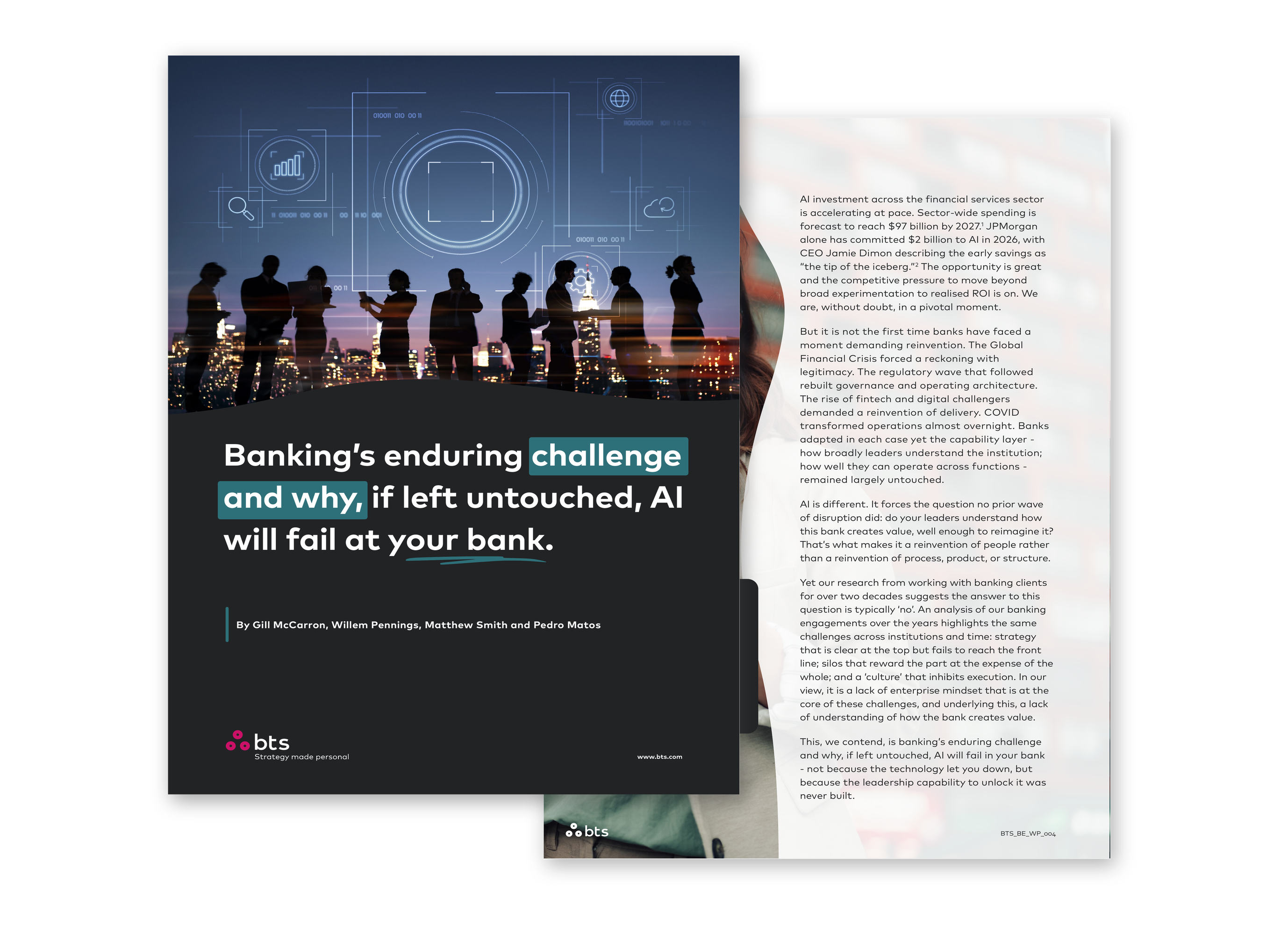
Banking's enduring challenge
Banking's enduring challenge, and why, if left untouched, AI will fail at your bank
Pyramid, kite, or house
AI is removing the work that once built expertise. See how the kite and the house shape your talent pipeline, and why the choice shouldn't be left to default.
The 6 challenges of top executives
Two decades with senior leaders on four continents point to six people challenges shaping the executive agenda. Philios Andreou shares what works for each, from leading AI adoption to keeping your best talent.
No items found.