The science of great conversations

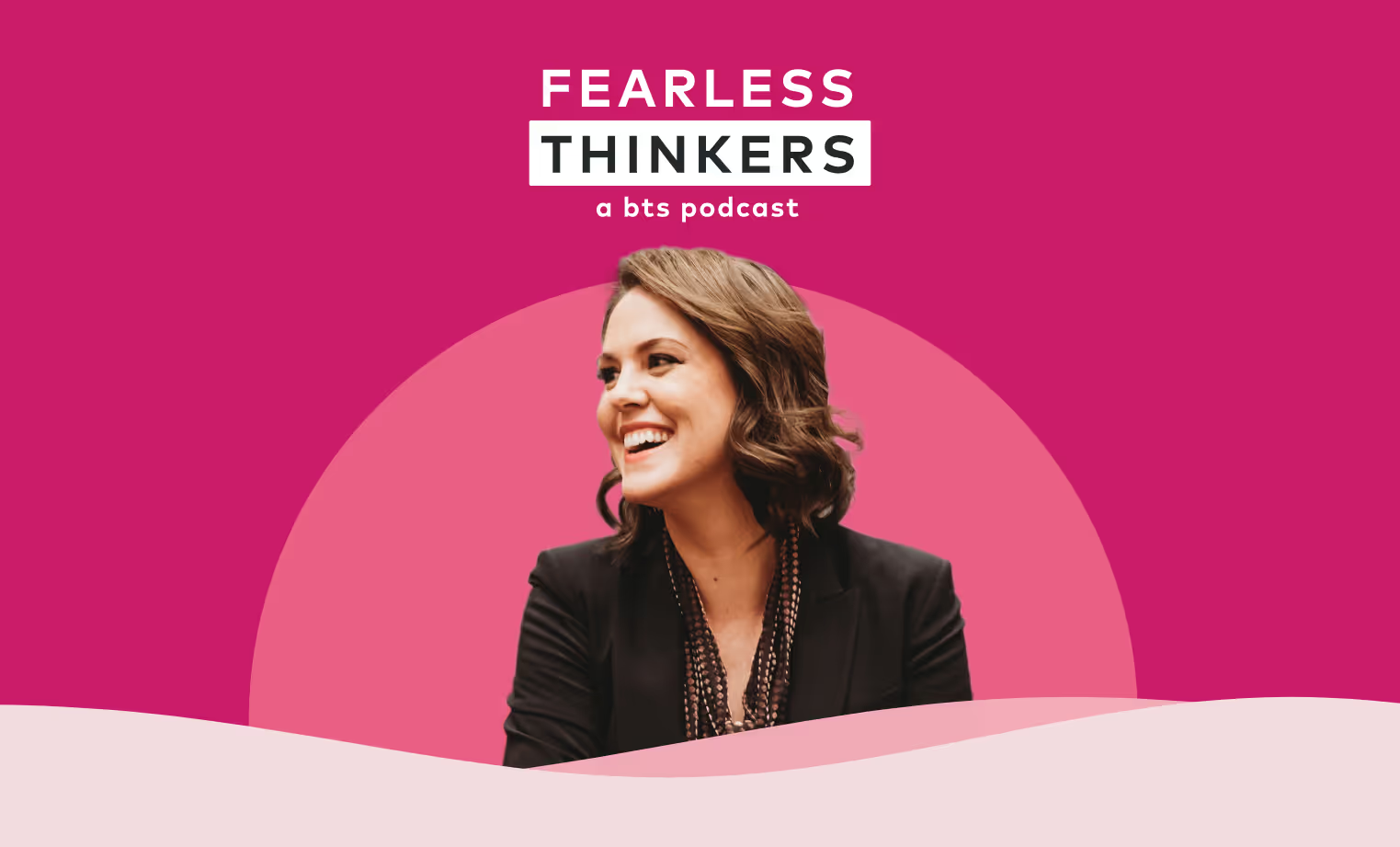
Why do some conversations feel effortless while others fall flat? Harvard professor and author Alison Wood Brooks joins Fearless Thinkers to unpack the psychology behind meaningful dialogue. Drawing from her research and her book TALK, Alison reveals what makes conversations thrive, from the importance of asking good questions to the power of levity, kindness, and truly listening out loud.

Most of us want to lead in a way that matters; to lift others up and build something people want to be part of. But too often, we’re socialized (explicitly or not) to lead a certain way: play it safe, stick to what’s proven, and avoid the questions that really need asking.
This podcast is about the people and ideas changing that story. We call them fearless thinkers.
Our guests are boundary-pushers, system challengers, and curious minds who look at today’s challenges and ask, “What if there is a better way?” If that’s the energy you’re looking for, you’ve come to the right place.
Find this episode on:


.svg)
Andy: Alison, welcome to Fearless Thinkers.
Alison: Thank you so much for having me, Andy. I'm so happyto be here with you.
Andy: I know. And with you, I've been looking forward tothis and I am just so excited about the possibility of having a conversationabout conversations.
Alison: It's so meta, isn't it?
Andy: It really is. It really is.
You know, uh, one of the things that I've, I've just beenamazed in, in, in getting into your work is that you point out thatconversation, it's something that we do from just a, a year or so after birth,but even though it's something we do all the time, it can be a lot more complexthan it appears. And I'm just curious.
We feel like we should be experts, but we're really oftenfar from perfect. Why so often do we underestimate, uh, the intricacies inconversations?
Alison: Yeah, just like you said, it's this, this activitythat we learn how start learning how to do when we're so young a year and ahalf old.
Andy: Yeah.
Alison: Um, and we practice doing it with a huge array ofpartners over and over every day of our lives.
And by the time we get to adulthood, it feels like we shouldbe experts or that we should be perfect or that all of our conversations shouldbe great or fine or easy. And when you start to look under the hood of themechanics of conversation and how they unfold and the unbelievable complexitythat our brains are managing during a live conversation, uh, you start torealize, oh, it's not easy, it's not simple.
Yeah. And of course, even the best communicator, adultcommunicators have lots of room for improvement. And even, even the bestconversationalists are gonna have some that are awesome and some that are just.Fine. And maybe some that are terrible, uh, because when you look under thehood, conversation is really complicated.
Andy: Yeah. What are some of the things that contribute tothat complexity?
Alison: Well, I. You are doing an incredible, it's acoordination game, as we call it. Yeah. Uh, as scientists call it, you'recoordinating many things above the surface. You're coordinating all of theverbal content, the words you're saying to each other.
So coordinating just that is hard. You have to take turnsspeaking and not speaking. Right. Um, you're coordinating how things sound, thetone of your voice, the volume, all of it. The acoustic properties. You're alsocoordinating your non-verbals with each other. How are we moving our faces andour bodies?
You know, right now we're doing it through a littlerectangle on a computer. Um. And beneath all of that stuff that you can see onthe surface, the words, the nonverbals, the, the sounds and acoustics is just avast universe of psychology, um, within each human mind. Um, right. I havegoals, I have beliefs, things that I believe to be true.
I have emotions, I have aspects of my identity that youcan't see on the outside. All of that, you also have, and so even when on thesurface we're talking about a topic like lunch or our blazers or our work, weare also actually talking about all of those other things that are beneath thesurface. We're navi, we're, we're having these gentle, indirect conversationsabout our identities and our feelings and our beliefs.
Andy: Yeah. Um,
Alison: and
Andy: kind of reacting from that space as well. Andsometimes predictably, and sometimes surprisingly, and
Alison: Yes, of course. Yeah. And some of the things areforeseeable and Uhhuh, many of them are not. And you need to react. Every timeI talk, you have to react to that new, spontaneous, immediate context that I'vejust set for you.
Yeah. And that, and our brains are not super computers. Sodoing that fluidly and uh, perfectly every time is not the right expectation.
Andy: You know, there are lots of different types ofconversations that we are involved in, and I know that when you started atHarvard, one of the areas that you focused on was negotiation.
Alison: Yeah.
Andy: And that's kind of a, in some ways, a very structured,particular type of conversation. And I'm curious, having started from thatplace, what is it that, um, uh, prompted you to start thinking aboutconversations more broadly?
Alison: I think the world of negotiation exists. You know,it's a course that's taught at every business school and law school.
It's a field of study in behavioral science. Mm-hmm. That,that has existed for decades, probably because it's so structured. It makes ita little bit easier to study. It makes it a little bit, uh, easier to createframeworks, to understand it. Um, and it's all, and it's really, and we have todo it a lot. We have to negotiate things all the time at work, outside of workin our relationships.
After teaching that, doing research like that and teachingthe negotiation course for, uh, the course itself, probably four or five years,and doing research for maybe 10 years. I started to feel that, well, twothings. One, I didn't feel like our MBA students at Harvard needed to be taughtto be more strategic.
Actually, they're already quite strategic. Um,
Andy: maybe even cultivating an over strength there.
Alison: Right. Maybe we're double clicking on something thatdoesn't need to be double clicked on. Right. And also it felt, it feels like,as you said, is a, it's a structured thing, but it's also a relatively narrowthing.
The main goal in a negotiation is persuasion, right? Like,or, um, it, it's any time two or more people disagree and are seeking to reacha trying to reach agreement. That is a very small sliver of the vastconsolation of motives that humans care about, things that they care about. Um,it matters and we do care about it.
We care about influence and persuasion, but we also careabout connection. Mm-hmm. We care about joy. We care about love, we care abouttrust, we care about privacy. We care about protecting our, our time. Um, and Ifelt like those motives were a little bit boxed out if we're focusing narrowlyon persuasion and influence.
Andy: Yeah. And so you evolved into this study of, of, ofconversation and you teach a course at Harvard Business School called Talk. Uh,you've got a. An amazing book called Talk and, uh, it's, it's not just thetitle of a course and the title of a book, but it's also an acronym, uh, thatthat provides a, a structure for thinking about this.
Perhaps you can give us kind of a high level and then we'lldelve into each of them and explore them a little bit each of the, thecomponents here.
Alison: I have to get something off my chest to start. Idon't like acronyms as a, as a, as a general, as a general preference. I justhave to say that. But I love this acronym because I think it does what we weretalking about, which is it very ambitiously tries to capture the full spectrum,the full landscape of the social world, and sort of all the things that humanscare about and are reaching for in their conversations.
Uh, TEA stands for topics. Topics are the fundamentalbuilding blocks of our conversations, what we talk about, uh, a stands forasking, asking questions. Mm-hmm. Also answering them. Uh,
Andy: okay.
Alison: Yeah. Um, L is for levity and levity as we'll. C isabout not just humor, but also also warmth. Really any mood that, uh, tug usaway from boredom and disengagement, which is a secret killer of conversation.
Um, and the K stands for kindness. Um, and kindness weattack quite concretely. I think everyone learns as children to hold upkindness as a virtue, an aspirational virtue. But I spent my whole lifewondering, well, but what do kind people actually think about and do? Like howdo we, how do we be actually kind from one moment to the next?
And I think. Science and, um, this course that I'm teaching,we, we've come to some pretty concrete, um, learnings about how kinder peoplebehave with others in, in conversation. Uh, and so, and in a way, all of themaxims, the TAL topics, asking levity, they're all sort of, um. Buildingtowards this virtue of, of kindness.
Andy: Yeah. You mentioned the science, and I know that oneof the things that's kind of amazing about what you've done in talking aboutconversations, it's, it's not just theoretical, it's grounded in, in empiricalresearch, so forth, which is just so interesting. And, and one of the areasthat I was surprised a little bit about was in terms of the T topics, becauseof course those are the building blocks.
That's the stuff we're gonna talk about.
Alison: Mm-hmm.
Andy: Uh, but, uh, you, you talk about the importance ofactually preparing ahead of time, and I could imagine a lot of people wouldfeel that's really awkward. Uh, or aren't I gonna get stiff if I'm doing that?How, how can I have a natural conversation if I've got a whole list of thingsto talk about?
Alison: So we've asked thousands of people about theirinstincts around. Topic prep. I also always ask my students every semester, uh,first I make them prep topics, and then I ask them, how annoyed were you withme that I made you prep topics? Um, and so between my students and thousands ofresearch participants, it is very clear that there are a lot of skeptics abouttopic prep.
Many people feel like they don't need to prep topics becauseespecially in close relationships, they'll just know what to talk about. Um,and two, if they do prep topics, they people worry that it will makeconversations feel overly scripted and stilted and wooden or insincere in someway. Yeah. Um, it, it is linked to this idea, uh, this aversion to topic preplinked to the idea of the myth of naturalness, um, as sort phrase.
I mean,
Andy: some people aren't just naturally great at this.
Alison: Well, it, it's so funny. It's, it's almost like we,we see other people who are great at conversation. We see them beingcharismatic. We see them, you know, hosting amazing podcasts. We see whatever.We're live, we're eavesdropping all the time. We're seeing wonderful moments ofconnection and romance and professional success driven by conversation and it.
When we see that happen, you kind of feel like, oh, thathappened easily for them or spontaneously because they're very talented andskilled and you kind of feel like, oh, I should, I should be the same way.Like, conversation is spontaneous and I need to just get, become more quickwitted and more and smarter and know more things and smoother.
Um, but what you don't see when you watch other peopleinteract is all the effort, the private effort that is their little duck feetpaddling under the surface during the conversation, but also those duck feetpaddling under the surface for their entire life. That where they werebuilding, potentially building conversational skills that led them to themoment when they could actually deploy them and be great at it or, or fumblingor whatever they're, they're doing.
Um, and so we just, we put a lot of pressure on ourselves tobe great. And it relates to this idea of topic prep because, uh. Literallyanything you can do to offload the complexity and cognitive effort that'srequired during a conversation is going to be helpful to you. And topic prep isso obviously one of those things.
If you can think ahead before your eye to eye with somebodyand lost in the chaos of the moment, you can think ahead, oh, what has beenhappening happening in their life recently? Or, what are we supposed to beworking on together today? Or, what's the, what's the most important thing weneed from this meeting?
Or, oh yeah, how's their kid doing? They were sick last timewe were talking. I should ask them how they're doing. Any of that sort of workthat you can do before the conversation starts makes the conversation so muchsmoother, easier. You're more likely to land on topics that are actuallyproductive and enjoyable.
It pushes you to focus on your partner more than yourself,makes you feel as anxious. 'cause when you. Encounter those moments when youdon't know what to say, you'll actually have an idea of what you can say. Um,it also reduces blurting if you think ahead a little bit about stuff you don'twanna raise.
Oh,
Andy: the do's and don'ts on the conversation.
Alison: Yeah. There don't, the topic part is both what do Iwant to raise and what don't I want to raise? And so it, it reduces, um,unfortunate foot in mouth moments in, in our conversations too.
Andy: Well, how much prep is, is really required. 'cause Icould imagine some situations where like, if you're gonna have an interview andof course that's a very special kind of conversation, you might prepare a lotthere.
Alison: It's a great question. I actually think that's thebest objection to the idea of topic prep is saying like, yeah, yeah, I getthat. It sounds awesome. It will help me, but I don't have time. Yeah, I don'thave, I don't have extra wiggle room in my day, in my life and my mind to bedevoting to prep. Here's the really beautiful part in our studies, we randomlyassign people to prep topics or not.
And then we can play around with how they prep topics. Andone of the most exciting things that we found is that you can give them shorterand shorter windows of time to do it. Even when we give people only 30 secondsof topic prep time, you still see these very meaningful increases in outcomeslike enjoyment and productivity and lowered anxiety, all of the things that wecare about during the conversation.
So the argument of, I don't have time for this. I wanna pushpeople on. Imagine that you see a friend, like, let's imagine you're at work ina big building, long hallway, right? You see, I see you, Andy, at the end ofthe hallway, right? I know I'm gonna get to you in 10 seconds.
Andy: Right
Alison: in those 10 seconds. I can push myself to thinkabout you and what we might talk about.
I can think. Oh yeah. Um, I know Andy went to Dubai recentlyand was working on some really important stuff. I'm gonna ask him about that.I'm gonna remember to ask him about that.
Andy: Yeah.
Alison: Um, I know he has a really wonderful family andwonderful son. I'm gonna ask how his son is doing.
Andy: Yeah.
Alison: That will make the conversation better even in, in10 seconds when you greet each other in the middle of that hallway.
Um, and it, and of course it's not everything is, needs tohappen immediately before. I like to keep, um, notes in my Google calendar. Um,yeah. For all of the upcoming conversations I have, and you can populate yourlist of topic prep for people as it occurs to you. Right? Like catch thosebutterflies in your butterfly net whenever it pops into your, into your mind,not, not just in the minute before you see them.
Andy: One of the things I really like about what you'repointing out there is that for a lot of us getting. Um, mire down in the morassof, of small talk. Yeah. Uh, can be really dreadful. And if you've, if you'veoffloaded some of that cognitive load. In terms of, of, of getting theconversation started and even as you're saying, taking 10 seconds or 30seconds, uh, to think about, well, what might I talk to Alison about, about hersister, about her kids, or, or something like that.
It, it at least lets you avoid talking about the weather orweekend plans,
Alison: but we don't need to avoid the weather and weekendsactivities entirely. Yeah. Right. The mistake most people make is they staythere way too long. Okay. Um, a beat one, beat, one turn about the weather isenough to do this social ritual to make it feel like, oh yeah, we're having aconversation now.
The mistake people make is not pushing past that quitequickly. Topic prep will help you do that so we can have a beat about theweather. It is beautiful here in New England today. Beautiful. Um, how's yourson? Is he still in New England? Right? Like I, if I have thought ahead aboutthat, it helps me move away from the mundanity of the weather.
To something more meaningful, uh, quite quickly. The mistakepeople make is like circling the drain, not saying anything exciting,meaningful, relevant, uh, thought provoking for too long.
Andy: Yeah. You know, you, you were just, uh, asking aquestion, how's your son? Is he still in New England? And, and in making that,in putting that question out there, it, it kind of gets us to the second ofthe, of the principles and, and talk and asking.
Alison: Mm-hmm.
Andy: Uh, and you were asking a question there as a way ofraising a topic, but give us a little bit of a sense of what the, the range ofthe considerations are around asking.
Alison: Yeah, questions are asking questions is the mostcommon way that people switch topics. Uh, but it's not the only way to switchtopics.
Mm-hmm. I could just start talking about something wild thathappened to me recently. Yeah. And that's fun too. Yeah. Um, but questionsoften help us switch topics. They also have many other functions. They, uh, forexample, follow up questions also help us stay on topic. Mm-hmm. And divedeeply into it. A follow up question is where I ask you some sort of probingor, uh, so another thing about what you've just said, um, anything you've justsaid or even something you said earlier in the conversation.
So question if topics are like these fundamental buildingblocks of conversation questions are like the hands that pick up the blocks andmove them around. And poke at them and help us figure out what's, what isbeautiful about this block? What is interesting? What, is there any glitterinside this block?
What can we uncover about it? Um, that's what questions do.And you know, there's a lot of conversation about the importance of perspectivetaking. Uh, turns out humans are not good at perspective taking. We just relyon our own experiences and project them onto other people and say that we'retaking their perspective because it's hard to guess what is it on someoneelse's mind.
It's impossible to know what they've experienced in theirlife, accumulate cumulatively, and that day. Um, the only way to actuallyunderstand someone's perspective or learn about their per perspective or gettheir perspective is to ask them. Hey, how's your day going? What happenedearlier today? Anything weird?
Anything scary? How are you feeling? Um, what are you upsetabout? What are you excited about? It's the most direct pathway to actuallyenacting perspective taking.
Andy: We, you talked about questions as and, and askingquestions as this way of exploring topics, and that's a rosy picture on, onasking questions.
But I think there's a dark side here too.
Alison: There are, there not all questions are great. Um,when I think about good question types and bad question types. On the bad side,it's, it's almost less about, um, the question itself and more about thepattern of turn taking that unfolds around the question.
Andy: Okay,
Alison: so one example is what we call Boomer asking, whichis not about boomers, Andy, it's not about a generational thing, it's a boomer,it's a reference.
Oh goodness. We love all humans of all ages. Um, it's abouta boomerang. So it would be like I ask you a question. Let's say I ask you howyour weekend was and you give me an answer and maybe you even share somethingreally lovely like, oh, I went and picked apples with my wife.
Andy: Yeah.
Alison: And instead of following up on that with you, I'mlike, let me tell you how the apple orchard went with my kids this weekend.
Right. Immediately. Right. So it's the, the arc of theboomerang is coming right back to me and my perspective Right. Very, veryquickly. Um, there is, it's important to achieve a back and forth, a ping pongness of mutual sharing, but you cannot do it immediately after someone hasshared something with you.
It's insufficiently re responsive to them and it makes themfeel like you didn't actually wanna hear their answer to begin with. Even ifyou, even if, even if in asking you about your weekend. I did actually wannahear, um, but I'm gonna make you feel like I didn't listen to your answer.
Andy: When you were talking about the acronym, you weretalking about the T, the A and the L leading up to the K.
And I can see there a connection between the asking and thekindness. Are you, are you really focused on the other person in terms of whatyou're asking questions or not?
Alison: And it, for sure, um, though I will say questionasking is so powerful. That even if in a fleeting moment you think to yourself,I should ask a question right now and ask Pardon.
And by asking that question, it's not really in the sincerepursuit of learning and curiosity and gaining wisdom, but really just to keepthe conversation alive or because you feel a sense of obligation to do it.
Andy: Okay.
Alison: That still is an act of kindness. You're saying it'sa way of saying to your partner, I care enough about this conversation goingwell, I care enough about this not being awkward for us and for you that I amwilling to offer you this olive, olive branch of a question.
Yeah. Even if I am not. Dying to hear answer.
Andy: I'm gonna keep this conversation going. We're gonnakeep it on life support one more step.
Alison: See,
Andy: see where I can go.
Alison: Right. I'm beginning to engage with you in it.Right? Right. Like, I care so much about this being good for us, that I'mgonna, I'm gonna do this, asking behavior.
Andy: Now, the the other thing that I, I recall you, uh,sharing with me at one point is there's, uh, if there's all of these thingsabout asking questions and then there's Boomer asking or those sorts of things,there's the far end of the spectrum, which is folks who don't ask questions atall. I know. And the impact that has on a conversation,
Alison: I know we call them Z Qs, zero question askers.
Uh, this is a phrase from a lovely woman that I'veencountered in my work. Uh, her name's Rachel Greenwald. She's a professionalmatchmaker. She did this project where she did exit interviews from Uhhuh,dates, Uhhuh. Why did people want to go on another date with somebody? Or whydidn't they? So the sort of good and the bad and, um, so often the number onereason people don't wanna go on another date with someone is because they werea zq or, or, or not, or an insufficient question asker,
Andy: right?
Alison: Um, ZQ kills the conversation. You should really, nomatter what your goals are, no matter how competitive or conflictual or what'shappening, you really should never leave a conversation having asked zeroquestions. It's, it's almost universally a sign of conversational failure.
Andy: Well, can you go to the other extreme?
Could you ask too many questions?
Alison: That's the natural, that's the right follow-upquestion as soon as you start saying, okay, well we all need to ask morequestions and we're gonna try and avoid Boomer asking, we're gonna try and askmore follow-up questions. Um, is there a tipping point? Yeah. So like, whendoes many questions become too many questions?
Andy: Uhhuh,
Alison: as with all things that are context dependent, itdepends. Um, okay. In co, in very cooperative context or conversations, let'ssay dating mm-hmm. Where you're, especially early on in a relationship whereyou have so much to learn about each other. There we see no tipping point. It'slike you can't possibly ask too many questions.
The people who ask more questions do better on the date,regardless of gender, regardless of the content of what they're talking about.It's just like you're, you and your date partner are so aligned and you have somuch to learn that you couldn't possibly overdo it. Um, on average, um, in. Butthat starts to be tempered when you think of different contexts like, uh, ourgoals aren't aligned, or maybe we're negotiating and it's very tense.
And if I were to just keep berating you with questions, itstarts to feel interrogative and like, uh, like I'm trying to get informationout of you that I'm gonna use to exploit you in the same way we were sayingabout gotcha questions, right? You're, you're, you might start to question mymotives of why am I asking you these things?
Um, and that's where you need to, you need to be able toread the room and figure out like what is it, what's an appropriate amount ofquestions. Even, even in conflictual situations, we have data fromnegotiations, right? Sales calls, which boy talk about is there any moreannoying context and or conflictual than a sales call.
Um, even there, we do see a tipping point, um, right. Wehave the data set of like, uh, I don't know, 2000 sales calls and 30 minutesales calls. When you get to the point where the sales person is asking morethan three questions per minute for the entire call, this is quite an extremeof question asking. Um, you do see a, a, a, a sort of curve linear point wherethey, the, their partner likes them less and it's less effective.
But still, even at that very high end of the question askingspectrum, those levels are still significantly higher than asking too few. The,it's, it's quite clear that even in these conflictual situations, um, askingnot enough questions, is the more common and more detrimental problem aren'tmaking them feel like you're going to avoid them.
Like they're, like you actually care about them and wannaunderstand their perspective and their needs. Um, one flavor of question askingthat helps us do that is open-ended question asking as opposed to, you know, asopposed to like, uh. Were you late to the meeting? Uh, were you driving yourcar? Was there traffic?
Um, which feels very accusatory. Open-ended questions. What,what was your morning like? What was the traffic like today? And even withinopen-ended question asking, which solicits a lot more information from yourpartner and feels less accusatory. Even within that, we find the wordingmatters. So starting a question with what, uh, what are you excited about?
What do you like eating for breakfast? Um, maximizes bothinformation exchange and likability and relational outcomes. Questions like,why were you late? Or, um, how did you get here? The why questions can feel eaccusatory and how questions are easy to answer, but they're less informativeon average. So these open-ended, what questions can be quite helpful.
Andy: That's so interesting though, why questions can feelaccusatory. Uh,
Alison: why do you think that's interesting, Andy? Why areyou shaking your head? Why are you skeptical? It's like these, it's, it's toodirectly trying to access your motives and it feels, it puts people, uh, makesthem feel defensive.
Andy: One of the other things that, uh, that, uh, you'vealso pointed to in terms of the, of the acronym that you, you love to hate or,or hate to love of talk.
Alison: Oh,
Andy: no. Is this idea?
Alison: No, I love to love talk. I just
Andy: love Okay. Other, but acronyms themselves are not so,not so great.
Alison: Yeah.
Andy: Um, levity, now levity on, on the one hand, uh, thisconversation just feels wonderful in terms of having it. I know that in somecontexts people are really, really concerned about whether humor is appropriatein a business context, and they can seem unprofessional.
Alison: Yeah.
Andy: Um,
Alison: yeah.
Andy: What is it that that's important around levity interms of engaging conversations and why should we focus on that? What does iteven mean to have levity in a conversation?
Alison: Yeah. Um, levity, I think it's easy to very quicklythink of humor and laughter. Mm-hmm. And that's obviously part of it, butlevity is broader than that.
Mm-hmm. Levity. Mm-hmm. Is any moment in conversation thatpulls you away from low arousal, negative feelings of. Boredom, disengagement,sadness, depression, these low energy, negative emotions that often lead peopleto disengage. Mm-hmm. From a meeting or from a conversation, or even from arelationship.
Mm-hmm. Um, it's so easy to think of conversations that failbecause they're too explosive, they're too hostile, too angry. These sort ofhigh arousal
Andy: Right.
Alison: Uh, emotions. What the Well, it's,
Andy: it's flashier.
Alison: It's flashier. It's more memorable. Right. It's moresalient. Um, it's a bigger headline, you know? Right. But it's actually morecommon for a conversation to fail with a silent sleeping pill.
Like, we all know this. We all see and hear really boringconversations all the time, that we don't leave feeling energized and, um. Youknow, healthily provoked from, and
Andy: they almost starve to death.
Alison: They starve to death. And then it's in a missedopportunity. Right. Like, every time you're with another person, it's a chanceto learn from them and get excited together.
Mm-hmm. And if you're bored, you're missing thatopportunity. So levity moves, whether it's humor or mm-hmm. Novelty. Like justchanging the subject or just warmth. Mm-hmm. Pulling people back in, makingthem feel engaged and safe. You know, compliments, expressing gratitude,focusing on them after you've been, you know, focused on yourself for a while.
There are all of these moves that just help snap us back in,make us lean forward towards each other. Mm-hmm. Again, to be able to. Achieveanything else. And I think that's what I, that's the top line thing I wantpeople to think of when they think of conversational levity. Yes, it makes, itactually makes us more happy.
It makes us more productive and joyful, and that mattersunto itself, but it's not just in service of happiness. We have to be leaningforward and engage in order to achieve any of our goals. Even the very serioushard ones. If I'm disengaged and bored and disinterested, we cannot negotiate aproblem. We cannot solve, make a tough decision.
We cannot brainstorm important ideas. And so levity is asort of end to itself, but also a stepping stone to Yeah, all the things wecare about. Unfortunately, the lack of it is just a rampant, pervasive problem.Um, in especially live. What's so funny is sometimes we don't realize howcommon a problem it is because so many of the conversations we consume frompublic discourse have been edited to maximize levity, to maximize engagement.
The, the pauses between turns are taken out, the boring bitsof the conversation have been edited away. And so everyone seems so interestingand engaging because they're incentivized to put out public conversations thatare engaging. You don't realize, oh, so many of the things that we're talkingabout privately at home and at work
Andy: right,
Alison: are very boring.
Andy: Yeah. They're, they're curated,
Alison: but we can make our real conversations, we can makeour reality, uh. Resemble it more closely it, because we have, you know, agencyover using more levity. Right. Deploying more levity in our conversation, Ialways start this part of the course by saying like, uh, guys, I'm so sorry.
I can't make you funny. If you're not, if you're not funny,I'm not. I may not be the one to make you more funny, but the good news is youdon't have to be funny. That's not the point. Yeah. And in fact, trying to befunny is kind of the wrong goal. Yeah. Trying to be funny or seem funny is aself-interested thing and focuses yourself on this.
The better frame is how do I make every interaction fun forYeah. Fun,
Andy: not funny,
Alison: fun, not funny. Yeah. And even if you're not greatat making it fun, you can be really good at making it feel safe and warm andengaging.
Andy: Yeah. That's what now talking about engaging, one ofthe things that I'm curious about now is thinking about kindness.
Alison: Mm-hmm.
Andy: You've talked before about how that's a matter ofconnection to the other person, but what is it that we can do to really signalthat the other person's really being seen and heard? How can we reinforce that,that connection and, and the kindness?
Alison: Yeah. I, I, in, in my class, I define kindness ascaring about other people, and I don't know if I can make my students careabout other people more.
We just assume that they do hope that they do. But thesecond piece of it is showing it so care about other people, but also show it.And, and for whatever reason, many of our instincts and conversation lead us tofail to show other people. Mm-hmm. That we're listening to them, that we careabout them, that we wanna support them even when we disagree with them.
And so mo much of it is, seems sort of simple, but it's thestuff that we forget to do, especially when, especially when our relationshipsare, conversations are tested. Or when things get tense. And so we work on twothings. The first is listening, and the second is, uh, receptiveness toopposing viewpoints.
So people who believe things that are quite different thanwhat we believe.
Andy: Yeah.
Alison: The listening part of it is, and very importantfirst step. Uh, we all know about active listening. It's like this thing that'sbeen in the zeitgeist for decades of smiling and nodding, leaning forward eyecontact, make convincing your partner that you're hearing them.
The, the problem with active listening through thesenonverbal cues, Uhhuh, is that even here as we're talking digitally, you can besmiling and nodding, and you're actually very busy thinking about the nextquestion that you might ask me. And so you're, maybe you're not listening thatcarefully to what I'm saying.
Um, it's really important to find grace for that reality.Mm-hmm. Uh, in some of our research, we have found that people's minds arewandering. At least 25% of the time during conversation, and we suspect that isa map.
Andy: You're not listening to me a hundred percent of thetime.
Alison: It, we suspect that for some people, especiallypeople who are very creative or have attentional issues, it could be upwardsof, you know, 75% of the time your mind is actually wandering away from theconversation and it's not a problem.
That's just how our brains were built and right. Often ourbrains are doing really amazing things to tie ideas together, to think aboutconnections to work so hard to refocus our attention mm-hmm. On the personwe're listening to. Um, so that's kind of like listening, the, the, thenodding, the smiling, the eye contact, leaning forward.
That's sort of listening 1 0 1, right? That's the basic,like, yes, you need to try to listen to other people and use nonverbal cues.What becomes advanced to listening is using your words to show someone thatyou've put in the hard work to hear them. That sounds like repeating thingsthat you've heard them say, affirming the things that you agree with,validating the feelings that they're expressing to you.
Uh, paraphrasing what multiple people have said during agroup conversation, asking follow up questions. 'cause you can only do that ifyou heard them in the first place. Um, using callbacks. So like referencingback to something they said earlier in the conversation or earlier in yourrelationship. Even better, um, long-term listening.
Andy: Yeah. You, you listened and remembered, right?
Alison: Yes. Oh, callbacks are, are just a genius move. Imean, if you can listen and remember to bring it up later, like you've won theconversation game, you've won the relationship game, uh, you're doing great. Soall of these things you need to say out loud and for whatever reason, whenwe're in the chaos of conversation, right?
We forget to say those things out loud. Um, and we need, weneed to say them. The people that we think of as sort of charismatic and goodconversationalists, often this is what they're doing. They're, they're puttingin the effort to hear people processing what they say and then expressing itback to them in some way meaningful way that like, Hey, I heard what you saidabout this, that thing that you experience, or that crazy belief that you hold.
Like, I wanna hear more about that. Tell me more. Um, it'sjust, it's sort of the secret sauce of, of the listening.
Andy: So it's a, it's a matter of, of being responsive inyour listening, not just attentive in your listening. That's
Alison: right. Attentive, then responsive and, andultimately sort of understanding and receptive.
That's what pushes you, uh, to the next level is you'rebeing responsive. You're showing, you're listening out loud, you're showingyou're listening even when, or especially when things get hard. Um, and that,and in that moment, not only do, do, you need to be sort of attentive andlistening, but also like deeply nonjudgmental, deeply open to their differingviewpoint.
And that's very, very hard.
Andy: It's so hard in those moments to be curious. I knowwhen you, when you want to, you know, storm the battlements and defend yourposition, but really staying open to the other person's point of view,
Alison: we have such an ingrained instinct to win and to beright and to be knowledgeable.
Yeah. And to be credible and. Yeah. To believe that what webelieve is true and correct. Yeah. Um, the longer I am a scientist, the, themore I realize, like, nobody really knows anything with certainty.
Andy: Yeah.
Alison: How foolish of us to talk to each other like we do.And the only way to figure out what other people actually care about, what theyactually need, uh, is to ask them and to really listen.
Andy: I wanna explore group conversations for just a minuteif we could. And what is it that makes group conversations different fromone-on-one conversations?
Alison: Yeah. We're now in territory where I, I feel likeyour expertise outstrips mine, Andy, um, group conversation is a, it's veryeasy to think of group conversation and one-on-one conversation as, um, thesame task because it requires talking and listening.
Andy: Right.
Alison: But when you look at the mechanics of it, as soon asa third person pulls up a chair, it is a categorically different task all of asudden. Mm-hmm. In a one-on-one, both people are jointly responsible forkeeping the conversation alive. You have to take turns, you have to listen, youhave to keep it going.
And if you don't, it's over. Um, it's just one persontalking at a wall. As soon as a third person pulls up a chair, one person couldbe completely silent the entire time and they're still part of theconversation.
Andy: Right.
Alison: That's a very different dynamic. All of a sudden,there's a new calculus to figure out who should talk when, who should be takingthe baton?
How do we coordinate that and. There's now many morerelationships at stake, one-on-one. There's one relationship. Every time a newperson pulls up a chair and joins the group, the number of relationshipsactually increases exponentially because it's all of the people, all of thecombinations of all the people in the group.
And so navigating that comple complexity is so much more, somuch more of a coordination problem even than, than one-on-one, uh,conversation.
Andy: You know, you, you've talked about the goals inconversations, uh, being information exchange and relationship as differentdimensions. It feels to me like when you're talking about a group conversation,there's almost a third dimension that that drops in there, which is the rolethat the various people are gonna play in that conversation, because that'spart of the, the way that you're, uh, you're gonna navigate, uh.
Uh, the space there.
Alison: That's a very nice point. That's exactly right.There's also, and, and this is true one-on-one, but also in groups, there'salways a secret access of time. Mm-hmm. Like, we, we care about this thing. Dowe care about it now? Do we care about it tomorrow? Oh yeah. Do we care aboutit? Did we care about it 30 years ago?
Um, and so in and in groups, I think that plays out quite,um, poignantly because you can sequence the arrangement of the people in thegroup. Yes. Like, one of the things I often think about is like, what, what doI do that helps in group conversation? And my answers are often, um, well, Itry to connect with people one-on-one first.
Right? Right. Like, or the group thing even happens. Youwanna be coming from a place of love and trust in your one-on-one relationshipsand one-on-one conversations. During a group conversation, you can, as a goodsteward or even a good group member, you can help shape the structure, thesequence. Of the groupings.
Um, so you can break groups into subgroups. You can havepeople ref take a moment, reflect privately, pair them up, make them formgroups of four, um, and then rejoin as the whole group. And I think a goodleader. I don't know if the word leaders are anything but good steward, um, ofa group conversation should be thinking about how to structure theconversational patterns and group sizes to meet the needs of that Yeah.
Of that meeting.
Andy: And if, if the leader's not doing that, what's to stopsomeone else who's there from taking the initiative? Leading from where theysit.
Alison: That's right.
Andy: And asking the question or making the suggestion.
Alison: And there, like you said, these roles. I mean the,yeah. There are so many opportunities. If you're good at scribing on thewhiteboard, if you're good keeping time, if you're good at remembering whateach pastor should be about.
Right. If you're good at asking questions, these are allroles that even people who on the surface don't have a lot of power.
Andy: Yeah.
Alison: They enact those roles. Those are so helpful to thegroup that you're sort of gonna earn status. You're, you're claiming yourpower. Yeah. The little power that you might have claim it.
I mean, the person writing on the whiteboard sure. Has a lotof power. You're gonna, you can write down That's right. What you think isimportant and what the
Andy: group, it's the power of the pen there. Right. Power.Exactly.
Alison: Yeah.
Andy: Yeah. You talked about connecting with people ahead oftime and, and building bonds of, as you put it so nicely, love and trust.
Alison: Mm-hmm.
Andy: What, what are your thoughts about the, the interplaybetween conversation and trust?
Alison: Hmm. Well, when you talk about what are our goals,you mentioned there are like two axes that I think about that I think everybodyactually should be thinking about. One is informational. High informationalgoals are about accurate information exchange.
Low informational goals are like, I wanna keep a secret, Iwanna conceal information or don't have to do with information at all. So like,I wanna protect privacy, I wanna have fun, I wanna rest, I wanna feel peaceful.The other access is relational. Low relational goals are things that I, I need.I, I need to leave this conversation 'cause I'm tired.
I wanna make a good impression on you. I wanna persuade youto agree with me. The high relational goals are things like, I've hurt yourfeelings and I wanna make you feel better, so I'm gonna apologize. I wanna havefun together. I wanna entertain you. I want you to not be awkward. I wannalearn about you.
I want you to feel heard. I want you to feel understood. Iwanna learn from your expertise. All of these things that serve your needs. Andus as a pair, as a as, as a, as a group. Collectively, we live in all four ofthose quadrants. All of those needs matter. But when we think about buildingtrust, it comes from a sort of relentless focus on the high relational side ofthe map.
It's a, it's how do I actually. Convince people to trust meor how do you convince people to trust you is like sincerely caring about whatthey need and giving it to them.
Andy: Yeah. I, I can see that expanding into also givingpeople a greater sense of belonging in the group too, when they're engaged thatway with that level of respect and care and, and, uh, and people being curiousabout what they could contribute to the conversation,
Alison: because you truly do care, right?
Like you mm-hmm. Recognize that every human being is equallyvaluable and that you have things to learn from them, ideally throughconversation and question asking. And if you can make someone feel that, thatyou'll earn trust with each other and give them a sense, the gift of, a senseof belonging of that is, that is true.
It's not performative. It's like you really do want to learnfrom them.
Andy: Yeah. Now you talked about, uh, just a, a few minutesago about, um, people kindness being particularly important when you disagreewith someone. If you, if you're coming from different places, what would bethe, if you're gonna give, uh, a nugget of advice to somebody, negative adviceabout how to approach a conversation where you disagree with somebody, what,what might you point to
Alison: focus less on persuading them?
Focus more on learning their perspective. We have such aprofound natural tendon tendency to want to be right and to persuade people toagree that we're right or agree to our point of view. It's incredibly strongforce within all of us. The amount, the, to the extent that you can push that.Drive away and instead truly try and learn not only what other people believe,but why they believe it.
Mm-hmm. Learn from them. The relationship's gonna be better,the conversation is gonna be better. You're actually gonna learn from them. AndI ironically, you will ultimately be more persuasive because you will beinvaluable relationship the way persuasion works. It's very rarely that I'mgonna change your mind dramatically within the boundaries of one conversation.
It's more like maybe if we have a great relationship and wetrust each other and we interact productively over time, you may bend to thegentle pressure of my differing view. You may come to see my. Position moreclearly and come to believe the evidence that I'm citing to support that viewSlowly over time, but almost never within, you know, one sweeping moment whereyou make declare some incredible point of view within ma such amazing data thateverybody's gonna change their mind.
It's not how the human mind works, not how relationshipswork. Yeah. Um,
Andy: yeah, you're picking up that thread of the, of theimpact on time, on the conversation as well, that, that through progressivelayering of conversation over time, deepening the relationship, building theshared understanding, and opening each other up to each other's perspectives.
Alison: I think about this a lot, Andy, I, I, this is one ofthe things that kind of keeps me up at night about conversation is in order todo it well, every relationship is just a repeated sequence of conversationsover time and. To do it. Well, you do need time together. You do need to haveconversations. You also need to respect people's time.
You need to not bug them too much. You don't need to botherthem. You give them space and spaciousness and time to recover and all thethings. And so that's a, that's hard to balance unto Yeah. Itself. A lot ofleaders that I talk to, I think in theory they're like, yes, I agree witheverything you're saying.
I, you're right. I, I need to prep topics. I need to askmore questions. I need to make sure people aren't bored. I need to express mylist, my good listening. Mm-hmm. I need to be receptive to opposing viewpoint.
Andy: Yeah.
Alison: How will I find the time to do that? How can I, Idon't have the wiggle room in my calendar or in my life.
Right. To, to actually devote to all of these things. And Ithink the thing that I grapple with, and I hope everyone will grapple with islike, I don't think you have time not to do those things.
Andy: Yeah.
Alison: You're wasting. Your life and opportunities and yourtime with other people if you're not Yeah. Devoting it to those, prioritizingthose things.
Andy: Yeah. It, it strikes me in what you're saying, thatthey have time enough for bad conversations. That's right. Maybe they, maybethey could, you know, devote some of that to having a better qualityconversation. It's not that you're necessarily even you, the point you weremaking about topic prep, it's the five steps down the hall before you encounterme, that you think about the fact that, you know, I've got a son and a wife andthat I went apple picking and you wanted to ask me about that.
I mean, that's, that takes almost no time, but it, it's thespark.
Alison: Yeah, that builds. And it's not always, you know,it's not always personal. It's more like, oh, also I knew that Andy was goingto this, going to buy it to do this really amazing deal. And I really wannaunderstand like, how did that go? Was it hard?
Like, what was difficult about it? Right. Did you get toomuch sand in your shoes? Like, what happened? Right. And, but just that quickmoment ahead of time of thinking about it means we're more likely to find thespark. To find
Andy: Yeah.
Alison: To actually thrive. What you described is like,yeah, you're making time for bad conversations.
It's so true. It's like you're surviving your social liferather than actually, um, taking advantage of the opportunity. Yeah. With everyperson you come in contact with.
Andy: Well, you know, talking about surviving your sociallife, uh, I'm, I'm curious, what is it that would be some of the most commonways that people accidentally shut down?
Conversations.
Alison: Hmm. There are. So the laundry list of mistakes thatwe all make is so like impossibly.
Andy: Oh no, it's a minefield.
Alison: I know it's a minefield. Well, there's things thatwe, there's errors of commission, things that we Okay. Say that we, weshouldn't, like Boomer asking, right. Like,
Andy: right.
Alison: Um, there's also things that we've neglect to dothat we should do.
Uhhuh. And I would put, you know, follow up questions arereally high on the list. Uh, I think it's very easy to shut down goodconversation by simply failing to ask the next question. And it sounds sosimple, but it's like, if any, any time someone shares almost anything with youabout themselves, about their work, about the world, ask the next question.
Like, ask. Why did you think to tell me that? Or what'sexciting about that to you? Um, it's almost always that next question thatactually digs out the treasure from what they're, they're sharing. It's, that'swhere things get more interesting and vulnerable and connective and exciting.Um, so that's a big one.
Uh, don't shut it down by failing to ask the follow-upquestion.
Andy: Yeah. But you also gave kind of the, the conversethere, which is, uh, if, if you wanna do a conversation, upgrade, ask thefollow-up question. I mean, it's kind of the Yeah. Oh
Alison: yeah.
Andy: Yeah. Any other great upgrades that you'd suggest? Doyou have a, another, uh, nugget on that one?
Alison: Callbacks. Callbacks.
Andy: Callbacks?
Alison: Yeah. I'm gonna call back to callbacks. Uh,
Andy: yeah.
Alison: Callbacks are so magical because they. They alwaysgive you the opportunity if you feel like you didn't stay long enough on acertain idea or topic. Mm-hmm. You can circle back isn't really quite the rightphrase. Right. But you can call back to it as a, as a way to say, did we coverthis enough?
They also show that you were listening. They also show thatyou're quick witted. Right. Like, 'cause you can mm-hmm. That you remembered tobring it up. They're almost always pretty funny. Not funny is not even theright word. They're like sparkly. They're like, it's a way to say like, oh, Iwas listening to you and look at, look at us having a
good,
Andy: what's that?
It's that moment of connection. You're bringing that backagain.
Alison: Yeah, exactly. So try and try and incorporate more,more callbacks. Uh, for sure. I'm trying to think other quick, quick wins. Uh,topic prep is a very quick, even huge, huge win. Um. When you start new topics,starting them with open-ended, what questions that's been quite, um,life-changing for me as well.
The other thing that, one other thing, and this is not aboutwhat we say to each other, but uh, where we look while we're doing it, um, onefinding that I have found quite profound is realizing where we direct our gaze.And this is for group conversations in particular. We so naturally look at highstatus or high power group members.
Well find yourself doing this and you're like, oh my god,both, because they spend most of the time talking. During a meme, more airtimeon average, but also because we're like looking to them to give up, to tell us,uh, like what, tell us the norms. What, how are you feeling about this? What'sfunny? What's allowed, what's safe, what's not, what's important, what's not?
And so Mo most people tend to look more at the high statusgroup member, um, which naturally makes low status group members feel boxed outand invisible. Like they're not even part of the group.
Andy: It's self-fulfilling.
Alison: It's self-fulfilling. It's a weird spiral. Um, sopushing yourself to make sure that you're meeting the gaze of all people, um,as often as you can.
Oddly, like even if you just have a nice shared glance withsomebody, um, without exchanging any words, it makes them more likely toparticipate in the conversation later whenever they might have somethingvaluable to share. Yeah, because they don't feel invisible.
Andy: Increasingly people interact with texts.
Mm-hmm. And it's not just email, but just little blitz oftext messages.
Alison: Mm-hmm.
Andy: And we also have the surge as is, is an understatementin people interacting, um, with ai.
Alison: Yeah.
Andy: And having what feel like conversations in anartificial, uh, medium, if you will. It's not another person on the other sideof that.
It feels like it, but it's not another person. And I'mcurious, uh, in terms of thinking about technology now and, and what you wouldthink as the, if you will, uh, the challenge you'd throw to us about how topreserve, enhance. Conversations in an environment where increasinglytechnology is dominating the way that, that we're, it's in it'sdisintermediating our conversations.
Alison: Yeah. It's, it's such a big question. Um, I'll tryand answer this in two parts. The first is about the sort of mania mm-hmm. Oftoggling across different modes of communication that we're all doing. Now, Iwant you to imagine if I asked you to write out a comprehensive transcript ofall of the incoming and outgoing messages in your life across all communicativemedia.
So face-to-face, phone calls, dms, text messages, emails,Snapchat, whatever. I know you're very active on Snapchat, Andy, so I'm gonnaneed all, I'm gonna need your receipts there. Yeah. Um, but imagine you had acomprehensive, um, transcript of like 20 minutes from a busy communicative timein your life. I asked my students to do this exercise.
What it highlights is one, we're just, we're just togglinglike crazy all the time. Now, um, there are interesting things to unpack about,is that good? How do we take advantage of the, you know, what is text-basedcommunication helpful with? When is it harmful? How, um, obligated are we torespond to people in across different modalities?
Do I need to respond to everybody? Do how quickly? But italso underscores my students almost at all, without fail, say, this is whenthey look back on those 20 minutes and on those transcript, the, theface-to-face communication are the only ones that felt real, that felt mememorable and meaningful and like part of their real life.
Um, that's very important. It's important to remember thatemail and texting is, is productive and for transactional information exchange.But real life happens mostly face-to-face and in other modalities with peoplethat we actually will see face-to-face or have seen face to face previously.Um, people are 30 times more likely to laugh face-to-face than they areanywhere else.
Um, they are 34 times more persuasive face-to-face, not just34%, 34 times more persuasive face-to-face than, that's
Andy: mind boggling.
Alison: It's crazy. It's crazy. But it it, when you thinkabout the human brain evolved to communicate face-to-face like we were builtto, to look at each other and read each other's body language and be togetherand all of the messiness of conversation together.
We were not built to be like sending emojis and an email,hundreds of emails every day. Right. It's useful, it's incredible. It augmentsour lives, but it is not the same and it is not as rewarding. As face-to-face.Yeah. So that's one thing is sort of like, right, how do you design yourconversational life?
How do you design your work to optimize across thesedifferent modalities? One way that I think can be helpful to think about thedifferences between them is face-to-face. You have verbal content, the wordsnonverbal, which is everything coming in through your eyes and acoustic thesounds. How does someone sound when you're with them, right?
That's a lot of rich information. It also is happeningsynchronously. It's relentless and it's live, and that's exciting and, andwonderful. Uh, if you close your eyes and have a conversation, that's adifferent experience. It's like having a phone call. Um, any other mode ofcommunication, phone, email, text, video, chat limits those cues in some way,some very meaningful way.
And so it's just in less, uh, information, rich, and theytend to differ in terms of synchronicity. So like I can wait four days torespond to your text. Or not, or I try and show you, Hey, I care about you bygetting back as quickly as I can. So that's sort of the toggling problem,opportunity, and answer. The other piece of this, which you framed so nicely ishow is tech including AI augmenting our conversational lives?
How is it improving our conversational lives? How is itdisrupting our conversational lives? How is it replacing our conversationallives? It's doing all of those things. And I like to imagine a world where webuild tools and habits to take advantage of how it can make our conversationswith real people better, um, and avoid the one, the, the tools and habits thatreplace too many of our real conversations with humans.
And disrupt them. I mean, there's this amazing site. So myfriend Angela Duckworth has this amazing new study where she, they'vemanipulated for kids how close their phone is to them. Literally like how far adistance, how many
Andy: inches? Yeah,
Alison: how many inches, how far away is it from you in theschool? Like is it down the hall and in locked in a locker versus sitting inyour backpack at your feet?
The further the phone is away from you, the higher your testscores because it's just, it is a portal to a different world that isincredibly disruptive to have nearby. If it's in your hand and you're trying totalk to somebody, it's the opportunity to look down and be like, oh yeah, holdon a second. Let me Google that.
That disrupts, I mean, in some ways it can be helpful, butit disrupts the natural flow of face-to-face connection. And if you're doingthat over and over and over and over, um. You're not getting as many real repsof practice for kids, that's incredibly problematic because they're justlearning to have conversation.
And for adults, we really need to think carefully aboutbalancing the pros and cons. Um, I think, you know, this, one way that I'vebeen trying to leverage this is I built, we, we together built this AI versionof, of me, um, and it knows all of the content from my book. It knows all, ithas transcripts from lots of podcasts, and we've been ha sort of had our hairblown back with, I think my, I'm impressed with it for so many reasons, but thething that I feel so encouraged about is it's not a bot that's trying to trapto replace conversation, right?
It's not trying to trap you into using it as much as it can,
Andy: right?
Alison: Instead. It's, it feels like sincerely the goal ofit is to help people think through their communication challenges as a way toprepare for the next one that they have with a real person. Yeah. It's a, it'sthe
Andy: ultimate topic prep.
Alison: It's a better version of topic prep with, with avery, very informed, available, forgiving, safe coach.
Andy: Right.
Alison: It's better than what you could sit down and do onyour own, just making a bulleted list. Um, yeah, and so that feels exciting tome. Uh, yeah. As a way to augment real human to human conversation.
Andy: You know, when we started, I said we get to have aconversation about conversation and, uh, I have to thank you.
This, uh, this has blown my hair back as little as I have ofit, but it's blown my hair back as well. So, Alison, thank you so much.
Alison: Thank you so much, Andy. You're amazing and it'sbeen such a pleasure to be here. Thank you.
Andy: You're amazing. Okay.
Related Content