
Why skills-first hiring isn't enough.
Skills-first hiring alone won't close the diversity gap. This BTS whitepaper shows HR and talent leaders how to design equitable skills-based hiring that removes degree barriers, reduces bias, and drives real DEI outcomes.
February 10, 2026
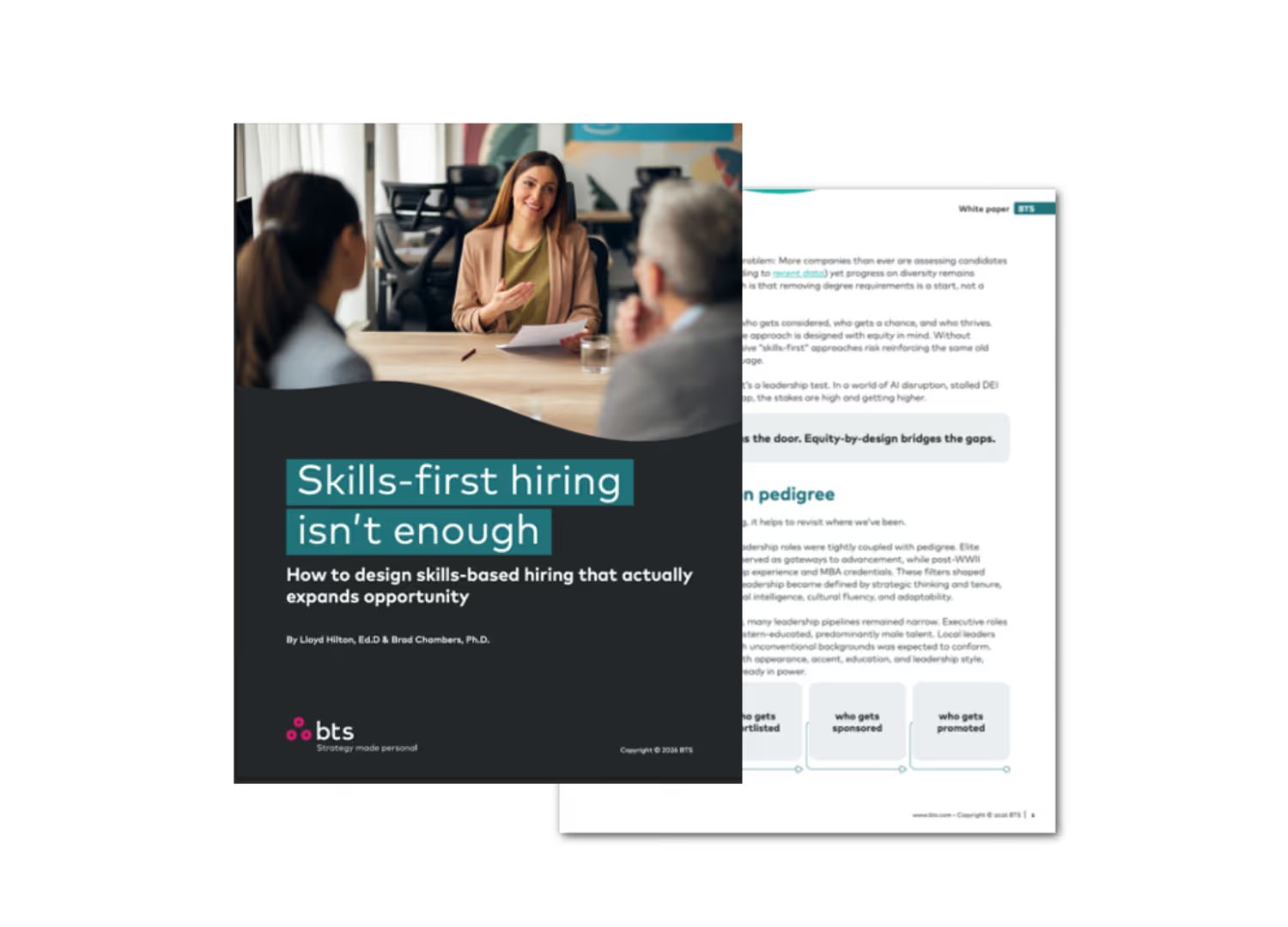
More companies than ever are assessing candidates based on their skills (81%, according to recent data) yet progress on diversity remains frustratingly slow.
Without that intentional design, even progressive "skills-first" approaches risk reinforcing the same old barriers, just with different language.
The hidden barriers that skills-based frameworks miss
The most damaging filters aren't in your job postings. They're in how skills are defined, how assessments are chosen, and how hiring managers are trained to evaluate unfamiliar profiles.
How to design an equitable skills-based hiring process
The organizations closing the gap share a specific set of design principles, around skills definition, structured assessment, and ongoing measurementthat most hiring redesigns never reach.
- Define skills by what the job requires, not how incumbents got there
- Use validated, structured assessments over résumé screening
- Train hiring managers to evaluate evidence, not familiarity
- Track demographic drop-off at every stage of the funnel
Download the whitepaper for the full framework, data, and practical steps.
Download complete whitepaper


Related content
.png)
Pyramid, kite, or house
AI is removing the work that once built expertise. See how the kite and the house shape your talent pipeline, and why the choice shouldn't be left to default.
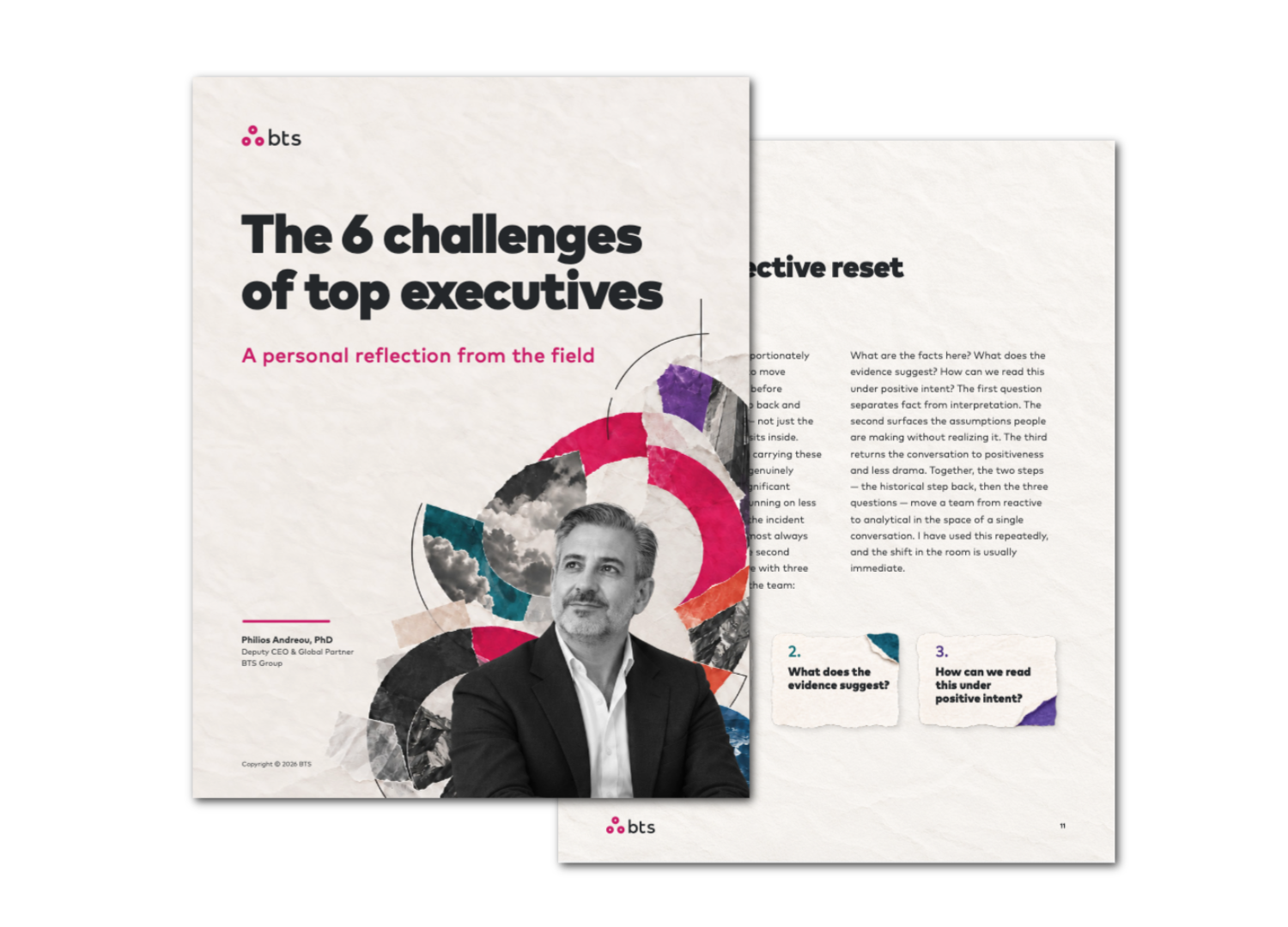
The 6 challenges of top executives
Two decades working with senior leaders across four continents reveal the six patterns now defining what it takes to lead at the top.

The EQ blind spot: What senior leaders get wrong about executive presence
BTS research on thousands of leaders reveals that while expertise builds credibility, emotional intelligence drives real executive presence and results.
Related content
Pyramid, kite, or house
AI is removing the work that once built expertise. See how the kite and the house shape your talent pipeline, and why the choice shouldn't be left to default.
The 6 challenges of top executives
Two decades working with senior leaders across four continents reveal the six patterns now defining what it takes to lead at the top.
The EQ blind spot: What senior leaders get wrong about executive presence
BTS research on thousands of leaders reveals that while expertise builds credibility, emotional intelligence drives real executive presence and results.
Brad Chambers
Lloyd Hilton, Ed.D, MSPOD
skills-based hiring, skills-first hiring, competency-based hiring, degree-free hiring, STAR workers, equitable hiring practices, skills assessment, remove degree requirements, diversity hiring, talent acquisition, hiring bias reduction, alternative credentials, workforce development, structured interviews, DEI recruitment, inclusive hiring, skills vs degrees, competency-based recruitment, talent assessment strategies, skills gap solutions, non-traditional talent, career mobility, employee retention, skills-based hiring framework, blind hiring, work sample tests, hiring manager training, future of work, workforce transformation, apprenticeship programs, internal mobility