Meet Jess

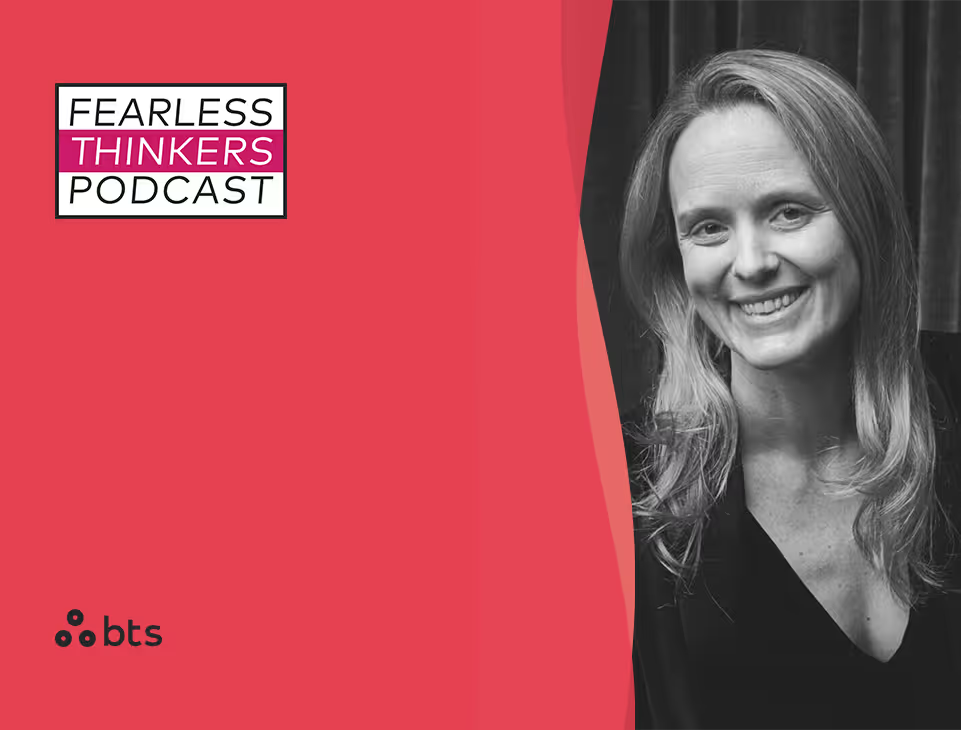
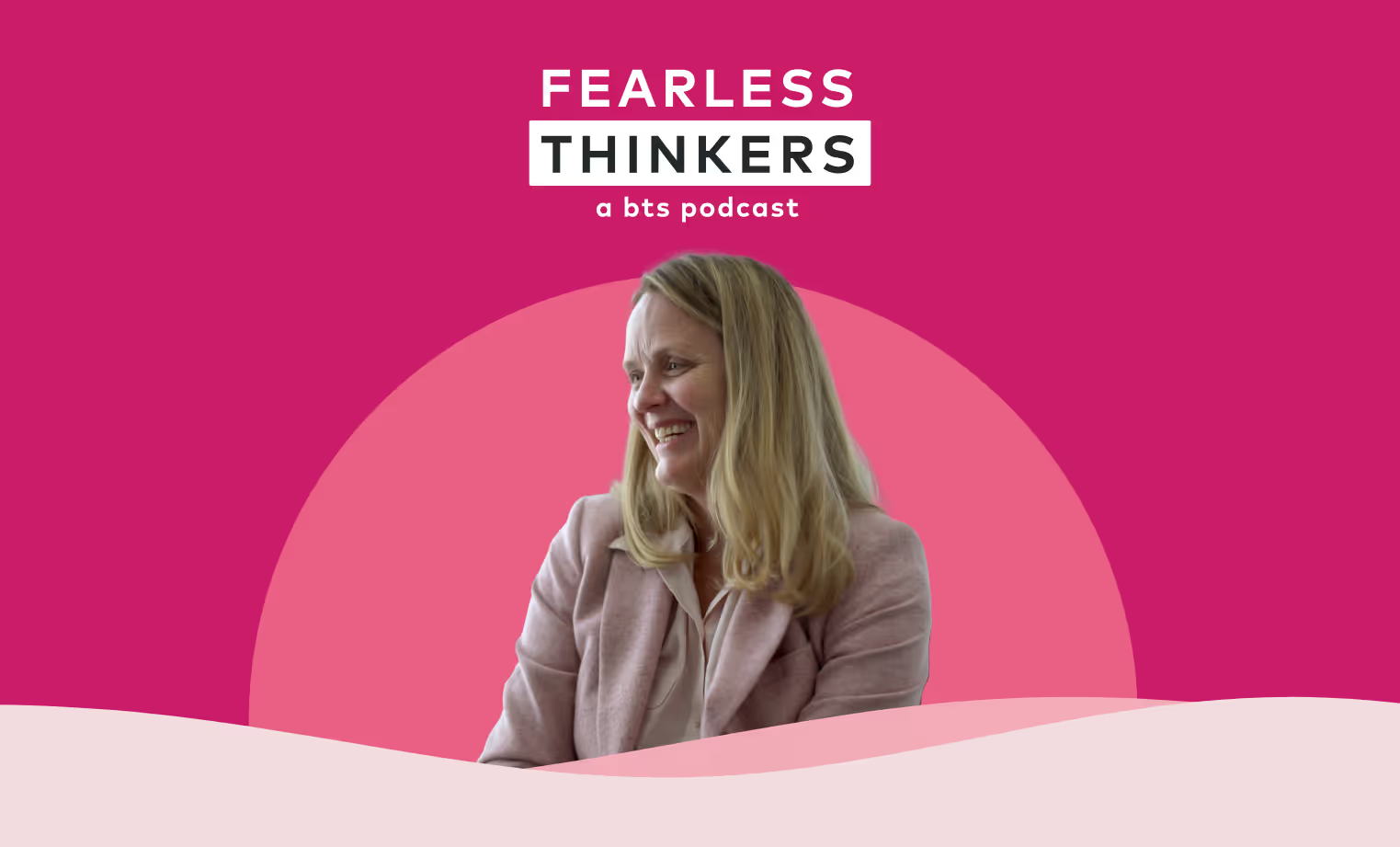
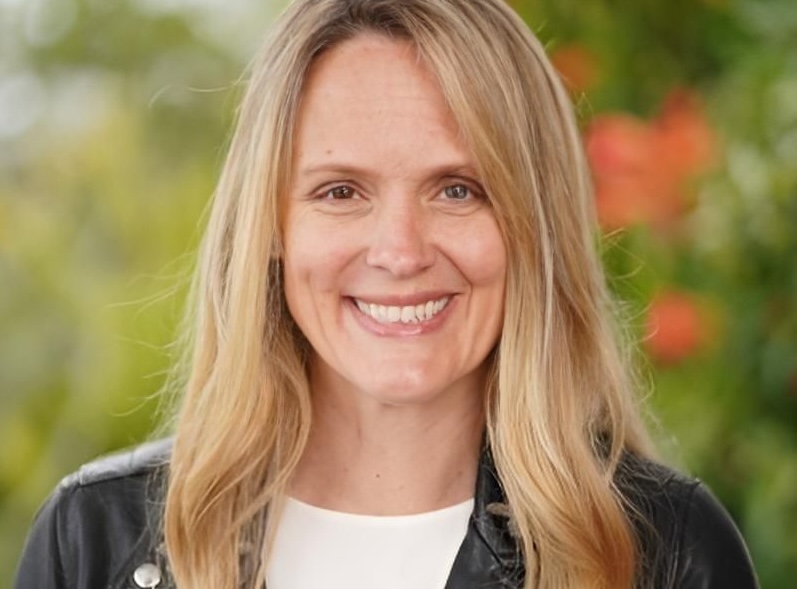
In this episode of Fearless Thinkers, meet Jessica Skon, President & CEO of BTS Group, and hear about how her upbringing and decades-long evolution at BTS continue to shape her decisions.
Most of us want to lead in a way that matters; to lift others up and build something people want to be part of. But too often, we’re socialized (explicitly or not) to lead a certain way: play it safe, stick to what’s proven, and avoid the questions that really need asking.
This podcast is about the people and ideas changing that story. We call them fearless thinkers.
Our guests are boundary-pushers, system challengers, and curious minds who look at today’s challenges and ask, “What if there is a better way?” If that’s the energy you’re looking for, you’ve come to the right place.
Find this episode on:


.svg)
Masami: Welcome to Fearless Thinkers, the BTS podcast. My name is Masami Cookson, and our host is Rick Cheatham. In this episode, Rick sits down with Jessica Skon, the new CEO of BTS Group.
Rick: Thanks, Masami. As always, with Jess, it was a great conversation. In fact, we went so deep and took so much time, we've actually decided to split it up into two episodes.
Masami: Cool! Can you give us a breakdown of each one?
Rick: Sure. The first one really is a little bit of an introduction to Jessica for those that don't know her, and actually, as somebody who's known her for 16 years… For those who do know her, learn a little bit about where she comes from, and how where she's come from shapes how she makes decisions today, and also where she sees BTS going. The second one is a deep dive [into] one of the key pillars that we use at BTS, and increasingly are talking to our clients about, which is how you create a big hearted and high performing culture, and the benefits of — and really, the necessity — of having both in today's business environment.
Masami: Both sound like great conversations. Let's get into it.
Rick: Hey, Jess. Thanks so much for taking the time to meet with me today.
Jess: Of course — my pleasure.
Rick: As most people are aware by now that would be listening to this, but perhaps not, you just had a huge change in your role at BTS and are now taking over as CEO for BTS Group. So first, congratulations on that. I thought a cool thing for us to do would be to just spend a little time helping people to get to know you a bit and [understand] what you think when you think of leadership and leading BTS going forward. How does that sound?
Jess: It sounds fun.
Rick: Cool. Well, I guess, and this is one of those wonderful open-ended questions that everybody loves to get: I would love it if you could give us the kind of three-to-five-minute version of your story.
Jess: Okay, happy to. I guess, because I’ve been at BTS my entire career, I could simplify it into the two chapters, right? Probably my childhood, and then my evolution at BTS. Does that sound okay?
Rick: Fantastic.
Jess: Okay, awesome. So, early years and growing up: I grew up in the Midwest in a little town called Stillwater, Minnesota. Actually, the oldest town in the state. I think what was fortunate for me is that I had two parents who understood unconditional love. And even when they divorced when I was 10, because they got that — and they were wonderful parents, they knew to put their children first, right? And so — it was a respectful, amicable divorce. And as difficult as it still was, I feel very fortunate for having had that experience. I'd say they also believed in me and my little sister, and they were very laissez faire, right? So, hands-off… That made me feel kind of in charge of my own destiny and [finding] my own whatever brought me joy or where I could focus as a kid. I think maybe more on the unusual side came from my father. He was the prison warden. There were two prisons in the town of Stillwater — a minimum security, and a maximum security — and his career, as I was growing up was, he grew up from the ranks in the prison system, but then ended up running both of them at different times, and then was the associate commissioner for the state of Minnesota.And maybe one thing is… probably, people have different images of what a prison warden is. The state of Minnesota was internationally kind of known for reform, and he was a key leader in that. So, he was somebody who, you know, felt like the role of the prison was not just to protect society, but to help people get their lives back on track. And I think the reason why that was important for me is what I observed in him — both as we would run into, say, ex-inmates out in the town, or in state parks, state events, or whatever, or just a few times when I was able to go into the prison — was I observed a couple of really important things.One was, I'd say, grace and dignity, right? For everybody. I observed his relational skills of making people from different backgrounds and very different from him feel seen, respected, heard, and believed in. And I never ever saw an abuse of power. In fact, I saw just the opposite of it. And, you know, I think that is had a pretty big dent on me learning around how to treat people and how I would expect to be treated as well. Yeah, so those are probably the two kind of standout thoughts from my childhood.As I think about BTS, I feel extraordinarily fortunate. Rumor has it that I was the first undergrad the company hired: I joined when I was 22. And I remember telling myself back then, I assumed I'd go to grad school or stay for just a couple years. And I just said, as long as I keep learning at the pace I want to learn, and having fun with my colleagues, then I guess I'll stay. And here I am, 20, 23 years later. That still is the truth. But the culture that our founder Henrik Ekelund created was one that allowed me to be, what I realized over time, a perpetual rookie. When I joined, we were probably 40 people globally, and around 20 million in revenue; we're now about 220 million in revenue. And when you're a part of that growth, every maturity moment or leadership moment for me was the biggest one of my life, and I was experiencing [them] at BTS.The other part of being a perpetual rookie, though, is when you're a consulting firm, you get to be creative and solve different problems for our clients. And also, because of that culture he created around freedom, responsibility, and trust, I felt tremendously empowered to do what was right for our clients and to try new things.So, if I reflect back on my career, probably every couple years I found myself feeling like I was in a situation where I was inventing something new, inventing a new service that the company didn't have, but the client believed we could do it. And I found that to be tremendously fun and innovative. And what happened over time is… I would hear about a new client problem, design it together with the client, and it would be a success. And that kind of propelled my leadership forward, because when you invent something new and you have success around it, then in its nature that makes you a leader, right? And people want to learn from you and bring it to their clients. And then a small practice or a small business would form around that.And as I look back, I think that was how I evolved my career for probably the majority of the time. And then, because I started when I was 22, I've held every role up the career roadmap, from being a consultant, to a project leader, to ultimately running an office to running a practice, a region. And in 2016 was a pretty major leadership transition for me: that's what I took over BTS North America, which is about 50% of the company's revenue. And, at that moment, it was more of a turnaround. And I'm happy to talk about that, Rick, if you'd like me to. Otherwise, we could go onto your next question.
Rick: No, that's great. Actually, I really appreciate that as somebody who's known you now for almost 16 years and not only considers you a colleague, but a friend, I actually felt like I learned some new things about you. So, thanks a lot for sharing.So, let's shift just a little. Given the work we do, you've had the opportunity to stand with and advise so many executives as they've taken on new businesses or new roles within their own companies. Based on that experience with all of those leaders, what are some things that are now kind of top priorities for you, and maybe some things that you're like, “Okay, I know I need to avoid this”?
Jess: Yeah, I appreciate that question. It's very… I feel like this transition is highly nuanced. As I mentioned in 2016, it was more of a turnaround story for BTS North America. We had had a few years of just single-digit growth, which — if you're hiring young people, and you want to give people long term careers — you have to grow faster than that to make that happen. And it's very different right now, right?So, my transition is: I'm transitioning from our founder who built this this beautiful company that's been in place for over 33 years. He's loved and adored by all of us. We respect the culture and all of the core elements that he's put in place for us to now grow from. And he's moving into chairman, and he's staying on part-time. So, that's an important reality.The other [reality]: this is not a turnaround. We've had great growth. We'll continue to, I mean obviously our eyes are on a potential recession, but we're thinking very thoughtfully about that, and we've weathered those storms before. So, given that I'm taking over for a founder who's staying on part-time and moving to chairman, and that we have wind at our backs, that's a different reality than taking over in a turnaround situation and/or even coming in from the outside. So, with that, and thinking about, to your point, the advice that I've both learned from and received from other CEOs and their transitions…Right now, given our reality, I think what I'm trying to do is nothing very jarring, because it's not needed. I'm trying to keep full accountability and ownership and autonomy in our leadership: regional leaders, our practice leaders, the office leaders. I am spending time in parts of the company that I know the least, and that know me the least. So, I think I'm well respected and known for broadening our service portfolio for innovation, for helping us go after bigger client problems which leads to bigger client partnerships and especially known for that in North America.Given that I'm prioritizing for the next quarter… Spending time with our clients in Europe, going to every one of our offices and our different teams there and just listening, right? I'm just trying to get a sense of where that market is at, where our team is at. And when I'm listening, I'm just listening to figure out how it can be most helpful. I have a feeling it will be to simply help connect the dots with the right resources and talent and expertise from across the company, so they can take their client partnerships to the next level, just like we're all trying to do… But that's one area.Another area is… We have over 230 people on our digital team spread out around the world and concentrated in Mumbai. So, I'm spending more time working with them, understanding their workflows. And again, listening to see how we can form even closer teaming and partnerships around the world just to help them, right? Make it easier for them to continue to take our technology to next levels. And then, the third priority under that would be kind of what we call “most of the world.” Just simply, again, for the same reason.So, I'm in listening mode. That probably would be the first one. The other one is, you know, I feel like I've, with the leadership team, with the group leadership team last fall, we already put in place our longer-term ideas of what success would look like in the next four to five years, and some of our priorities. So, we're just still getting those in place, and starting to make sure that the teams are working in new ways, and that they're excited about it. So, yeah, I think just given our reality, that's what's on my mind right now and that feels very different than when I, in 2016, you know, was leading a turnaround.
Rick: Actually, I'm glad you mentioned that kind of five-year priority look. So, let's just fast forward for a moment and think for a minute. Alright, it's five years from now, you're sitting on the back porch somewhere and reflecting on what's happened in the five years. And as you think about — probably through both lenses, of who BTS has become and the other lens in your personal experience — what would be some things that you would be most proud of?Jess: Well, this goes to a bit on the journey that BTS has been on, and that we're continuing to strengthen… But maybe at its simplest, that the CEO is able to work with and partner with — feel and believe — that BTS has shown them what consulting should be, or what consulting should have been, or what a partnership with a consulting firm should feel like.And the reason why they would feel that way is because, by working with our team and our firm, their executive team — all the way down to the front lines — kept ownership, right? We helped them keep their authorship. Their confidence was built. They were able to motivate more quickly and bring along everybody in their company around what's most important to get done, and their people had more fun through the process, and more joy in their day-to-day work. We helped them realize that, perhaps, in the last four or five decades, there's been too much attention and too much money spent trusting external people to write a strategy, when in fact the experts and the people with the fingertip feel are right there around them. They just need to improve their conversations, the dialogue, and the process of getting that done. That we help them realize there's been too much money and time spent on redesigning processes and technology implementation and far less, too little energy and focus on their people.I mean, probably no better experiment than what we just lived through — the two year pandemic — to realize that fast pivots and shifts are all about people doing something differently, nothing else. And you know, when COVID hit, a company, no matter how big or small, had to figure out how to shift immediately. They didn't have time to redesign processes for six months. They just simply asked people to do different things, and they rallied, and they did. So, the grand experiment of it really is all about the people… Converting that realization into, then, “How should a CEO and their leadership team bring their people along constantly, and make their people feel like they're the most important part of the business?” — is what we stand for. And I think we'd help them realize how to institutionalize that.I think the second part is: there would be a very natural authentic recognition that BTS's culture is a modern one. It's one that's role-modeling both what we call big hearted and high performing at the same time — that those two things co-exist and they are mutually reinforcing. And if our clients feel that when they're working with our teams, it would be naturally role modeling for them as they think about strengthening their culture in a way that would most reinforce their unique strategy.
Masami: So great to hear from Jessica and learn more about her path and the history of BTS. For a deep dive into creating BTS's big hearted and high performing culture, tune into part two of this episode. If you'd like to stay up to date on the latest from the Fearless Thinkers podcast, please subscribe or you can always reach us at BTS.com. Thanks again.
Related Content