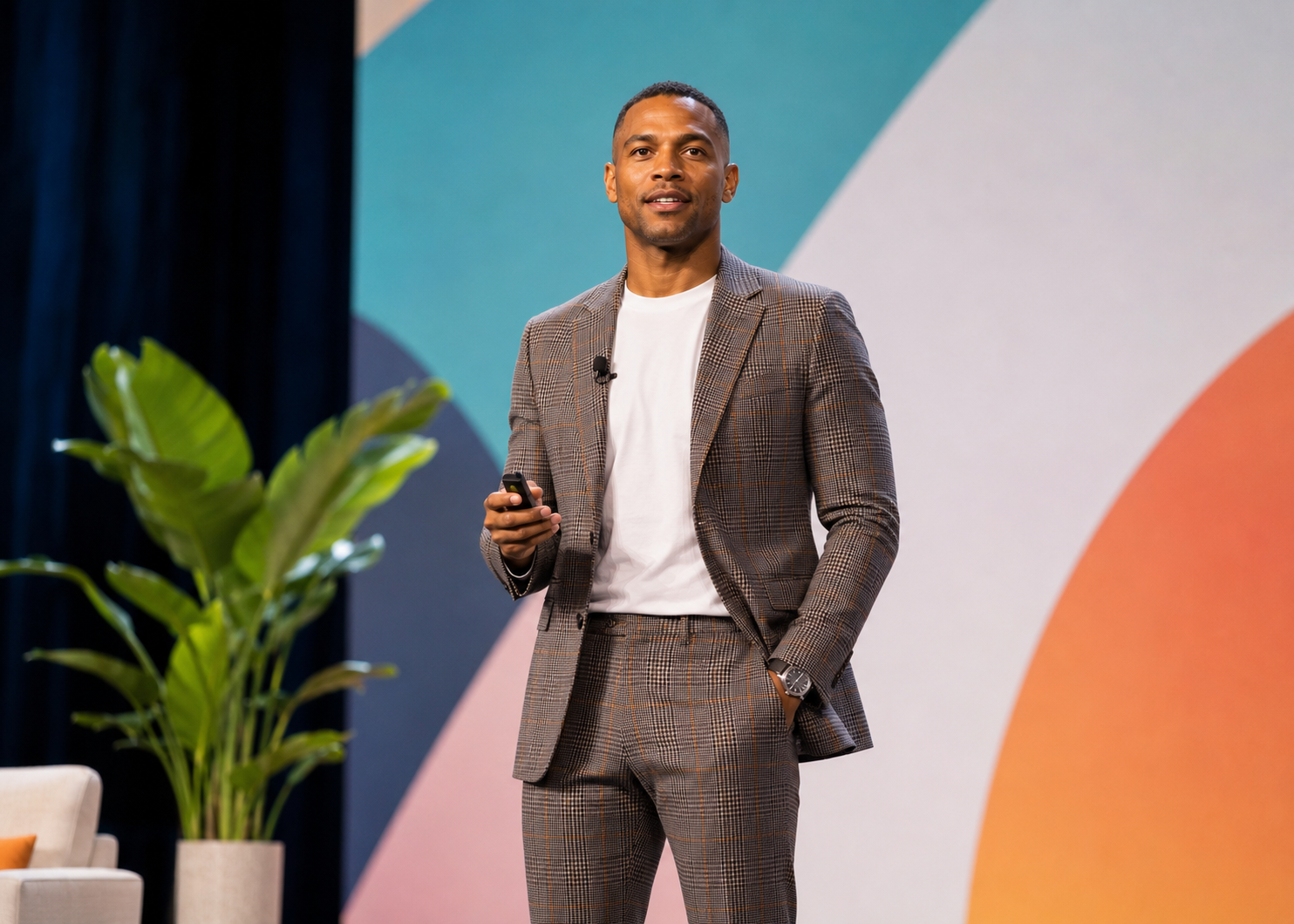
Is your culture past its sell-by date?

How do you know when your culture is working against you? What if your current culture is no longer serving your business? Culture is your strategy accelerator, so you better know how it’s helping you. Even if you think all is well, you may be missing something that is going to trip your strategy up soon or later. Here’s how to be on the lookout for signs it’s time to check your culture and see if it is still fresh enough to support your strategic vision.
How to spot the flares
While leaders know that a strong culture is critical to the success of their organization, it is still not uncommon for them to ignore the warning signs of fires smoldering beneath the surface sounding the alarm that cultural combustion is near. Waiting to address these cultural challenges when everyone is busy and staring down the barrel of change is not optimal and leads to stress and burnout. Leading today means proactively tapping into the tools to nurture and shape culture before it goes bad. Done right, this will allow leaders to feel energized about deploying their culture to accelerate their strategy, not impede it.
Here are several common events that should prompt leaders to pause and examine whether trouble is brewing.
1. A change in strategy
A change in strategy, reorganization, or a shift in the business structure is a strong indicator that means people across the enterprise need to work together differently. The old roles, behaviors, collaborations, and communication may not serve the new direction. Rather than set your teams and your strategy up for failure, incorporate a culture assessment into your strategic plan so you can get in front of what needs to change.
2. Acquisition/rapid growth
Acquisitions and/or times of rapid growth force organizations to suddenly need to execute on dramatically more things, while simultaneously wrestling with old ways of working together. Rapid growth can leave employees with whiplash, struggling to keep up with the new world order. Post-merger, it is all too common for silos to form; “Oh, those are the XYZ Company folks.” Years later, acquired talent often still bears an indelible tattoo on their forehead marking cultural otherness. To nip those cultural blazes in the bud, leaders must inventory the readiness of the organization to go through the change and convey and anticipate the implications of the change. (Click here for more on culture and successful M&A.)
3. DEI initiatives
Diversity, equity, and inclusion initiatives are high stakes and high visibility, particularly in the current climate. They often require behavior change that is uncomfortable and unfamiliar. Company history and the culture born of that history are both the reason why the initiatives are necessary and can be the inhibitor to change. Before jumping in, it’s critical to take a culture pulse to understand what will block and accelerate a new culture of belonging. Often, leaders find they need to course-correct or restart when DEI initiatives fall flat. Taking the time to get real up front about how to nurture and support a culture of belonging is what differentiates successful initiatives from those that are puzzlingly ineffective.
4. Marketplace disruption
External changes are also a forcing factor for culture change. When the market changes, the company needs to pivot, and this can result in a need to change go-to-market strategies, business models, and even the core of what the company does. Leaders are forced to peek under the hood to see if the company is ready culturally to take on the challenge. Take our large financial institution client who is an industry giant. They were profitable and effective, but their culture was complacent. Leaders felt satisfied about the need not to do anything different. This reluctance to be introspective about the health of their culture was costly. An unexpected economic downturn finally forced the organization to pause and take notice as they lost market position. They had an uphill battle creating the significant culture change required to pivot the company and are still feeling the ramifications years later.
Keep your culture fresh
Here are three things to consider when making sure your culture is on the right track no matter what your organization is facing.
- Honor the past. Your culture probably came to be for very deliberate business reasons once upon a time. As the context changes, it is important to acknowledge the roots and create a link to the future. Culture change can feel shocking. Making good use of storytelling skills might generate more awareness and help your team connect with the shift better.
- Don’t let success blind you. It’s easy to ignore a festering cultural problem when times are good. Focusing solely on financial performance may cause leaders to ignore early warning signs and biases about the less desirable cultural trends that are happening.
- Understand the enterprise-view. When we work with our clients on culture change, often we ask them to consider what beliefs, daily structures, and ways of working they want to hold. While it is inevitable for an organization to have sub-cultures across business units or functions, such sub-cultures should not be disconnected or in opposition of the organization’s collective cultural aspirations. While each practice area or function might have its own flavor, the pillars of culture should be aligned directionally across the organization and modeled with intentionality.
Culture isn’t homogenous. It is a fluid component of your organization that must morph alongside change, disruption, and growth. While it is experienced differently at different levels, it also beckons for unity through that diversity. Leaders can honor the one enterprise culture they are striving towards through clear guidelines that bring to life a shared vision, shared set of values, operating principles, and mindsets. Read here for more on how to make sure your culture drives your strategy, not tanks it.
Related content

Related content

You’re buckling in for an overseas flight in a brand-new Boeing 777. The pilot comes on the PA: “Ah, ladies and gentlemen, our flight time today will be six and a half hours at a cruising altitude of 33,000 feet. And I should mention that this is the first time I have ever flown a 777. Wish me luck.”
Before setting foot in the real world, pilots, military personnel and disaster response teams use intense simulations to learn how to respond to high-intensity challenges.Why should we place corporate leaders and their teams in situations without first giving them a chance to try things out? The risks are huge — new strategy investments can run into the hundreds of millions of dollars. BTS offers a better way to turn strategy into action: customized business simulations.
‘Now I Know What it’s Like to be CEO’
A customized business simulation of your enterprise, business unit or process, using real-world competitive dynamics, places leaders in a context where they step out of their normal day-to-day roles and gain exposure to the big picture. Participants make decisions in a risk-free environment, allowing them to experience critical interdependencies, execution best practices and the levers they can use to optimize their company’s key performance indicators. It takes the concept of a strategy and makes it personal, giving each individual the chance to see the direct impacts of their actions and the role they play in strategy execution.
Leading corporations are increasingly turning to business simulations to help build strategic alignment and execution capability when faced with the following business challenges:
- Key performance objective and new strategy implementation.
- Accelerating strategy execution and innovation.
- Improving business acumen and financial decision making.
- Transforming sales programs into business results accelerators.
- Leadership development focused on front-line execution.
- Implementing culture change as tied to strategy alignment.
- Modeling complex value chains for collaborative cost elimination.
- Merger integration.
Within minutes of being placed in a business simulation, users are grappling with issues and decisions that they must make — now. A year gets compressed into a day or less. Competition among teams spurs engagement, invention and discovery.
The Business Simulation Continuum: Customize to Fit Your Needs
Simulations have a broad range of applications, from building deep strategic alignment to developing execution capability. The more customized the simulation, the more experience participants can bring back to the job in execution and results. Think about it: why design a learning experience around generic competency models or broad definitions of success when the point is to improve within your business context? When you instead simulate what “great” looks like for your organization, you exponentially increase the efficacy of your program.
10 Elements of Highly Effective Business Simulations
With 30 years of experience building and implementing highly customized simulations for Fortune 500 companies, BTS has developed the 10 critical elements of an effective business simulation:
- Highly realistic with points of realism targeted to drive experiential learning.
- Dynamically competitive with decisions and results impacted by peers’ decisions in an intense, yet fun, environment.
- Illustrative, not prescriptive or deterministic, with a focus on new ways of thinking.
- Catalyzes discussion of critical issues with learning coming from discussion within teams and among individuals.
- Business-relevant feedback, a mechanism to relate the simulation experience directly back to the company’s business and key strategic priorities.
- Delivered with excellence : High levels of quality and inclusion of such design elements as group discussion, humor, coaching and competition that make the experience highly interactive, intriguing, emotional, fun, and satisfying.
- User driven: Progress through the business simulation experience is controlled by participants and accommodates a variety of learning and work styles.
- Designed for a specific target audience, level and business need.
- Outcome focused , so that changes in mindset lead to concrete actions.
- Enables and builds community: Interpersonal networks are created and extended through chat rooms, threaded discussions and issue-focused e-mail groups; participants support and share with peers.
Better Results, Faster
Well-designed business simulations are proven to significantly accelerate the time to value of corporate initiatives. A new strategy can be delivered to a global workforce and execution capability can be developed quickly, consistently and cost-effectively. It’s made personal, so that back on the job, participants own the new strategy and share their enthusiasm and commitment. This in turn yields tangible results; according to a research report conducted by the Economist Intelligence Unit and sponsored by BTS, titled “Mindsets: Gaining Buy-In to Strategy,” the majority of firms struggle to achieve buy-in to strategy, but those that personalize strategy throughout their organization significantly outperform their peers in terms of profitability, revenue growth and market share.
Business Simulations: Even More Powerful in Combination
Comprehensive deployment of business simulation and experiential learning programs combines live and online experiences. The deepest alignment, mindset shift and capability building takes place over time through a series of well-designed activities. Maximize impact by linking engagement and skill building to organizational objectives and by involving leadership throughout the process.
Putting Business Simulations to Work
Simulations drive strategic alignment, sales force transformation, and business acumen, financial acumen and leadership development, among other areas. A successful experiential learning program cements strategic alignment and builds execution capability across the entire organization, turning strategy into action. Results can be measured in team effectiveness, company alignment, revenue growth and share price.
Learn more about business simulations
Learn how BTS Business Simulations can help with your initiatives.
Fill out the form below to have a BTS representative contact you.

I recently read an HBR article discussing why the traditional approach to leadership development doesn’t always work.
It stated that instead of traditional methods, the best way to identify, grow and retain leaders to meet today’s demands is to “Let them innovate, let them improvise and let them actually lead.”
Over the past 30 years, as we’ve partnered with clients facing a vast range of challenges, we’ve seen the truth behind this – that people learn best by actually doing. That’s why business simulations are such a powerful tool: they allow people to do and lead within a risk-free environment, and condense years of on-the-job learning experience into a few days, or even hours.
We also know that learning is not just a “one and done” situation – it is a continuous experience. In many cases, a learning journey, which blends a variety of learning methodologies and tools over time, is the most powerful means of shifting mindsets, building capabilities and driving sustained, effective results.What a learning journey looks like depends entirely on the context of your organization. What challenges are you addressing? What results are you driving for? What does great leadership look like for your organization?

To bring this to life, imagine the following approach to a blended learning journey for aligning and developing leaders – in this scenario, within a financial services firm: Financial technology has “transformed the way money is managed. It affects almost every financial activity, from banking to payments to wealth management. Startups are re-imagining financial services processes, while incumbent financial services firms are following suit with new products of their own.”
For a leading financial services company, this disruption has led to a massive technology transformation. With tens of thousands of employees in the current technology and operations group, the company will be making massive reductions to headcount over the next five years as a result of automation, robotics and other technology advances.
This personnel reduction and increased use of technology is both a massive shift for the business as well as a huge change in the scope of responsibility that the remaining leaders are being asked to take on moving forward. As such, the CEO of the business unit recognizes the need to align 175 senior leaders in the unit to the strategy and the future direction of the business, and give them the capabilities that they need to effectively execute moving forward.
To achieve these goals, BTS would build an innovative design for this initiative: a six-month blended experience, incorporating in-person events, individual and cohort-based coaching sessions, virtual assessments and more. Throughout the journey, data would be captured and analyzed to provide top leadership with information about the participants’ progress – and skill gaps – on both an individual and cohort level, thus setting up future development initiatives for optimal success.
The journey would begin with a two-day live conference event for the 175 person target audience, incorporating leader-led presentations about the strategy. The event would not just be talking heads and PowerPoint slides, but rather would leverage the BTS Pulse digital event technology to increase engagement and create a two-way, interactive dialogue that captures the participants’ ideas and suggestions. Participants also would use the technology to experience a moments-based leadership simulation that develops critical communications, innovation and change leadership capabilities, among other skills.
romAfter the event, participants would return to the job to apply their new learnings. On the job, each participant would continue their journey with four one-on-one performance coaching sessions, in addition to a series of peer coaching sessions shared with four to five colleagues. They also would use 60-90 minute virtual Practice with an Expert sessions to develop specific skill areas in short learning bursts, and then practice those skills with a live virtual coach. Throughout the journey, participants would access online, self-paced modules that contain “go-do activities” to reinforce and encourage application of the innovation leadership and other skills learned during the program.
As a capstone, six months after the journey has begun, every participant would go through a live, virtual assessment conducted via the BTS Pulse platform. In three to four hours, these virtual assessments allow live assessors to evaluate each leader’s learnings from the overall journey and identify any remaining skill gaps. The individual and cohort assessment data would then lead to and govern the design of future learning interventions that would continue to ensure the leaders are capable of implementing the strategy.
As you can see, this journey design leverages a range of tools and learning methodologies to create a holistic, impactful solution. It’s not just a standalone event – each step of the journey ties into the one before, and the data gathered throughout can be used well into the future in order to shape the next initiative .
Great journeys or experiences like this can take many forms. In addition to live classroom and virtual experiences, there is an ecosystem of activities, such as performance coaching, peer coaching, practice with an expert, go-dos, self-paced learning modules, and more, that truly engage leaders and ensure that the learnings are being reinforced, built upon, practiced and implemented back on the job. We find that these types of experience rarely look the same for every client. There are many factors that determine which configuration and progression will make the most sense. There is one common theme that we have found throughout these highly contextual experiences, however – that the participant feedback is outstanding and the business impact is profound.

Leading with Purpose, Part 1
Most CEOs I speak with are not 100% at peace with their company’s purpose. As the market, their people and their business evolve, so will their purpose. As some of the best companies of past and present show us, there is strength, and even magic, in a great company purpose. What is also clear, however, is that this magic does not come from just having a “purpose” or “vision,” but rather from how well a company is executing against their purpose.
When Southwest Airlines (which has been profitable for 45 consecutive years, and on FORTUNE’s list of World’s Most Admired Companies for 24 straight years) was first starting out, their mission was to make flying affordable.1 They rallied their people on the idea that a grandmother should be able to affordably buy a ticket, at the drop of a hat, to get on a flight to see her new grandchild. This simple mission led to the “Southwest Effect,” which transformed the airline industry, and continued to be a lens with which the Southwest leadership team made key decisions.
Today, Southwest’s vision has evolved: “To become the world’s most loved, most flown, and most profitable airline.” And they are executing on this vision. They continue to drive superior shareholder returns against all industries on the S&P 500 (as they have for the past 44 years), and in 2018 were named the top low-cost airline in JD Powers customer survey reports for the second year in a row.
As the Southwest example highlights, great company purpose combined with a leadership team who will build the work-flows, culture, processes and metrics to live up to it can be an enormous employee motivator. But we have also experienced, both at BTS and with our global clients, that a good company vision and purpose on their own are not sufficient – employees need them to be even more personal to them as an individual. I remember a lunch I had twelve years ago with a 24-year old new hire who was my direct report. After some small talk he looked at me and said, “Why are you here? Why have you spent seven years with the same company?”
I’ll never forget that lunch. It was the first time I had been asked the question, and it was the beginning of a new decade where our employees were much louder and more active about wanting to reflect and spend time on our mission and purpose, linking it to their personal values and the impact they strived to have in the world. Luke, that 24-year old new hire, has made me and our company better as a result of his question.
In the last decade, there has been a growing emphasis in the business world on finding a deeper motivation to unlock greater meaning at work. For some this may sound ‘fluffy,’ or as one executive we spoke to commented, “Is this just the next version of the pursuit of vision and values? It sounds great on paper but too often makes little real difference as it tends to stay on the wall, rather than live in your heart.”
Yet your people spend the majority of their life at work and with colleagues. At its best, a sense of purpose is a way of bringing meaning to their work and understanding the contributions they are making to the company, as well as greater society. It makes sense, then, that employees who are clear on their personal and professional purpose end their work day invigorated and proud of what they’re doing instead of exhausted by mindless work that is bereft of real meaning.
According to a recent PWC study, 79% of business leaders believe that purpose is central to business success – but only 34% use their organization’s purpose as a guidepost for their leadership team’s decision-making. Signs that your workplace may be lacking organizational purpose are distracted employees and a lack of comradery. These are significant factors – so why don’t more organizations devote time to developing clear purpose and values? Well, developing organizational purpose is no easy task, and much of it starts with your own personal purpose. If you’re unsure of what exactly your own personal purpose is, have no fear – in the next two installments of this blog series, we will offer simple steps to help you uncover your personal and organizational purposes and get closer to leading through the lens of purpose.