Why we’re proud of consulting that’s different by design

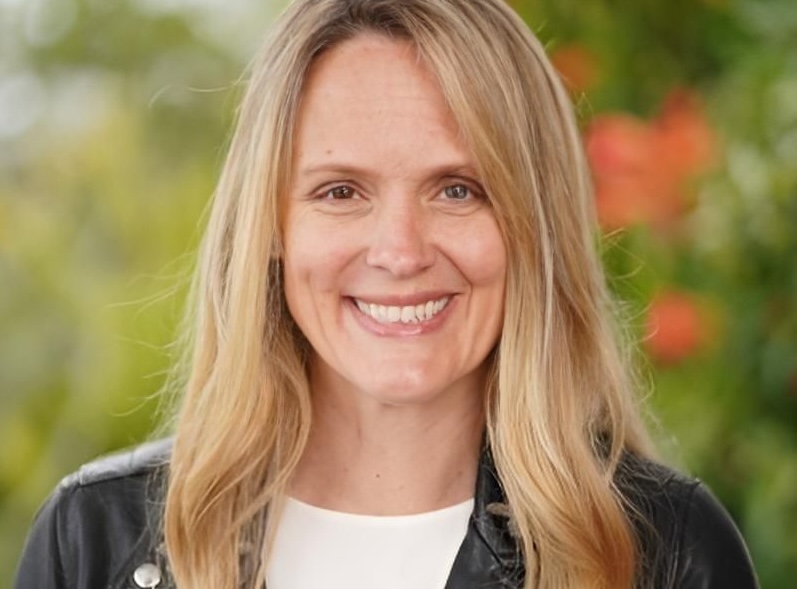
Anne Wilson, VP, Principal, and Head of C&T NA, and Kathryn Clubb, CEO, BTS NA, discuss setting higher expectations for consultants.
March 25, 2025
Guests
Subscribe to the BTS newsletter
Follow us on Linkedin
Follow BTS on Linkedin
Share

In this special episode of Fearless Thinkers, guest host Anne Wilson, VP, Principal, and Head of the Change & Transformation Center of Expertise for North America, and Kathryn Clubb, CEO of BTS North America, discuss why organizations should expect more from consultants and when not to hire them.
About the host
No items found.
About the show

Most of us want to lead in a way that matters; to lift others up and build something people want to be part of.But too often, we’re socialized (explicitly or not) to lead a certain way: play it safe, stick to what’s proven, and avoid the questions that really need asking.

This podcast is about the people and ideas changing that story. We call them fearless thinkers.

Our guests are boundary-pushers, system challengers, and curious minds who look at today’s challenges and ask, “What if there is a better way?”If that’s the energy you’re looking for, you’ve come to the right place.

Read Transcript

Masami Cookson: Welcome to Fearless Thinkers, The BTS Podcast. My name is Masami Cookson. I'm excited to share that we have a special guest host today, Anne Wilson, Head of Change and Transformation for BTS North America.

Anne Wilson: Hi, Masami, always great to see you and talk to you. I'm doing very well, thank you. It's bright and sunny in Chicago, but spring hasn't quite found us yet; otherwise, doing quite well.

Masami: That's awesome. I'm so happy to have you here, always wonderful to have another female voice on the podcast.

Anne: Thanks, Masami. You know, there's no shortage of fearless female thinkers at BTS, so I'm excited to have the platform and the opportunity to have a conversation today.

Masami: Would you share a little bit more about what you and Kathryn covered on the podcast?

Anne: Yeah, absolutely. So, you know, at BTS we've believed for a long time that consulting as an industry isn't serving clients well, and the idea that companies deserve more from consultants is really gaining traction. So, we really thought that the timing was right for us and for Kathryn, especially given how long she's worked in the industry, to share some of what we've seen and what organizations should be looking out for and what they should expect from a great consulting relationship.

Masami: Wow, I can't wait to hear more. Let's get into it.

Anne: Kathryn, welcome to the Fearless Thinkers Podcast or welcome back, I should say.

Kathryn: Nice to be here. Thanks, Anne.

Anne: Kathryn, I wanna start today with an obvious question. The topic of our conversation is about what traditional consulting gets wrong and why it's time for a new approach. You are a longtime consultant, you've said quite loudly and publicly that you have three loves in your life: your spouse, Linda, your dogs, and consulting. So, the obvious question is why? Why would you want to go out into the world to talk about what's wrong with something that you care about obviously so deeply?

Kathryn: Let's start at the beginning. I feel like I grew up in consulting, and when I found consulting, I was in awe that they would pay you money to do work that was this much fun helping organizations solve really challenging problems.

Anne: It's quite a compelling value proposition to think about being able to access outside expertise or perspective that you don't have internally and build the internal capability that you need for sustainable growth over the long term. But you mentioned watching consultants help clients solve the same problems over and over again, and isn't that core to the consulting business model to turn one engagement into the next engagement? How could this possibly be a sustainable approach for consulting firms?

Kathryn: I love having long-term clients. The relationships you can build with them become the basis for everything that's possible. You learn how to complement each other's skills and knowledge. You learn how to work together. It's like a marriage: the longer you're in it, the more you know how to have each other's best selves come out, right? So, you have a strong foundation, and you can stand on the shoulders of the accomplishments that you have.

Anne: Yeah, I guess the argument being if you have to hire a consultant to solve the same problem three years later, did they ever even solve it in the first place?

Kathryn: The bad news is, it's an accurate description of how the industry has actually evolved. In my mind, the good news is it doesn't have to be that way. Companies actually hire consultants for all kinds of services, but it kind of boils down to they need to make a decision and don't know how or don't have the data or don't have the perspective needed to make that decision. And then they have to execute, implement, actually make those decisions become real in their daily life of their business. Those are the things that in my mind are reasonable things to hire a consultant to do.

Anne: Well, as they say, careers are not linear. But I'd love to dig into that a bit. Can you say a little bit more about that? After swearing off consulting, why? Why come to BTS? Why dive right back in?

Kathryn: The first time I met BTS, I was referred by a former colleague of mine who actually had been a client of BTS. And when she asked me what I wanted to do next, this was when I was finishing up commercializing the medical device command company, I said I wanted to do weird consulting and she asked me more about that and without hesitation, she said "You have to meet my friend at BTS." And I did and we talked for hours.

Anne: You have often said to me and to clients that a change in information doesn't equal a change in behavior. You actually can't just drop off a strategy or a PowerPoint act no matter how glossy and beautiful it is and expect people to take it up and start making different choices. Why? Why is that? Why is it the communication and beautifully laid plans don't go the way we expect them to?

Kathryn: There's humans involved–

Anne: Pesky humans.

Kathryn: Pesky humans, they are the bane of strategists' existence. So, these elegant strategies get developed truly beautiful, elegant, relevant, breakthrough kind of strategies. And then they have to get implemented by humans. And a lot of the issue that I've seen in the past is the separation of the development of the strategy and the people who have to implement it.

Anne: So, we've spent a lot of time talking about humans, about shifting mindsets, offering people new beliefs, building capabilities, helping to change behavior. It sounds like training, not consulting, which is it?

Kathryn: Often training has been a change lever because when you create new strategies, you are asking people to see differently, do things differently, have different capabilities than they may have had in the past. What you can't train is judgment and what people need to have when they're implementing strategies, actually, even when they're creating strategies is judgment, will this fit with our customers? Is this something that our employees can actually execute? Is our technology or our systems or our processes up to what we need to do? It's all a matter of judgment. And so, the idea is to give them an experience of it, actually let them live it. Let them understand why they're doing things differently.

Anne: What's your take on why there's such disdain for consultants?

Kathryn: Minimally, a consultant should not make you feel bad. That's fundamental table stakes. But so many consultants come in, they've got smart MBAs, they've got people who have worked across industries, they get people who get paid a lot of money, and they feel, consultants often feel that their job is to give you answers. And that would mean actually telling you something you don't know about a business that you've lived in, worked in, are in on a day-to-day basis for a long period of time. And so it's just a shame.

Anne: So, we've covered a lot of ground about why organizations hire consultants, what to look for in a consultant to ensure that you are making a good investment. Do you ever have a moment with a client where you say this isn't the work of a consultant, you really shouldn't hire a consultant for this. Are there moments when clients shouldn't hire consultants?Kathryn: One of the ones we hear about a fair amount, particularly when big name consultants get hired, is that leadership needs credibility with their board or shareholders or investors to potentially rubber-stamp or support tough decisions they need to make. And leadership of companies — management — is a hard job. It's a really hard job, and we're in a moment right now with recession looming and pivots going on and technology disruptions going on that it takes courage to be a leader.Anne: I think sometimes reaching out to the firms that we know is a muscle memory that's hard to break. But as they say, doing the same thing over and over again and expecting different results is the definition of insanity. So don't outsource leadership courage is kind of the first piece of advice that I heard from you there. Don't outsource leadership courage. Kathryn, we're reaching the end of our time.

Kathryn: Obviously, I'm still in consulting. I actually think it's the absolute best career choice for me. I think it's a great career choice for a lot of people who like challenge, diversity, intellectual, and human connection. And I would be remiss if I didn't say that based on who we are, how we operate, and how we're different, I believe that every company on the planet deserves BTS. It's a different kind of human-centric, practically driven consulting company that our clients are looking for. They may not just know that quite yet.

Anne: Well said, Kathryn. Thanks again for your time and thanks everyone for tuning in.

Masami: If you'd like to stay up to date on the latest from the Fearless Thinkers Podcast, please subscribe. Links to all of the relevant content discussed in today's podcast are in the show notes or you can always reach us at bts.com. Thanks again.

Related Content

Inisights
October 2, 2025
5
min read
A brave new world: What AI means for leadership and culture
Discover how AI is reshaping leadership and culture. Why jazz leadership, simulation, and re-skilling are essential to unlock the full value of AI across teams.

At BTS, we’re constantly challenging ourselves to innovate at speed. And right now, it feels like we’re standing at the edge of something massive. The energy? Electric. The velocity? Unprecedented. For many of us, the current pace feels a lot like the early days of the pandemic: disorienting, high-stakes, and somehow exhilarating. And honestly—it should feel that way. Our teams have been tinkering with AI, specifically LLMs, for the past 2.5 years and it has really been in the last eight months that I can see the profound impact it is going to have for our clients, for our services and our operating model.

The opportunity isn’t about the technology. The world has it and it’s getting better by the minute. The issue is people and people’s readiness to adopt it and be re-tooled and re-skilled. It’s about leadership. AI is deeply personal, it’s surgical. In fact, that’s its genius. So, getting full scale adoption of AI, re-tooling everyone in the company by workflow, so that they can invent new services, unlock new customer value, unlock new levels of productivity, even use it for a better life, is the current race. The central question I’ve been wrestling with, alongside our clients and our own teams, is this:

What does AI actually mean for leadership and culture?

And the answer is clearer by the day: AI isn’t just a new toolset. It’s a new mindset. It demands that we rethink how we lead, how we learn, and how we build thriving organizations that can compete, adapt, and grow.

The productivity paradox revisited

Let’s start with the elephant in the boardroom. There’s been a lot of buzz around AI and its promises. But many leaders have quietly wondered: Will any of this actually move the needle? A year ago, we were asking the same thing. We had licenses. We had curiosity. We had early experiments. But the results were modest, a 1% productivity gain here or there. But by April, we were seeing:

  • 30–80% productivity gains in software engineering
  • 9–12% gains in consulting teams
  • 5%-20% improvements in client success and operations

Just as importantly, the innovation unlock and creativity across our platforms due to vibe coding along with new simulation layers, is leading to new value streams for our clients. This isn’t theoretical. It’s not hype. It’s real. The difference? Adoption, ownership, and a shift in how we lead in order to energize the AI innovation within our teams. The challenge now isn’t whether AI creates value. It’s how to unlock and scale that value across teams, geographies, and business units—and do it fast.

Two Superpowers of the Agentic AI Era

In working with leaders across industries, I’ve come to believe in two superpowers (there are more as well) that will unlock the potential of this AI era: Jazz Leadership and a Simulation Culture.

1. Jazz Leadership

Forget the orchestra (although personally I am a big fan.) The successful team cultures that are innovating with AI feel more like jazz. In jazz, there’s no conductor. There’s no fixed sheet music. There are core bars and then musicians make up music on the spot based on each other’s creativity, building off of each other’s trials, riffs and mistakes, build something extraordinary together. This is how experimenting with AI today, in the flow of work, feels like.

For each activity across a workflow, how can new AI prompts, agents, and GPTs make it better, codify high performance, drive speed and quality simultaneously? How can we try something totally different and still get the job done? How might we re-invent how we work? That’s how high-performing teams operate in the AI era. The world is moving too fast for command-and-control leadership, a perfect sheet of music with one leader who is interpreting the sheet music and directing. What we need instead is improvisation, trust, shared authorship, courage and a playful spirit because there are just as many fails as breakthroughs.Jazz leadership is about creating the conditions where:

  • Ideas can come from anywhere
  • People see tinkering and testing as key to survival and AI failures mean your team is at the edge of what’s possible for your services and ways of working
  • Leaders say, “I don’t have all the answers, but I’ll go first, with you”
  • People feel “I’m behind relative to my peers in the company” and the company sees this as a good sign because the pace of learning with AI means higher chance of success in the new era

At BTS, we recently promoted five new partners who embody this mindset. They weren’t the most traditional leaders. But they were the most generative. They coached others. They experimented and are constantly re-tooling themselves and others. They inspired movement. They are keeping us ahead, keeping our clients ahead and driving our re-invention. Jazz leaders make teams better, not by directing every note—but by setting the stage for breakthroughs. It is similar to the agile movement, similar to how it felt in Covid as companies had to reinvent themselves. It’s entrepreneurial, chaotic and fun.

2. Simulation Culture

The ability to simulate is a super-power in this next agentic, AI era. Simulation has always been part of creating organizational agility, high performance and leadership excellence. But AI and high-performance computing have transformed it into something bigger, faster, and infinitely more powerful. It means that building a simulation culture is within all of our grasp, if we tap its power.Today, companies simulate:

  • Strategic alternatives - from market impact all they way to detailed frontline execution
  • New business, new markets and operating models
  • Major capital deployment e.g. build a digital twin of a factory before breaking ground
  • Initiative implementation
  • Workflows current and future
  • Jobs to assess for talent and critical role readiness
  • Customer conversations and sales enablement motions

With a simulation culture, where you regularly engage in scenario planning and expect preparation and practice as a way of working, billions in capital is saved, cross-functional teams are strengthened, high performance gets institutionalized, win rates increase, earnings and cash flow improves.

Where to get started

Below are a few examples of what leading organizations are doing. Consider testing these in your own organization:

  • Conversational AI bot platforms used to scale performance expectations and the company’s unique culture.
  • Agentic simulations built into tools so people can prepare and practice with 100% perfect context and not a wasted moment.
  • Digital twins of the job created so that certifications and hiring decisions are valid.
  • Micro-simulations spun up in hours to align 50,000 people to a shift in the market or a new operational practice.

Final Thoughts

  • Lead like a jazz musician. Embrace improvisation, courage and shared creativity.
  • Build a simulation culture. Because in a world that’s moving this fast, practice isn’t optional—it’s how we win.

This is a brave new world. Not five years from now. Right now.Let’s shape it—together.

Inisights
May 5, 2025
5
min read
BTS acquires Nexo to strengthen its position in Brazil and Latin America
BTS has agreed to acquire Nexo Pesquisa e Consultoria Ltda., Nexo, a boutique consulting firm headquartered in São Paulo, Brazil.

P R E S S R E L E A S E
Stockholm, May 5, 2025

STOCKHOLM, SWEDEN – BTS Group AB (publ), a leading global consultancy specializing in strategy execution, change, and people development, has agreed to acquire Nexo Pesquisa e Consultoria Ltda., Nexo, a boutique consulting firm headquartered in São Paulo, Brazil.

Nexo has been growing continuously since it was founded in 2017. With revenues of approximately 12 million Brazilian Reales (approx. 2.1 million USD) in 2024, and a highly capable team of 21 members, Nexo has built a strong reputation for delivering transformative projects in strategy, innovation, leadership, and culture.

Nexo collaborates with a great portfolio of clients across sectors such as financial services, consumer goods, and technology, assisting both local and global companies in navigating uncertainty, unlocking creativity, and activating strategy through people. Their work encompasses culture transformation, leadership development, employer value proposition, innovation culture, and vision alignment – supported by proprietary methodologies and frameworks.

BTS currently operates in Brazil servicing both local and multinational clients with a team of 13 employees. By acquiring Nexo, BTS not only increases the Group’s footprint in Brazil but also adds significant capabilities in culture and transformation services. Nexo’s client base has limited overlap with BTS, creating strong growth potential and synergy opportunities.

“Nexo is known for helping leaders and organizations tackle some of the most complex, human-centered challenges with creativity, empathy, and strategic clarity and the Nexo team is loved by their clients,” says Philios Andreou, Deputy CEO of BTS Group and President of the Other Markets Unit. “Their products and services complement and elevate our existing offerings, especially in culture transformation, and we are thrilled to welcome the Nexo team to BTS.”

“We’re excited to join BTS. We’ve long admired BTS’s approach and unique portfolio to support large organizations and leaders in connecting strategy with culture across the organization,” says Andreas Auerbach, co founder of Nexo. “Becoming part of BTS, allows us to scale our impact and bring more value to our clients while staying true to our values and culture,” adds Mariana Lage Andrade, co-founder of Nexo.

Upon completion of the transaction, Nexo’s business and organization will merge with BTS Brazil. Nexo’s founders will assume senior management roles in the joint operation.

The acquisition includes a limited initial cash consideration. Additional purchase price considerations will be paid between 2026 and 2028, provided Nexo meets specific performance targets. A limited portion of any such additional purchase price considerations will be paid in newly issued BTS shares. The transaction is effective immediately.

BTS’s acquisition strategy continues to focus on broadening our service portfolio, expanding our geographic reach, and enhancing our capabilities to support future organic growth in a fragmented market.

For more information, please contact:
Philios Andreou
Deputy CEO
BTS Group AB
philios.andreou@bts.com

Michael Wallin
Head of investor relations
BTS Group AB
michael.wallin@bts.com
+46-8-587 070 02
+46-708-78 80 19

Inisights
May 5, 2025
5
min read
BTS acquires Nexo to strengthen its position in Brazil and Latin America
BTS has agreed to acquire Nexo Pesquisa e Consultoria Ltda., Nexo, a boutique consulting firm headquartered in São Paulo, Brazil.

PRESS RELEASE

Stockholm, May 5, 2025

STOCKHOLM, SWEDEN — BTS Group AB (publ), a leading global consultancy specializing in strategy execution, change, and people development, has agreed to acquire Nexo Pesquisa e Consultoria Ltda. (Nexo), a boutique consulting firm headquartered in São Paulo, Brazil.

Nexo has been growing continuously since it was founded in 2017. With revenues of approximately 12 million Brazilian Reales (about 2.1 million USD) in 2024, and a highly capable team of 21 members, Nexo has built a strong reputation for delivering transformative projects in strategy, innovation, leadership, and culture.

Nexo collaborates with a diverse portfolio of clients across sectors such as financial services, consumer goods, and technology, assisting both local and global companies in navigating uncertainty, unlocking creativity, and activating strategy through people. Their work encompasses culture transformation, leadership development, employer value proposition, innovation culture, and vision alignment—supported by proprietary methodologies and frameworks.

BTS currently operates in Brazil, servicing both local and multinational clients with a team of 13 employees. By acquiring Nexo, BTS not only increases the Group’s footprint in Brazil but also adds significant capabilities in culture and transformation services. Nexo’s client base has limited overlap with BTS, creating strong growth potential and synergy opportunities.

“Nexo is known for helping leaders and organizations tackle some of the most complex, human-centered challenges with creativity, empathy, and strategic clarity, and the Nexo team is loved by their clients,” says Philios Andreou, Deputy CEO of BTS Group and President of the Other Markets Unit. “Their products and services complement and elevate our existing offerings, especially in culture transformation, and we are thrilled to welcome the Nexo team to BTS.”
“We’re excited to join BTS. We’ve long admired BTS’s approach and unique portfolio to support large organizations and leaders in connecting strategy with culture across the organization,” says Andreas Auerbach, co-founder of Nexo. “Becoming part of BTS allows us to scale our impact and bring more value to our clients while staying true to our values and culture,” adds Mariana Lage Andrade, co-founder of Nexo.

Upon completion of the transaction, Nexo’s business and organization will merge with BTS Brazil. Nexo’s founders will assume senior management roles in the joint operation.

The acquisition includes a limited initial cash consideration. Additional purchase-price considerations will be paid between 2026 and 2028, provided Nexo meets specific performance targets. A limited portion of any such additional considerations will be paid in newly issued BTS shares. The transaction is effective immediately.

BTS’s acquisition strategy continues to focus on broadening its service portfolio, expanding geographic reach, and enhancing capabilities to support future organic growth in a fragmented market.

For more information, please contact:

Philios Andreou
Deputy CEO
BTS Group AB
philios.andreou@bts.com

Michael Wallin
Head of Investor Relations
BTS Group AB
michael.wallin@bts.com
+46-8-587 070 02
+46-708-78 80 19

Client Stories
October 28, 2025
5
min read
Translating at scale: Building a better client experience with AI on the team
See how BTS uses AI to transform translation and localization to deliver faster, smarter, and more personal client experiences worldwide.

lorem ipsum

Client Stories
October 17, 2025
5
min read
AI-first business simulations: A BTS innovation story
BTS is redefining experiential learning with AI-first business simulations that accelerate strategy, scale leadership impact, and drive real transformation.

lorem ipsum

Client Stories
April 4, 2025
5
min read
RGM as a growth engine in the snack industry
Discover how a leading snack company turned Revenue Growth Management into a powerful tool for growth, agility, and profitability.

lorem ipsum

Podcast
September 19, 2025
5
min read
4 things nobody is telling you about the future of work
Discover 4 things no one is telling you about the future of work, and how leaders can unlock real AI adoption, culture shifts, and lasting impact.

lorem ipsum

Podcast
July 30, 2025
5
min read
What AI can’t replace: the human side of leadership
Discover how better conversations drive alignment, trust, and results—plus why communication matters more than ever in the age of AI and hybrid work.

lorem ipsum

Podcast
July 18, 2024
5
min read
Revenue Growth Management: Linking strategy and tactics for success
In this episode, Rick Cheatham is joined by Teresa Yetano, Senior Director, and Emily Steigerwald, Senior Director, to explore RGM.

lorem ipsum

Whitepapers
July 28, 2025
5
min read
Built to Shift: A playbook for downturns
Built to Shift is a playbook for navigating constant change, from how to align teams to leading with clarity in today’s fast-moving world.

lorem ipsum

Whitepapers
April 30, 2025
5
min read
Belonging by design: How organizations build thriving cultures
Discover how fostering belonging across individuals, teams, and systems can drive performance, trust, and culture in your organization.

lorem ipsum

Whitepapers
January 10, 2025
5
min read
An emerging role of coach in learning journeys
Traditional coaching focuses on individual growth and is evolving into something far more integrated and dynamic: the coach as learning partner.

lorem ipsum

News
October 10, 2025
5
min read
The New AI Driven Leadership Model Will Be More Like Jazz

Six top CEOs from varying industries discuss the future of leadership in an AI world.

lorem ipsum

News
August 20, 2025
5
min read
BTS and clients recognized with 59 Brandon Hall Group Excellence Awards in 2025

BTS has earned 59 Brandon Hall Group Excellence Awards in 2025 alongside its clients. These awards recognize some of BTS’s most innovative and effective solutions, created through close collaboration with their clients.

lorem ipsum

News
March 3, 2025
5
min read
BTS acquires Sounding Board to serve global companies end-to-end, executive to frontline coaching needs

STOCKHOLM, SWEDEN – BTS Group AB (publ), a leading global consultancy specializing in strategy execution, change, and people development, has agreed to acquire Sounding Board, a technology-based leader in scalable, high-impact coaching solutions driving transformational leadership development.

lorem ipsum