Expertise

BTS is digital, every day

Digital capabilities, human touch

Smiling woman with curly hair working on a laptop in a modern office setting.

It’s about people, not technology.

Our digitally-enabled programs accelerate learning, spark change, personalize virtual engagements, and improve business results for our clients and their people.

We focus on capabilities that extend workshops and learning journeys to reinforce knowledge and enable practice, expand the reach of learning programs allowing them to be self-paced, and cascade learning and change to the full organization utilizing leader-led modules delivered in the flow of work.

Digital Learning

We're building the digital learning experience of
tomorrow.

Since 2001, we've been at the forefront of defining what learning can be in the digital world. Our mission is to create experiences that inspire, engage, transform, and most importantly deliver results. Adding SwissVBS to the BTS team enhanced our ability to be a creative team focused on delivering results. We're learning experts. We're storytellers. We're creative thinkers. We're problem solvers.
View assessment
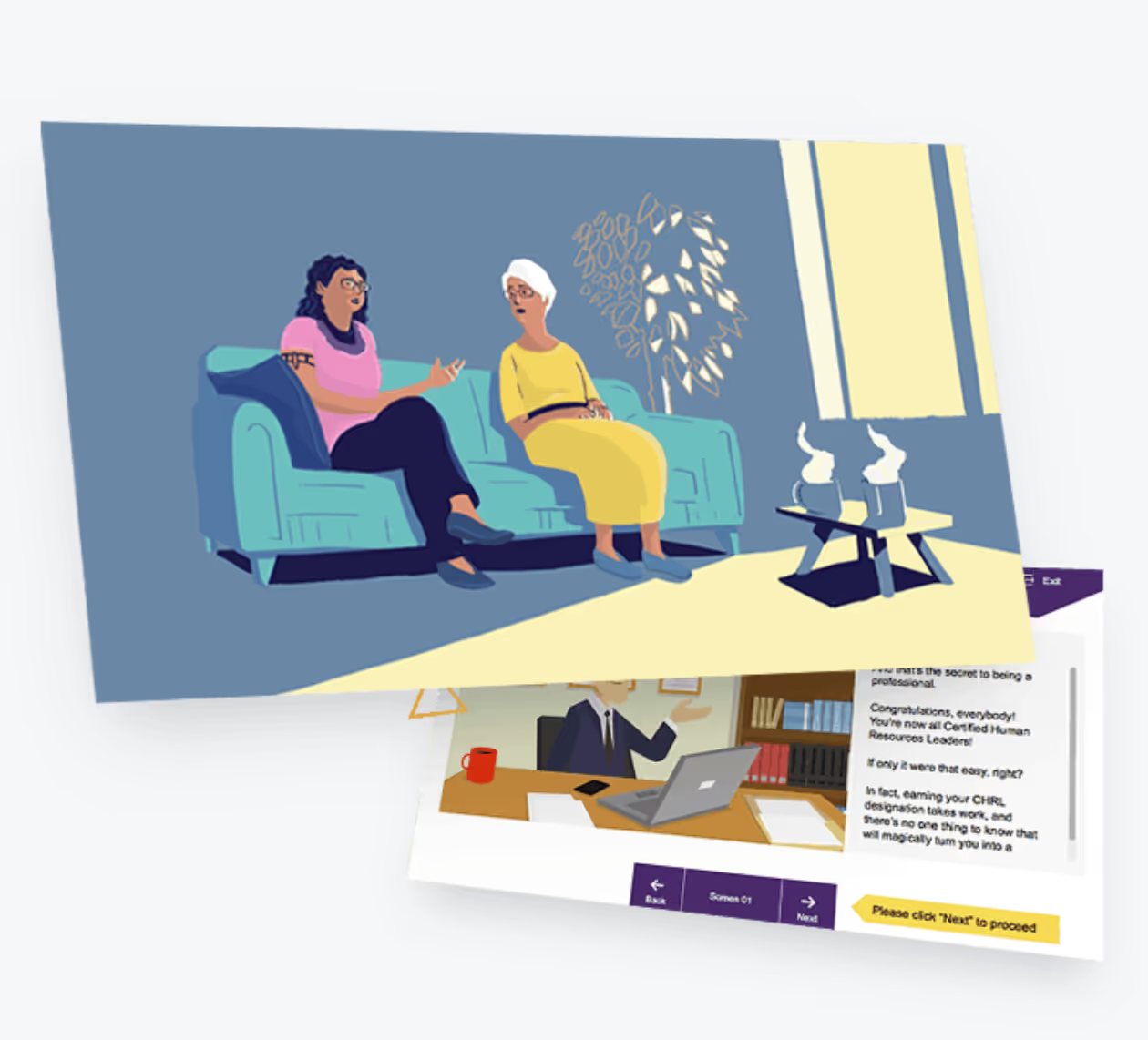
Illustration of a younger woman and an older woman sitting on a blue couch in a brightly lit room with a potted plant and a small table holding two steaming mugs.
Digital Learning

Bite-sized, single-concept learning

BTS's rapid learning is a robust but focused library, targeting pivotal behaviors in leadership and sales. Novel micro-training concept in which line leaders bring a team together to engage in a module, discuss and practice.
Learn more
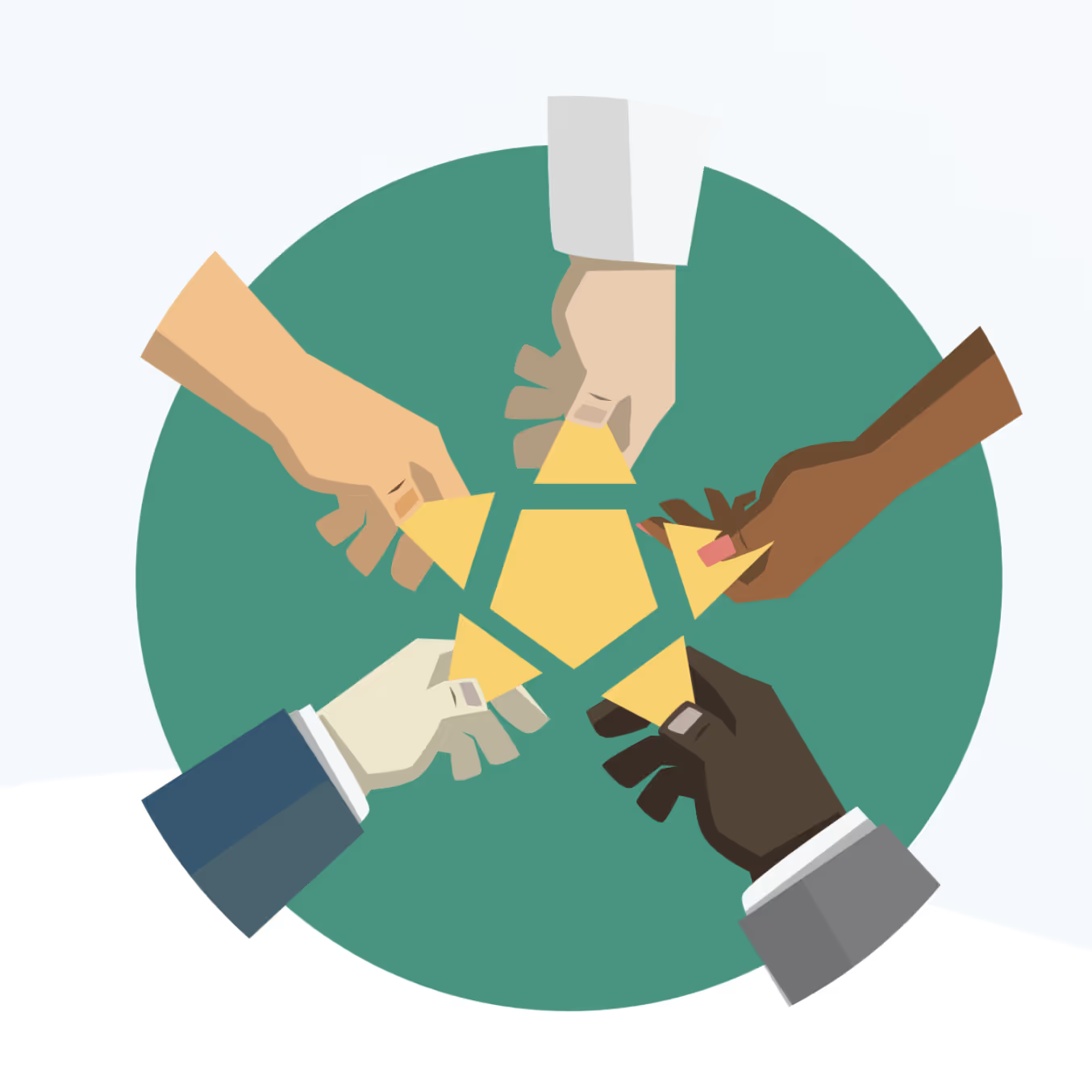
Illustration of five diverse hands assembling pieces of a yellow star together over a green circle background.
How we help

Get Togethers to engage every team in the organization

Ultimately to drive real change, every leader needs to own and drive new ways of working with their teams all the way down to the front lines. Our pre-packaged ‘Get Togethers’ are scalable, flexible, and easy ways to ignite team momentum to learn, align and change. These pre-designed experiences built to run in the flow of work and be highly interactive, engaging, experiential, and meaningful. Analytics and reporting is embedded and provides you with deep insights from all teams without having to burden the organization with more surveys.

Talk to an expert
Digital Learning

Understanding Project Management increases ability to lead & follow project management processes

The new Understanding Project Management (UPM) by BTS is a Web-based learning resource that helps experienced and aspiring project managers understand the five process groups of best practice project management. The self-paced 4-hour program can be taken as pre-work to help users prepare for more advanced workshops or as a standalone project management primer to better understand fundamental project management. It can also be used as an ongoing reference tool to reinforce concepts and prior learning.

View Offering
Computer monitor displaying charts and video interface connected to diverse user icons and cloud storage symbols.
Digital Learning

Winning in Business Simulation

Winning in Business is an industry-leading digital simulation that will provide your people with the skills they need to perform at a higher level and help your organization to gain a competitive edge. These multi-round, team-based or self-paced, learning experiences are built to help participants practice making business decisions via real-life business situations.

Talk to an expert
Person using a tablet displaying a business planning tool interface during a meeting with colleagues.
Digital Learning

Know-the-business

Our Know the Business (KTB) suite drives business acumen by allowing your people to practice using basic financial statements and key ratios to assess company performance. The multi-language KTB is a mobile-ready, self-paced experience that allows participants to learn, study, and test their financial acumen knowledge. Combining video-based learning bursts, interactive tools, quizzes, and a simulation, the KTB enables all learners to make sound business decisions that drive bottom-line results.

Talk to an expert
Person using a smartphone displaying a green and orange task management or to-do list app interface.
Digital Learning

iLead Challenges

iLead Challenges help companies accelerate the development of great leaders. The simulation provides a series of scenario-based video challenges featuring important leadership moments to deliver a learning experience that reinforces the critical skills necessary for effective leadership. Participants will engage in cinematic storylines to address key leadership topics and develop their leadership skills – essential for optimal execution and delivering long-term business results. Each iLead is a 20- to 30-minute interactive, multi-media experience and is available in many languages

Talk to an expert
Person holding a tablet displaying a virtual meeting titled 'Meeting with Angelo' with video and transcript on screen.
How we help

Digital is an enabler. It powers our in-person and virtual simulations as well as gives people a voice during larger conferences

Facilitated workshops

Facilitated classroom work that goes deep, fast with engaging activities along the way so your team can put in the powerful emotional work. Available in-person, virtually, and on-demand.

Events & Offsites

Alignment simulations and experiences for your leaders and teams that crowdsource the wisdom of the group with mind-blowing ideation.

Rapid Learning
π

A robust but focused library of bite-sized single-concept learning targeting pivotal behaviors in leadership and sales.

Virtual Simulations

Teams run a simulation of your business over multiple rounds combining facilitated sessions with asynchronous teamwork in breakouts.

Self-directed Simulations

Experience simulated worlds, make decisions and see the impact on your business, leadership, sales, and innovation goals.

Leader-led team get togethers

Short, impactful digital experiences designed to be easy to run and accessible when leaders need them in the flow of work.

Custom digital learning

Digital learning strategy, microlearning, course correction, learning reinforcement, and next-gen digital learning campaigns.

Blended & Digital Journeys

Blended journeys include virtual workshops, self-directed learning, and results assurance.

Personalized coaching & practice

With 1-on-1 coaching, pod-coaching, learning circles, and practice-with-an-expert, we’ve got your coaching needs covered.

Assessments

Whether virtual, digital, or in-person, our moments-based assessments allow you to understand your people better based on real situations from your business.

Virtual & Digital Client Advisory

Advice, capabilities, and solutions from best practices for virtual, digital, or hybrid, to collaborative program or curriculum review.

Digital Toolkit

We believe meaningful results are achieved through a journey of learning, development, and execution. These insights allow us to create industry-leading products and experiences that can revolutionize your leadership

01

Business Simulations

We believe meaningful results are achieved through a journey of learning, development, and execution. These insights allow us to create industry-leading products and experiences that can revolutionize your leadership.

02

BTS Digital

From mobile apps to connected portals, BTS creates immersive, interactive digital experiences that enable participants to build skills, align with organizational strategies, and drive results.

03

Assessments

In these highly competitive markets and changing times, having an accurate understanding of a person’s capabilities has never been more critical. BTS offers assessments that evaluate a candidate’s fit within your company as well as the development areas of existing talent.

04

BTS Coach

By combining our robust technology stack, our global footprint, and our innovative, research-driven approach, BTS has made leadership coaching more accessible than ever at a scale previously unimaginable.

05

Virtual Facilitation

Whether virtual, in-person, or a hybrid approach, BTS constantly innovates with top technologies and methodologies to elevate our agenda and deliver transformational experiences at every engagement.

Latest News

Blogposts
April 20, 2026
5
min read
Why we didn't wait: A CEO's field notes from two years of applied AI
AI value is compounding, not linear. BTS CEO Jessica Skon shares how experimentation fuels flywheels, and how breakthrough “AI diamonds” emerge and scale.

Three decisions that changed everything.

Two years ago, we made three deliberate decisions about how BTS would move with Applied AI.

We would become our own Customer Zero.

While others were building strategies, defining governance, and waiting for clarity, we made a different call: we decided not to wait. Not because the stakes were low, but because they were high. And because in a space evolving this quickly, clarity wouldn’t come from planning. It would come from movement.

So instead of starting with a roadmap, we started with three principles:

  1. No top-down mandate. The people closest to the work figure it out.
  2. IT must evolve from gatekeeper to enabler - leading AI trials and fast experimentation.
  3. Don’t wait for certainty.

We set the organization in motion, and once we did, things started to move quickly.

What if we started this company today?

Waiting for certainty is itself a choice, and it’s costing companies more than they realize.

We started where we knew the work best: our simulations. No perfect plan, just teams moving, trying, and iterating.

Simulations are core to who we are at BTS. Companies that simulate don’t just make better decisions; they execute faster and build more engaged cultures.

The team asked a simple question:

"What if we were to start our company today?”

That question started the flywheel.

They asked IT for a few licenses and started building - vibe-coding, writing agents, and testing tools - moving at a pace that would make any VC-backed start-up smile.

The messy middle.

At first, the team was underwhelmed.

The early reports were blunt:

“Not good with math.”

“Poor graph capabilities.”

The team wasn't discouraged. They kept tinkering - jumping between tools, staying on top of new releases, experimenting constantly.

This was a small team, across 24 countries, building off each other’s ideas. Laughing at crazy creations. Breaking things. Iterating in a sandbox alongside real clientwork.

Each cycle produced something:

  • A sharper scenario
  • A faster build
  • A more powerful simulation

The flywheel was turning, and it was generating something real.

When the diamond appeared.

Then something shifted.

The team moved into client trials across five countries. They figured out ISO compliance and built the architecture to handle the complexity, the “spaghetti.”

And what emerged wasn’t incremental:

  • What used to take weeks started happening in days.
  • Limited creativity started to feel like unlimited innovation.
  • Clients became self-serving.
  • Agentic simulations were built directly into client systems for real-time updates and preparation.

This was our first AI diamond - a high-impact outcome created by many cycles of experimentation compounding into real value.

It only appeared because we kept the flywheel turning, each cycle increasing the odds that something would break through.

95% adoption in eight weeks.

Then it was time to take the AI diamond global.

BTS is decentralized and highly entrepreneurial. We operate across 24 countries and 38 offices, where local teams have real autonomy.

And historically? That’s meant a low appetite for adopting something built somewhere else and pushed from the center.

So we expected resistance.

Instead, something surprising happened.

In the first eight weeks, we saw 95% adoption across our global footprint.

It felt completely different from our own digital initiatives, ERP implementations, top-down rollouts of the past.

This moved on its own. Why? 

We realized it didn’t start with a framework or a model, it started with a feeling.

The feeling of being at the leading edge of one’s craft and profession.

  • Joy
  • Excitement
  • Pride

As we watched this play out across teams it stopped feeling like isolated wins.

There was a pattern to it. A repeatable, organic, innovation motion.

And the flywheel didn’t stop with simulations.

It spread across finance, sales enablement, legal, operations, and client delivery. Some cycles led to small improvements, and others revealed new diamonds.

Not becausewe planned for them, but because we built the conditions for people to find them.

The question I'd ask any CEO right now: Is your flywheel turning, or are you still waiting for the perfect plan?

In part 2, I’ll share the key success factors behind the breakthrough, and what we’re now seeing across more than 120 global clients.

Blogposts
April 20, 2026
5
min read
The myth of more: Why coaching needs structure
This blog explores why intentional design, built on consistency, continuity, and completion, is what turns scalable coaching into lasting leadership development.

Organizations have long wanted to scale coaching, but have been limited by cost and capacity. With AI, that's beginning to change as new platforms make coaching more accessible, flexible, and available on demand, extending support beyond a select group of leaders to entire populations.

For talent leaders, this shift creates both opportunity and complexity. With greater reach comes a new set of trade-offs: how to balance access with depth, flexibility with accountability, and efficiency with meaningful development.

The limits of unlimited (coaching).

Unlimited coaching sounds like the obvious answer. Remove the barriers, give everyone access, let people engage on their own terms. What's not to like?

In practice, quite a bit.

When coaching has no defined structure or cadence, engagement tends to become episodic - people show up when something feels urgent and step back when it doesn't. The coaching relationship never quite deepens. Conversations cover ground but don't build on it. And the development that was supposed to happen keeps getting pushed to the next session, and the next.

Three patterns emerge:

  1.  Sporadic engagement over sustained development. Without a rhythm to anchor the work, coaching becomes reactive. Clients bring whatever is most pressing that week rather than working toward something larger. Progress happens in bursts, if at all.
  2. Insights that don't compound. Great coaching reveals patterns over time - things a client can't see in one session but can't unsee after several. Without continuity, and without a consistent coaching relationship to hold the thread, each conversation starts close to zero.
  3. Outcomes that are hard to measure. No milestones. No defined endpoint. No clear way for the organization, or the client, to know whether it's working. Activity fills the gap where impact should be.

The result is a model that's easy to scale and hard to defend. Which is exactly the problem talent leaders are navigating right now.

The relationship is the lever.

Decades of research into what makes coaching work keeps arriving at the same answer: it's the relationship. Not the platform, not the methodology. The relationship.

When a coach and client build trust over time, developing shared language, and returning to the same themes with increasing depth, something shifts. Conversations get more honest. Insights stick. The client starts doing the work between sessions, not just during them. That's when coaching becomes genuinely transformative, and it can't be rushed or replicated in a one-off session.

The ICF and EMCC are clear on this: continuity is what dives outcomes. The coaching engagements that produce lasting change are the ones where each session builds on the last, not the ones that simply offer more access.

Three principles make that possible: Consistency, Continuity, and Completion.

1. Consistency

The foundation everything else is built on.

The temptation when designing a coaching program is to treat flexibility as a feature - let people book when they want, swap coaches freely, engage on their own schedule. But frequent coach changes reset the clock. Every new coach has to earn trust, learn context, and find their footing with the client. That's time spent getting started, not getting somewhere.

A stable coaching relationship works differently:

  • The coach starts to see around corners, uncovering patterns the client can't see on their own
  • The client stops performing and starts being honest
  • The relationship itself becomes a source of accountability, not just the sessions

Consistency doesn't constrain the work. It's what makes the deeper work possible.

2. Continuity

What turns a series of sessions into genuine development.

Without continuity, coaching tends to be additive at best- each session offers something useful, but nothing compounds. With it, the work builds on itself in ways that can't happen in isolated conversations.

What continuity makes possible:

  • A limiting belief surfaced in session three becomes a thread that runs through the rest of the engagement
  • A behavioral pattern the client couldn't see at the start becomes impossible to ignore by the end
  • Space opens up for the harder work - the kind that requires sitting with discomfort across multiple sessions, not resolving it quickly and moving on

That slower, deeper work is where lasting change actually happens. It doesn't come from more sessions. It comes from the right sessions, in the right order, with the same person.

3. Completion

The most underrated principle of the three.

In a world of unlimited access, there's no finish line, and without one, it's surprisingly hard to know what you're working toward, or whether you've gotten there. A defined endpoint changes the entire shape of an engagement.

A clear endpoint creates urgency and focuses every session on what matters most.

  • Shifts the question from "what should we talk about this week?" to "what do we need to accomplish before we're done?"
  • Gives both coach and client a body of work to look back on, not just a log of conversations

For talent leaders, this is also what makes coaching legible as an investment. Sessions logged is an activity metric. A cohort of leaders who completed a structured engagement and can articulate what changed, that's a result.

Don't just scale it, design it (here’s how) 

The opportunity in front of talent leaders right now is significant. The organizations that will get the most from this moment are the ones that treat coaching design as seriously as coaching delivery.

Practical design decisions:

  • Define the arc before you launch: set the number of sessions, the cadence, and the goals upfront, not after people have already started booking
  • Protect the coaching relationship: Make coach switching the exception, not the default, and design your program to discourage unnecessary re-matches
  • Build in milestones: create structured check-ins at the midpoint and end of each engagement so progress is visible to both the coach and the organization
  • Separate on-demand support from developmental coaching: Use AI-enabled tools for in-the-moment guidance, and reserve structured engagements for the deeper work
  • Measure completion, not just activation: Track how many people finish an engagement, not just how many start one

Questions to pressure-test your design:

  • Does every participant know what they're working toward before their first session?
  • Can your coaches see enough context about a client's journey to pick up where they left off?
  • Would you be able to show, at the end of a cohort, what changed, and for whom?

Access opened the door. Intention is what makes it worth walking through.

Blogposts
March 20, 2026
5
min read
Qué funciona y qué no en las transformaciones y cambios culturales
Cómo liderar un cambio cultural real en tu organización: insights prácticos, errores habituales y un enfoque probado para alinear estrategia, liderazgo y comportamientos hacia resultados sostenibles.

¿Se puede cambiar la cultura de una organización?

Hoy en día, hay pocas organizaciones que no se encuentren inmersas en uno (o varios) procesos de transformación cultural. Nuevas formas de trabajar en organizaciones más planas y adaptativas, mejoras en la cultura de seguridad, orientar la organización hacia sus clientes, transformaciones de las áreas comerciales, mejora de la excelencia operativa, por citar algunas.

Y es aquí donde viene una de las grandes preguntas:
¿se puede cambiar la cultura de una organización? Y, si es así, ¿cómo se hace?

Para ayudar a responder a estas preguntas, que a menudo nos hacen nuestros clientes y sobre las que hay mucho escrito, me gustaría compartir lo que en BTS hemos aprendido en los últimos 38 años sobre qué funciona y qué no (hasta ahora, que en esto de los cambios culturales uno nunca deja de aprender).

La buena noticia es que la respuesta a la pregunta de si se puede cambiar la cultura de una organización es sí.
La dificultad viene al responder a la segunda: ¿cómo se hace?

¿Un proyecto? ¿Una iniciativa?

Un punto importante a considerar es que los procesos de cambio o transformación cultural no son un proyecto con un inicio y un fin; es un proceso en constante evolución. Y esto es algo que en ocasiones genera tensión en las organizaciones, a menudo acostumbradas a un enfoque basado en proyectos.

¿Qué es crítico y a menudo se suele ignorar?

Hay una serie de elementos que, si se tienen en cuenta y se utilizan adecuadamente, harán que los esfuerzos de transformación sean mucho más eficaces. Desafortunadamente, muchas veces se ignoran.

Estos elementos críticos son:

  • Involucrar a la gente. Cuanto más se hace partícipes de la transformación a las personas (a todos los niveles), más altas son las probabilidades de que implementen los cambios requeridos.
  • Para entender el cambio hay que tangibilizarlo y experimentarlo. Consiste en conectar el marco teórico con acciones del día a día. Explicar la foto completa con transparencia es clave.
  • Todos los cambios traen consigo cosas positivas, pero también tienen impactos negativos. Explicar la foto completa con transparencia es clave.
  • Cambiar la cultura implica tiempo y requiere identificar y cambiar los “mindsets” y las estructuras diarias (símbolos) que definen cómo se hacen las cosas en la organización.
  • La cultura debe estar fuertemente conectada con la estrategia.

¿Cómo recomendamos estructurar los procesos de cambio cultural?

Nuestro enfoque se compone de cuatro etapas: establecer resultados, crear líderes de cambio, incrustar cambios clave y sostener las nuevas formas de trabajo.

1. Establecer resultados

El primer paso en cualquier proceso de transformación es establecer resultados claros. Es crucial identificar los impulsores de la transformación y definir los resultados deseados de manera que se logre un verdadero alineamiento a nivel ejecutivo. A medida que se avanza, hay que conectar los puntos entre el propósito y la visión, entendiendo de dónde se viene, dónde se está y hacia dónde se quiere avanzar. Además, es esencial conectar la transformación con los objetivos organizacionales.

Algunas acciones relevantes de esta fase son:

  • Recopilación de información (entrevistas, focus groups, visitas a operaciones,…)
  • Diagnósticos culturales
  • Definición de expectativas (Leadership Profiles

2. Crear líderes de cambio

En BTS creemos que todos los líderes son también líderes de cambio. Adoptar una mentalidad de “líder de cambio” requiere que los líderes experimenten y vean lo que se espera de ellos. Desde el inicio, es vital impulsar a la acción con ‘trabajo real’, como establecer nuevas prioridades y comunicar de forma transparente y eficaz.

Hay que comprometer (emocional y racionalmente) a los líderes con el cambio y hacerles ver cómo pueden impactar en la cultura a través de acciones concretas en el día a día.

Por último, es necesario proporcionar apoyo continuo para los cambios de mentalidad y comportamiento más difíciles y recoger retroalimentación sobre lo que funciona y lo que no en esta etapa.

Algunas acciones relevantes de esta fase son:

  • Elaboración de Playbooks para roles críticos
  • Despliegue de programas de liderazgo y cambio
  • Feedback loops con los niveles ejecutivos

3. Incrustar cambios clave

Para lograr un cambio significativo, es esencial identificar los modelos mentales actuales y ofrecer nuevos que apoyen el estado deseado. Crear rutinas y símbolos que refuercen el cambio, así como identificar procesos, prácticas, eventos o normas ancladas en las viejas formas de trabajar, es crucial.

Cocrear nuevas formas de trabajo para su activación inmediata ayuda a cimentar estos cambios. A medida que se avanza, cambiar los sistemas y procesos que soportan y refuerzan los cambios cruciales es fundamental para el éxito a largo plazo.

Algunas acciones relevantes de esta fase son:

  • Coaching a líderes
  • Montar Sprints culturales
  • Cascadear el cambio al resto de la organización
  • Assessments para medir cambios de comportamientos

4. Sostener las nuevas formas de trabajo

El cambio no es solo un esfuerzo individual, sino también un fenómeno social. Por ello hay que proveer de las redes sociales necesarias para apoyar los cambios de mentalidad y comportamiento. Intervenir con apoyo individual para roles críticos y períodos específicos, así como incorporar nuevas formas de trabajo, asegura la continuidad del cambio.

Por último, hay que utilizar datos para analizar lo que funciona y lo que no, permitiendo crear el siguiente conjunto de intervenciones y apoyo necesarios.

Algunas acciones relevantes de esta fase son:

  • Integración de los Playbooks en el ciclo de talento de la organización
  • Practica de los nuevos comportamientos en el día a día con bots potenciados por IA
  • Diseño de una oficina para monitorizar el cambio y definir nuevas acciones
  • Diseño y lanzamiento de Comunidades de Práctica (CoP)

La importancia de ser paciente e impaciente a la vez

Los procesos de transformación cultural son uno de los elementos más retadores, ya que nunca existe una receta única.

Ser estratégicamente paciente (teniendo claros esos resultados deseados y evitando dar bandazos), pero tácticamente impaciente (realizando acciones en las fases expuestas anteriormente y viendo qué funciona y qué no, para pivotar y corregir) es clave en los procesos de transformación.

El enfoque de las 4 fases ayuda a ello, posibilitando que estos viajes se conviertan en una experiencia enriquecedora para la organización, y no en un dolor de los que dejan cicatriz en la memoria colectiva.

Este es solo un resumen.
Si quieres profundizar en el enfoque completo, ejemplos y claves prácticas:

Descarga el PDF completo y accede a todo el contenido.

Client stories

Accelerating leadership alignment

Citi needed to ensure 40,000 of its leaders were engaged and aligned on leadership principles and ethical imperatives

Learn more
Citi logo with white text and arch on a light blue background.
Client Stories

Cascading a leadership framework

Schlumberger wanted to align its top 5,000 managers to its new leadership framework and ensure its top 400 executives became “change leaders.”

Learn more
White Schlumberger text logo on a light blue background.
Client Stories

Accelerating development with a performance culture

The CEO of Chevron recognized that creating a performance culture was a critical component of the company’s three key pillars for accelerating growth. To improve their culture, the organization partnered with BTS to upskill their people, starting with feedback.

Learn more
White Chevron logo with two downward pointing chevrons and the word Chevron on a light purple background.
Client Stories

Customer-centric, industry-based sales training

A leading financial services company needed to train 900 branch managers on foundational leadership skills, such as setting goals and holding people accountable, providing corrective feedback, and improving morale.

Digital financial chart with colorful bar graphs and fluctuating line graphs against a dark blue background with a warm light glow.
Neon sign with pink circular symbols and white text 'bts' mounted on a wall covered in rows of vintage cassette tape images.

Ready to start a conversation?

Every successful transformation begins with a meaningful conversation. Connect with us to explore how BTS can partner with you to make the shift.