

Insights


In Part 1, I told you about the three decisions we made two years ago and the simulation flywheel that produced our first Applied AI diamond.
Here’s the field-notes version.
Over 80% of our global business have now adopted a new Applied AI approach for doing simulations in the first eight weeks, across 24 countries and every practice.
The flywheel didn’t stop with simulations. It moved into finance, sales enablement, legal, operations, and client delivery. Teams started building agents and bringing them onto their own org charts. We didn’t plan for any of that. We built the conditions for people to find their own breakthroughs.
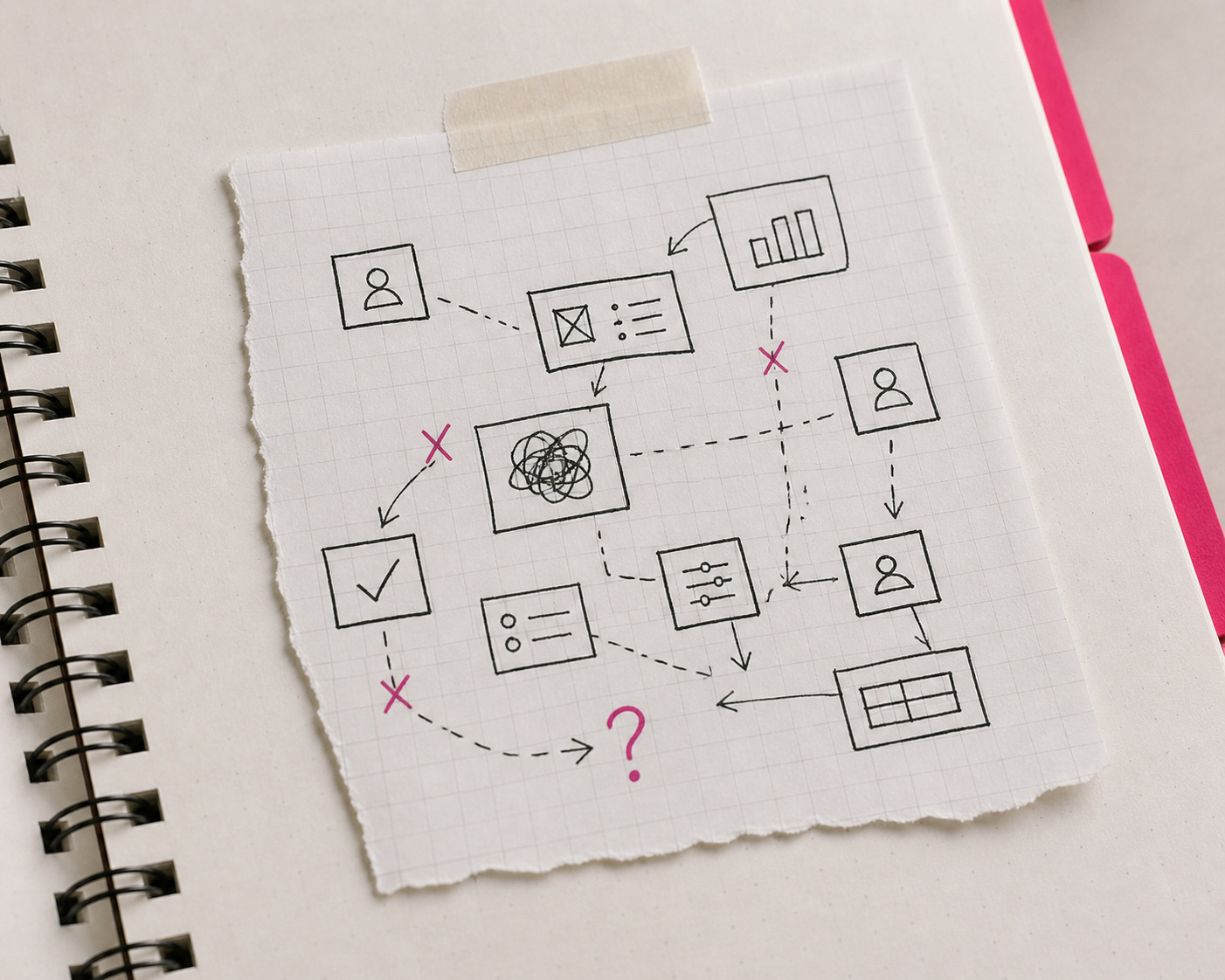
What it felt like inside the flywheel.
When the simulation team went live with their first clients on the new way of working, the lead person hit a wall. Their words:
“You’re asking too much. You’re making me be a full-stack developer. Up until this point I did a small part, and I sent it to the team, and they built off the back end, and they brought it back. And now I have to end-to-end soup to nuts, basically alone.”
There was graphic UI work nobody had been trained for, the fear of delivering quality below what BTS expects of itself, and the weight of not having a playbook. This was not the joyful adoption story most consultancies tell.
Then something shifted. Six members showed up for product testing, where the usual was two or three. The work created teamwork I hadn’t seen at BTS in years. The breakthrough was not an instantaneous change from skepticism to celebration. It was a breakdown in confidence, then rally, then bonding. If we didn’t make room for the breakdown, we would have lost the rally.
The other breakthrough was global teamwork; not yet a BTS core strength. Our culture is beautiful: high-freedom and entrepreneurial. But people’s first identities are to their countries. Almost every prior attempt we’ve made at a global initiative has failed. The one exception was Covid. So, when I say what happened next surprised me, I mean it.
I asked to join the simulation team’s Slack channel rather than pulling them into status meetings. What I got to watch in the mornings was someone in South Africa waking up, posting “I tried this and got stuck,” then London adding on, then San Francisco weighing in, then a surprise breakthrough overnight from Tokyo. We didn’t engineer that. Curious and determined BTS’ers did. The problem was interesting enough that the org chart didn’t matter. It was amazing to see and a glimpse into the next evolution of the BTS culture.

The pattern: Explore, expand, institutionalize, renew.
What we’ve now seen play out, both inside BTS and with clients, follows the same four-step pattern. Each step asks a specific decision of the leader.
Explore.
Stay stubborn on the aspiration and fluid on the path. Our breakthrough wasn’t the path we originally took. We changed tools and approaches. Nobody could have foreseen that. And if the team had taken the first six months of learnings from AI as their definitive “this is the detailed path we will follow,” we never would have gotten the disruption. Five different tool combinations were tried before we found the one that worked. Companies that lock into a single path or tool too early are betting against compounding capability that doubles roughly every seven months. That is not a bet I’d take.
Expand.
Run the old way and the new way side by side. When the simulation team’s breakthroughs got real, the instinct was to retreat into more internal testing. We did the opposite. They ran old way and new way in parallel on 6 or 8 live client projects across all three geographies. Every single one ended up going live the new way. The backup was always there. They didn’t need it.
Institutionalize.
Burn the boats. The simulation team committed that no new client work would be done the old way after January 1. The other practice leads then committed to dates within Q1, even though most of them had not yet experienced the new way themselves. They had to trust their colleagues. If you can do it for the most complex thing, you could probably do it for the less complex ones. By February 15, we had approaching 90% global adoption across 24 countries, across all practices. I was shocked and proud. We had spent years failing at exactly this kind of global rollout.
Renew.
Treat your agents as contractors. People on our diamond teams are now managing 30+ agents they built themselves. Our teams give agents performance feedback. We terminate their contracts when they don’t deliver. We expand the responsibility of agents when they outperform. The frontier question we’re wrestling with now is token budgeting. Two friends of mine running engineering-heavy companies believe that within 6 - 9 months, their token cost per engineer will exceed the cost of the engineer. Whether that’s the right framing is open. The question is real, and every CEO will be asked some version of it within the year.
What had to be true for this to scale.
Once we achieved this amazing global innovation, the leadership sat down to figure out what made it work. We named five things. None of them were about the technology.
Real pain points as the starting point. We had so many people frustrated from those ways of working, all the back and forth and all the wasted time, that this was gold for them. The old way was already painful. The new way wasn’t a forced disruption; it was relief. Find the workflow where the pain is loudest and start there.
The diamond unlocked creativity, it didn’t constrain it. This was the most differentiated insight, and the one most leaders miss. It wasn't "here's the new tasks and rules." It was, "once you learn how to do this, the sky's the limit. You can be even more creative." If your rollout feels like a new set of rules constraining your people, you’ve built the wrong thing.
Pair deep expertise with fresh eyes. The disproportionate share of our breakthroughs came from a tenured tinkerer with total command of the work, paired with someone new to the role who hadn’t yet built the muscle memory of how it had always been done. Without that pairing, you get incremental improvements to the work you already know how to do, instead of a reinvention.
Refuse the “people are too busy” reflex. When I brought the rollout to the global leadership team, the excuses came fast. “Our people are too busy. They’re burnt out. Q1 is going to be busy. No one’s going to have time.” My response: “This is a chance to eliminate the tasks you dread and expand what you love. I know it is a short push of extra work, and I think after the fact you and your team will feel joy and pride and say it was the best time we ever spent.” This is the moment most AI rollouts die.
Senior leaders must lead by example and do the work themselves. This is not middle manager’s job. This is not something you delegate. Even though you don’t build simulations anymore, you must know what this is. One of our partners proactively put time on senior leaders’ calendars and forced them to do the work. Once they started building, the excitement grew, and they could advocate for the rollout because they understood it. If your executives haven’t put their hands on the keyboard, you don’t have a rollout. You have a memo.
What we’re seeing across clients.
We’re now running this play with client organizations across industries and geographies. The companies whose flywheels are accelerating paired their A-players with their early-career talent, pulled IT and legal into the working sessions, refused the “too busy” reflex, and put their senior leaders’ hands on the keyboard. The companies whose flywheels are stuck almost always have a leadership pattern at the center of the stall. Not a tooling pattern. Not a governance pattern. A leadership pattern.
If this resonates, let’s talk.
If you read Part 1 and asked yourself whether your flywheel was turning, the question I’d add now is sharper: do you have the conditions in place for a diamond to appear? If yes, you’re already moving. If no, the technology will not save you.
Here's where we're starting with clients: a working session, half day to a full day, with a small group that owns one of your highest-friction processes. Together we map where your first diamond is most likely to land, how to set up the side-by-side trial, and what your version of "burn the boats" should look like.
The destination, if we do this right, is a self-reliant culture of applied AI inside your company. 5, 10, 15 diamonds compounding into a fundamentally different way of operating. From what I have experienced this is a once in a career opportunity for dramatic shareholder value creation if you get that muscle going. I say that because I'm watching it happen, in real time, inside our own company and across our client base.
If you want to get your flywheels spinning and map your first diamond, start here. Bring your hardest workflow. We'll bring the playbook.

Three decisions that changed everything.
Two years ago, we made three deliberate decisions about how BTS would move with Applied AI.
We would become our own Customer Zero.
While others were building strategies, defining governance, and waiting for clarity, we made a different call: we decided not to wait. Not because the stakes were low, but because they were high. And because in a space evolving this quickly, clarity wouldn’t come from planning. It would come from movement.
So instead of starting with a roadmap, we started with three principles:
- No top-down mandate. The people closest to the work figure it out.
- IT must evolve from gatekeeper to enabler - leading AI trials and fast experimentation.
- Don’t wait for certainty.
We set the organization in motion, and once we did, things started to move quickly.
What if we started this company today?
Waiting for certainty is itself a choice, and it’s costing companies more than they realize.
We started where we knew the work best: our simulations. No perfect plan, just teams moving, trying, and iterating.
Simulations are core to who we are at BTS. Companies that simulate don’t just make better decisions; they execute faster and build more engaged cultures.
The team asked a simple question:
"What if we were to start our company today?”
That question started the flywheel.
They asked IT for a few licenses and started building - vibe-coding, writing agents, and testing tools - moving at a pace that would make any VC-backed start-up smile.

The messy middle.
At first, the team was underwhelmed.
The early reports were blunt:
“Not good with math.”
“Poor graph capabilities.”
The team wasn't discouraged. They kept tinkering - jumping between tools, staying on top of new releases, experimenting constantly.
This was a small team, across 24 countries, building off each other’s ideas. Laughing at crazy creations. Breaking things. Iterating in a sandbox alongside real clientwork.
Each cycle produced something:
- A sharper scenario
- A faster build
- A more powerful simulation
The flywheel was turning, and it was generating something real.

When the diamond appeared.
Then something shifted.
The team moved into client trials across five countries. They figured out ISO compliance and built the architecture to handle the complexity, the “spaghetti.”
And what emerged wasn’t incremental:
- What used to take weeks started happening in days.
- Limited creativity started to feel like unlimited innovation.
- Clients became self-serving.
- Agentic simulations were built directly into client systems for real-time updates and preparation.
This was our first AI diamond - a high-impact outcome created by many cycles of experimentation compounding into real value.
It only appeared because we kept the flywheel turning, each cycle increasing the odds that something would break through.

95% adoption in eight weeks.
Then it was time to take the AI diamond global.
BTS is decentralized and highly entrepreneurial. We operate across 24 countries and 38 offices, where local teams have real autonomy.
And historically? That’s meant a low appetite for adopting something built somewhere else and pushed from the center.
So we expected resistance.
Instead, something surprising happened.
In the first eight weeks, we saw 95% adoption across our global footprint.
It felt completely different from our own digital initiatives, ERP implementations, top-down rollouts of the past.
This moved on its own. Why?
We realized it didn’t start with a framework or a model, it started with a feeling.
The feeling of being at the leading edge of one’s craft and profession.
- Joy
- Excitement
- Pride
As we watched this play out across teams it stopped feeling like isolated wins.
There was a pattern to it. A repeatable, organic, innovation motion.
And the flywheel didn’t stop with simulations.
It spread across finance, sales enablement, legal, operations, and client delivery. Some cycles led to small improvements, and others revealed new diamonds.
Not becausewe planned for them, but because we built the conditions for people to find them.
The question I'd ask any CEO right now: Is your flywheel turning, or are you still waiting for the perfect plan?
In part 2, I’ll share the key success factors behind the breakthrough, and what we’re now seeing across more than 120 global clients.

1. La Conversación Ha Cambiado
Durante los últimos dos años, el debate sobre la Inteligencia Artificial ha estado impulsado principalmente por proveedores tecnológicos y firmas de consultoría que animaban a las compañías a acelerar su adopción.
Hoy la conversación es distinta. Son los mercados financieros y los analistas quienes formulan la pregunta clave:
¿Dónde está el retorno?
Los datos muestran que los mercados apenas han incorporado expectativas de mejora de beneficios impulsados por IA en la mayoría de las compañías no tecnológicas. Mientras unas pocas grandes tecnológicas concentran las expectativas, el resto del mercado permanece bajo presión para demostrar impacto real en resultados.
Esto ya no va de ‘hype’ ni de titulares. Va de crear valor real, medible y sostenible.
Y el diagnóstico es claro: el reto no es la tecnología, sino la adopción organizativa.
Ahí es donde está la verdadera oportunidad.
2. Las organizaciones están chocando contra un muro — y lo saben
Tras dos años de programas amplios de IA: licencias masivas, sesiones de “IA para todos”, campañas de concienciación; muchas organizaciones se hacen la misma pregunta incómoda:
¿Y ahora qué?”
Se han lanzado iniciativas. Se han hecho pilotos. Pero el salto hacia un impacto escalable y medible no termina de llegar.
Los equipos utilizan herramientas de IA para ahorrar minutos. Algunos pilotos permanecen en fase de prueba durante meses, incluso años, sin escalar. Y la transición desde la “concienciación en IA” hacia la “IA que genera resultados de negocio” se convierte en un terreno para el que pocas organizaciones estaban realmente preparadas.
El desafío no es empezar. Es escalar.
3. Por Qué Existe Escepticismo: La Realidad Operativa
Cuando analizamos lo que ocurre en la práctica, la realidad operativa ayuda a entender el escepticismo del mercado. En distintos sectores se repiten los mismos patrones:
- Muchas iniciativas de IA se quedan atascadas en el piloto y nunca escalan.
- Un porcentaje importante no consigue generar impacto medible.
- Se produce una “curva J” de productividad: una fase inicial de disrupción antes de que aparezcan los beneficios.
- La “Shadow AI”, empleados utilizando herramientas personales sin gobernanza, se está convirtiendo en la norma, con los riesgos asociados.
El factor limitante no es el acceso a modelos o herramientas.
Es la capacidad y adopción organizativa: procesos, roles, gobernanza, habilidades y disciplina en la generación de valor.
4. Qué Hacen Diferente Las Organizaciones Que Sí Están Escalando La IA Con Éxito
Las compañías que están consiguiendo escalar la IA no necesariamente tienen más presupuesto ni más talento técnico. Lo que tienen es mayor disciplina organizativa.
Hay tres elementos marcan la diferencia:
- Desarrollan capacidades para cambiar comportamientos reales.
No se limitan a solo concienciar. No basta con webinars genéricos de “IA para todos”. Construyen capacidades estructuradas y basadas en roles:
- Directivos capaces de gobernar la estrategia de IA.
- Managers que saben rediseñar procesos y formas de trabajo.
- ‘Power users’ que lideran la identificación y el desarrollo de casos de uso.
- Y perfiles técnicos que llevan esos casos desde la idea hasta producción.
- Construyen cultura de datos, no solo infraestructura.
Los pipelines limpios importan. Pero también importa que exista una comprensión y entendimiento compartido sobre calidad del dato, gobernanza y uso responsable de la IA.
Sin ambas dimensiones, las iniciativas alcanzan rápidamente un techo: técnicamente viables, pero organizativamente bloqueadas.
- Gestionan la IA como una cartera de inversión, no como una lista de proyectos.
Cada iniciativa tiene un caso de negocio.
Los casos de uso se cualifican antes de asignar recursos.
El ROI se mide.
No persiguen cada tendencia. Priorizan con rigor —y detienen lo que no funciona.
Estos patrones no son teóricos ni aspiracionales. Son observables. Y replicables.
5. El Modelo de IA de Netmind: De la Adopción al Impacto a Escala
En Netmind hemos diseñado un enfoque precisamente para cerrar esta brecha entre intención y escala.
Nuestro modelo de IA es un marco integrado para ayudar a las organizaciones a transformar el potencial de la IA en resultados medibles, trabajando de forma coordinada en tres dimensiones interdependientes:
Pilar 1 — Valor De Negocio: Hacer Que Cada Iniciativa Justifique Su Inversión
La IA sin un caso de negocio claro es solo experimentación.
Trabajamos con equipos de liderazgo para establecer una disciplina sólida de generación de valor:
- Identificación de casos de uso de mayor impacto.
- Construcción rigurosa de business cases.
- Definición de métricas y marcos de medición.
- Diseño de estructuras de gobernanza que diferencian programas estratégicos de colecciones de pilotos desconectados.
La pregunta no es “¿qué puede hacer la IA?”, sino:
“¿Qué debería hacer para nosotros y cómo sabremos que está funcionando?”
Pilar 2 — Personas Y Organización: Construir Capacidades Que Perduren
La razón más habitual por la que la IA no escala no es técnica. Es humana.
Los equipos no saben cómo trabajar de forma diferente.
Los managers no saben cómo liderar en entornos híbridos humano-IA.
Los directivos no cuentan con marcos claros para decidir dónde invertir.
Nuestra arquitectura de desarrollo de capacidades cubre toda la organización en tres niveles:
- L100 — AI Fluency: Concienciación amplia: qué es la IA, qué puede y qué no puede hacer, y cómo impacta en cada rol. Es la base. Sin ella, el cambio no se consolida.
- L200 — AI Application: Capacitación práctica basada en roles para managers y responsables de negocio: identificación de casos de uso, rediseño de procesos y liderazgo de la adopción.
- L300 — AI Specialization: Itinerarios avanzados para ‘power users’, ‘champions’ internos y perfiles técnicos que llevan los casos desde concepto hasta producción y consolidan la capacidad a largo plazo.
Un principio clave de nuestro enfoque:
autosuficiencia por encima de dependencia.
No diseñamos programas que requieran soporte externo permanente. Construimos la capacidad interna para que las organizaciones puedan operar, adaptar y escalar por sí mismas.
Pilar 3 — Tecnología Y Datos: La Base Que Permite Avanzar Con Velocidad Y Seguridad
La estrategia y las capacidades necesitan una infraestructura adecuada.
Acompañamos a las organizaciones en el desarrollo de:
- Marcos de gobernanza del dato.
- Estándares de calidad.
- Guardrails de IA responsable
permitiéndolas avanzar de forma rápida y con seguridad, sin introducir nuevos riesgos.
No actuamos como integradores tecnológicos.
Trabajamos desde la perspectiva de negocio y organización, asegurando que las inversiones tecnológicas estén respaldadas por los procesos y capacidades necesarias para generar impacto real.
6. Cómo Trabajamos: Co-Crear En Lugar De Entregar
El modelo tradicional de consultoría en IA sigue siendo, en muchos casos, un modelo de entrega: se construye algo, se transfiere y el proyecto se da por cerrado.
La realidad de lo que suele pasar después es conocida: el traspaso falla, el equipo interno no puede sostenerlo y el piloto no escala.
En Netmind no construimos para las organizaciones. Construimos con ellas. Y desarrollamos sus capacidades para que puedan seguir construyendo sin nosotros.
Cada proyecto se diseña en torno a la co-creación. Nuestros expertos trabajan junto a los equipos internos. La metodología, las herramientas y los marcos de gobernanza se transfieren en tiempo real.
Eso es lo que hace que los resultados sean sostenibles.
Y también lo que convierte la inversión en capacidad en un activo estratégico, no en un coste recurrente.
The Bottom Line
Hoy los mercados dudan de que la mayoría de organizaciones logren capturar valor real de la IA.
Nosotros creemos que se equivocan, que esa predicción solo se cumplirá para quienes la aborden como una herramienta más o como un simple programa formativo y no como una transformación real de cómo se trabaja, cómo se toman decisiones y cómo se genera valor.
Las organizaciones que marcarán la diferencia serán aquellas que desarrollen capacidad organizativa en IA, no solo despliegue tecnológico.
La IA no es solo una herramienta: es una nueva capacidad organizativa.
El verdadero reto ya no es empezar, sino escalar con sentido y estrategia.

Organizations have long wanted to scale coaching, but have been limited by cost and capacity. With AI, that's beginning to change as new platforms make coaching more accessible, flexible, and available on demand, extending support beyond a select group of leaders to entire populations.
For talent leaders, this shift creates both opportunity and complexity. With greater reach comes a new set of trade-offs: how to balance access with depth, flexibility with accountability, and efficiency with meaningful development.
The limits of unlimited (coaching).
Unlimited coaching sounds like the obvious answer. Remove the barriers, give everyone access, let people engage on their own terms. What's not to like?
In practice, quite a bit.
When coaching has no defined structure or cadence, engagement tends to become episodic - people show up when something feels urgent and step back when it doesn't. The coaching relationship never quite deepens. Conversations cover ground but don't build on it. And the development that was supposed to happen keeps getting pushed to the next session, and the next.
Three patterns emerge:
- Sporadic engagement over sustained development. Without a rhythm to anchor the work, coaching becomes reactive. Clients bring whatever is most pressing that week rather than working toward something larger. Progress happens in bursts, if at all.
- Insights that don't compound. Great coaching reveals patterns over time - things a client can't see in one session but can't unsee after several. Without continuity, and without a consistent coaching relationship to hold the thread, each conversation starts close to zero.
- Outcomes that are hard to measure. No milestones. No defined endpoint. No clear way for the organization, or the client, to know whether it's working. Activity fills the gap where impact should be.
The result is a model that's easy to scale and hard to defend. Which is exactly the problem talent leaders are navigating right now.
The relationship is the lever.
Decades of research into what makes coaching work keeps arriving at the same answer: it's the relationship. Not the platform, not the methodology. The relationship.
When a coach and client build trust over time, developing shared language, and returning to the same themes with increasing depth, something shifts. Conversations get more honest. Insights stick. The client starts doing the work between sessions, not just during them. That's when coaching becomes genuinely transformative, and it can't be rushed or replicated in a one-off session.
The ICF and EMCC are clear on this: continuity is what dives outcomes. The coaching engagements that produce lasting change are the ones where each session builds on the last, not the ones that simply offer more access.
Three principles make that possible: Consistency, Continuity, and Completion.
1. Consistency
The foundation everything else is built on.
The temptation when designing a coaching program is to treat flexibility as a feature - let people book when they want, swap coaches freely, engage on their own schedule. But frequent coach changes reset the clock. Every new coach has to earn trust, learn context, and find their footing with the client. That's time spent getting started, not getting somewhere.
A stable coaching relationship works differently:
- The coach starts to see around corners, uncovering patterns the client can't see on their own
- The client stops performing and starts being honest
- The relationship itself becomes a source of accountability, not just the sessions
Consistency doesn't constrain the work. It's what makes the deeper work possible.
2. Continuity
What turns a series of sessions into genuine development.
Without continuity, coaching tends to be additive at best- each session offers something useful, but nothing compounds. With it, the work builds on itself in ways that can't happen in isolated conversations.
What continuity makes possible:
- A limiting belief surfaced in session three becomes a thread that runs through the rest of the engagement
- A behavioral pattern the client couldn't see at the start becomes impossible to ignore by the end
- Space opens up for the harder work - the kind that requires sitting with discomfort across multiple sessions, not resolving it quickly and moving on
That slower, deeper work is where lasting change actually happens. It doesn't come from more sessions. It comes from the right sessions, in the right order, with the same person.
3. Completion
The most underrated principle of the three.
In a world of unlimited access, there's no finish line, and without one, it's surprisingly hard to know what you're working toward, or whether you've gotten there. A defined endpoint changes the entire shape of an engagement.
A clear endpoint creates urgency and focuses every session on what matters most.
- Shifts the question from "what should we talk about this week?" to "what do we need to accomplish before we're done?"
- Gives both coach and client a body of work to look back on, not just a log of conversations
For talent leaders, this is also what makes coaching legible as an investment. Sessions logged is an activity metric. A cohort of leaders who completed a structured engagement and can articulate what changed, that's a result.
Don't just scale it, design it (here’s how)
The opportunity in front of talent leaders right now is significant. The organizations that will get the most from this moment are the ones that treat coaching design as seriously as coaching delivery.
Practical design decisions:
- Define the arc before you launch: set the number of sessions, the cadence, and the goals upfront, not after people have already started booking
- Protect the coaching relationship: Make coach switching the exception, not the default, and design your program to discourage unnecessary re-matches
- Build in milestones: create structured check-ins at the midpoint and end of each engagement so progress is visible to both the coach and the organization
- Separate on-demand support from developmental coaching: Use AI-enabled tools for in-the-moment guidance, and reserve structured engagements for the deeper work
- Measure completion, not just activation: Track how many people finish an engagement, not just how many start one
Questions to pressure-test your design:
- Does every participant know what they're working toward before their first session?
- Can your coaches see enough context about a client's journey to pick up where they left off?
- Would you be able to show, at the end of a cohort, what changed, and for whom?
Access opened the door. Intention is what makes it worth walking through.

É possível mudar a cultura de uma organização?
Hoje em dia, poucas organizações não estão envolvidas em um (ou vários) processos de transformação cultural. Novas formas de trabalhar em organizações mais horizontais e adaptativas, melhorias na cultura de segurança, orientação ao cliente, transformações nas áreas comerciais e excelência operacional, entre outros.
E é aqui que surge uma das grandes perguntas:
É possível mudar a cultura de uma organização? E, se sim, como fazer isso?
Para ajudar a responder a essas perguntas—frequentes entre nossos clientes e amplamente discutidas—gostaria de compartilhar o que aprendemos na BTS ao longo dos últimos 38 anos sobre o que funciona e o que não funciona (até agora, pois em transformação cultural estamos sempre aprendendo).
A boa notícia é que a resposta é sim.
A dificuldade está na segunda pergunta: como fazer isso?
Um projeto? Uma iniciativa?
Um ponto importante é que a transformação cultural não é um projeto com início e fim, mas sim um processo contínuo e em evolução. Isso muitas vezes gera tensão em organizações acostumadas a uma lógica de projetos.
O que é crítico e frequentemente ignorado?
Existem elementos que, quando considerados e aplicados corretamente, tornam a transformação muito mais eficaz. No entanto, muitas vezes são ignorados.
Esses elementos são:
- Envolver as pessoas. Quanto maior o envolvimento em todos os níveis, maior a probabilidade de implementação das mudanças.
- Tornar a mudança tangível e vivida no dia a dia, conectando teoria e prática. Transparência é fundamental.
- Toda mudança tem impactos positivos e negativos — ambos devem ser comunicados com clareza.
- Mudança cultural exige tempo e transformação de mindsets e estruturas organizacionais.
- A cultura deve estar conectada à estratégia.
Como estruturamos a transformação cultural?
Nosso modelo se baseia em quatro etapas: definir resultados, criar líderes de mudança, incorporar mudanças e sustentar novas formas de trabalho.
1. Definir resultados
O primeiro passo é estabelecer resultados claros e alinhamento executivo. É necessário conectar propósito, visão e objetivos organizacionais.
Ações:
- Coleta de dados (entrevistas, focus groups, visitas)
- Diagnósticos culturais
- Definição de expectativas (Leadership Profiles
2. Criar líderes de mudança
Todos os líderes devem atuar como agentes de mudança. É fundamental engajá-los emocional e racionalmente.
Ações:
- Programas de liderança
- Playbooks
- Feedback contínuo
3. Incorporar mudanças
É essencial transformar mentalidades e sistemas organizacionais.
Ações:
- Coaching
- Sprints culturais
- Cascata organizacional
- Avaliações comportamentais
4. Sustentar o novo modelo
Garantir continuidade através de redes, dados e suporte contínuo.
Ações:
- Integração com processos de talento
- Uso de IA no dia a dia
- Monitoramento da transformação
- Comunidades de prática
A importância de ser paciente e impaciente ao mesmo tempo
Transformações culturais são complexas e não têm fórmula única.
Ser estrategicamente paciente e taticamente ágil é essencial para ajustar e evoluir continuamente.
Esse equilíbrio permite transformar a jornada em algo positivo e sustentável.
Este é apenas um resumo.
Se quiser aprofundar com exemplos e práticas:
Baixe o PDF completo e acesse todo o conteúdo.
Si può cambiare la cultura di un’organizzazione?
Oggi, poche organizzazioni non sono immerse in uno (o più) processi di trasformazione culturale. Nuovi modi di lavorare in organizzazioni più piatte e adattive, miglioramenti nella cultura della sicurezza, orientamento al cliente, trasformazioni delle aree commerciali e miglioramento dell’eccellenza operativa, per citarne alcuni.
Ed è qui che nasce una delle grandi domande:
Si può cambiare la cultura di un’organizzazione? E, se sì, come si fa?
Per aiutare a rispondere a queste domande—che i nostri clienti ci pongono spesso e su cui esiste molta letteratura—vorrei condividere ciò che in BTS abbiamo imparato negli ultimi 38 anni su ciò che funziona e ciò che non funziona (finora, perché nel cambiamento culturale non si smette mai di imparare).
La buona notizia è che la risposta alla domanda se si possa cambiare la cultura di un’organizzazione è sì.
La difficoltà sta nel rispondere alla seconda: come si fa?
Un progetto? Un’iniziativa?
Un aspetto importante da considerare è che i processi di cambiamento o trasformazione culturale non sono progetti con un inizio e una fine; sono processi in continua evoluzione. Questo spesso genera tensione nelle organizzazioni abituate a un approccio basato sui progetti.
Cosa è critico e spesso viene ignorato?
Esistono diversi elementi che, se considerati e utilizzati correttamente, rendono gli sforzi di trasformazione molto più efficaci. Purtroppo, spesso vengono ignorati.
Questi elementi critici sono:
- Coinvolgere le persone. Più le persone (a tutti i livelli) sono coinvolte nella trasformazione, maggiori sono le probabilità che implementino i cambiamenti richiesti.
- Per comprendere il cambiamento, bisogna renderlo tangibile e sperimentarlo. Ciò significa collegare il quadro teorico alle azioni quotidiane. Spiegare il quadro completo con trasparenza è fondamentale.
- Tutti i cambiamenti portano aspetti positivi, ma anche impatti negativi. Spiegare il quadro completo con trasparenza è fondamentale.
- Cambiare la cultura richiede tempo e implica identificare e modificare i “mindset” e le strutture quotidiane (simboli) che definiscono come si fanno le cose nell’organizzazione.
- La cultura deve essere fortemente connessa alla strategia.
Come consigliamo di strutturare i processi di cambiamento culturale?
Il nostro approccio si compone di quattro fasi: definire i risultati, creare leader del cambiamento, incorporare i cambiamenti chiave e sostenere i nuovi modi di lavorare.
1. Definire i risultati
Il primo passo in qualsiasi processo di trasformazione è stabilire risultati chiari. È fondamentale identificare i driver della trasformazione e definire i risultati desiderati in modo da ottenere un vero allineamento a livello esecutivo. Man mano che si procede, è necessario collegare lo scopo e la visione, comprendendo da dove si viene, dove si è e dove si vuole andare. Inoltre, è essenziale collegare la trasformazione agli obiettivi organizzativi.
Alcune azioni rilevanti in questa fase sono:
- Raccolta di informazioni (interviste, focus group, visite operative, …)
- Diagnosi culturali
- Definizione delle aspettative (Leadership Profiles
2. Creare leader del cambiamento
In BTS crediamo che tutti i leader siano anche leader del cambiamento. Adottare una mentalità da “leader del cambiamento” richiede che i leader sperimentino e vedano ciò che ci si aspetta da loro. Fin dall’inizio è fondamentale promuovere l’azione attraverso il “lavoro reale”, come stabilire nuove priorità e comunicare in modo trasparente ed efficace.
I leader devono essere coinvolti (emotivamente e razionalmente) nel cambiamento e devono capire come possono influenzare la cultura attraverso azioni concrete quotidiane.
Infine, è necessario fornire supporto continuo per i cambiamenti più difficili di mentalità e comportamento e raccogliere feedback su ciò che funziona e ciò che non funziona in questa fase.
Alcune azioni rilevanti in questa fase sono:
- Sviluppo di playbook per ruoli critici
- Implementazione di programmi di leadership e cambiamento
- Feedback loops con i livelli esecutivi
3. Incorporare i cambiamenti chiave
Per ottenere un cambiamento significativo, è essenziale identificare i modelli mentali attuali e introdurne di nuovi che supportino lo stato desiderato. Creare routine e simboli che rafforzino il cambiamento, così come identificare processi, pratiche, eventi o norme ancorate ai vecchi modi di lavorare, è fondamentale.
Co-creare nuovi modi di lavorare per un’attivazione immediata aiuta a consolidare questi cambiamenti. Con il progresso, modificare sistemi e processi che supportano e rafforzano i cambiamenti è essenziale per il successo a lungo termine.
Alcune azioni rilevanti in questa fase sono:
- Coaching per leader
- Cultural sprints
- Cascading del cambiamento nell’organizzazione
- Assessment per misurare i cambiamenti comportamentali
4. Sostenere i nuovi modi di lavorare
Il cambiamento non è solo uno sforzo individuale, ma anche un fenomeno sociale. Per questo è necessario creare reti sociali che supportino i cambiamenti di mentalità e comportamento. Interventi con supporto individuale per ruoli critici e momenti specifici, così come l’integrazione dei nuovi modi di lavorare, garantiscono la continuità del cambiamento.
Infine, è necessario utilizzare i dati per analizzare ciò che funziona e ciò che non funziona, permettendo di definire nuove azioni e interventi.
Alcune azioni rilevanti in questa fase sono:
- Integrazione dei playbook nel ciclo di talent management
- Pratica dei nuovi comportamenti con bot basati su IA
- Creazione di un ufficio per monitorare il cambiamento e definire nuove azioni
- Creazione e lancio di Comunità di Pratica (CoP)
L’importanza di essere pazienti e impazienti allo stesso tempo
I processi di trasformazione culturale sono tra i più complessi, poiché non esiste una ricetta unica.
Essere strategicamente pazienti (con risultati chiari ed evitando cambiamenti erratici), ma tatticamente impazienti (agendo nelle fasi descritte e adattando in base a ciò che funziona e ciò che non funziona) è fondamentale.
Questo approccio permette di trasformare questi percorsi in esperienze arricchenti per l’organizzazione, e non in processi dolorosi che lasciano cicatrici nella memoria collettiva.
Questo è solo un riassunto.
Se vuoi approfondire l’approccio completo, esempi e chiavi pratiche:
Scarica il PDF completo e accedi a tutti i contenuti.
Can an organization’s culture be changed?
Nowadays, there are few organizations that are not immersed in one (or several) cultural transformation processes. New ways of working in flatter and more adaptive organizations, improvements in safety culture, customer-centric transformations, changes in commercial areas, and improvements in operational excellence, to name a few.
And this is where one of the big questions arises:
Can an organization’s culture be changed? And if so, how is it done?
To help answer these questions—often asked by our clients and widely discussed—I would like to share what we at BTS have learned over the past 38 years about what works and what doesn’t (so far, since in cultural transformation one never stops learning).
The good news is that the answer to whether an organization’s culture can be changed is yes.
The difficulty comes in answering the second: how is it done?
A project? An initiative?
An important point to consider is that cultural change or transformation processes are not projects with a beginning and an end; they are ongoing, evolving processes. This often creates tension in organizations that are used to a project-based approach.
What is critical and often overlooked?
There are several elements that, if considered and properly used, will make transformation efforts much more effective. Unfortunately, they are often overlooked.
These critical elements are:
- Involve people. The more individuals (at all levels) are engaged in the transformation, the higher the likelihood that they will implement the required changes.
- To understand change, it must be made tangible and experienced. This means connecting the theoretical framework with day-to-day actions. Explaining the full picture with transparency is key.
- All changes bring positive aspects, but also negative impacts. Explaining the full picture with transparency is key.
- Changing culture takes time and requires identifying and shifting mindsets and daily structures (symbols) that define how things are done in the organization.
- Culture must be strongly connected to strategy.
How do we recommend structuring cultural change processes?
Our approach consists of four stages: setting outcomes, creating change leaders, embedding key changes, and sustaining new ways of working.
1. Set outcomes
The first step in any transformation process is to establish clear outcomes. It is crucial to identify the drivers of the transformation and define the desired results in a way that achieves true executive alignment. As you move forward, you must connect the dots between purpose and vision, understanding where you come from, where you are, and where you want to go. Additionally, it is essential to link the transformation to organizational goals.
Some relevant actions in this phase are:
- Information gathering (interviews, focus groups, operational visits, …)
- Cultural diagnostics
- Definition of expectations (Leadership Profiles
2. Create change leaders
At BTS, we believe that all leaders are also change leaders. Adopting a “change leader” mindset requires leaders to experience and see what is expected of them. From the outset, it is vital to drive action through ‘real work’, such as setting new priorities and communicating transparently and effectively.
Leaders must be engaged (emotionally and rationally) in the change and shown how they can impact culture through concrete day-to-day actions.
Finally, it is necessary to provide ongoing support for the most challenging mindset and behavior changes and gather feedback on what works and what doesn’t at this stage.
Some relevant actions in this phase are:
- Development of playbooks for critical roles
- Deployment of leadership and change programs
- Feedback loops with executive levels
3. Embed key changes
To achieve meaningful change, it is essential to identify current mindsets and introduce new ones that support the desired state. Creating routines and symbols that reinforce change, as well as identifying processes, practices, events, or norms anchored in old ways of working, is crucial.
Co-creating new ways of working for immediate activation helps cement these changes. As progress is made, changing the systems and processes that support and reinforce key changes is essential for long-term success.
Some relevant actions in this phase are:
- Coaching for leaders
- Running cultural sprints
- Cascading the change across the organization
- Assessments to measure behavior changes
4. Sustain new ways of working
Change is not only an individual effort but also a social phenomenon. Therefore, it is necessary to provide the social networks needed to support mindset and behavior changes. Intervening with individual support for critical roles and specific periods, as well as embedding new ways of working, ensures the continuity of change.
Finally, data must be used to analyze what works and what doesn’t, enabling the creation of the next set of interventions and necessary support.
Some relevant actions in this phase are:
- Integration of playbooks into the organization’s talent cycle
- Practice of new behaviors in daily work with AI-powered bots
- Design of an office to monitor change and define new actions
- Design and launch of Communities of Practice (CoP)
The importance of being patient and impatient at the same time
Cultural transformation processes are among the most challenging elements, as there is never a single recipe.
Being strategically patient (with clear desired outcomes and avoiding erratic changes), but tactically impatient (taking action in the phases outlined above and observing what works and what doesn’t, in order to pivot and adjust) is key in transformation processes.
The 4-phase approach helps achieve this, enabling these journeys to become an enriching experience for the organization, rather than a painful one that leaves scars in the collective memory.
This is just a summary.
If you want to dive deeper into the full approach, examples, and practical insights:
Download the full PDF and access all the content.
¿Se puede cambiar la cultura de una organización?
Hoy en día, hay pocas organizaciones que no se encuentren inmersas en uno (o varios) procesos de transformación cultural. Nuevas formas de trabajar en organizaciones más planas y adaptativas, mejoras en la cultura de seguridad, orientar la organización hacia sus clientes, transformaciones de las áreas comerciales, mejora de la excelencia operativa, por citar algunas.
Y es aquí donde viene una de las grandes preguntas:
¿se puede cambiar la cultura de una organización? Y, si es así, ¿cómo se hace?
Para ayudar a responder a estas preguntas, que a menudo nos hacen nuestros clientes y sobre las que hay mucho escrito, me gustaría compartir lo que en BTS hemos aprendido en los últimos 38 años sobre qué funciona y qué no (hasta ahora, que en esto de los cambios culturales uno nunca deja de aprender).
La buena noticia es que la respuesta a la pregunta de si se puede cambiar la cultura de una organización es sí.
La dificultad viene al responder a la segunda: ¿cómo se hace?
¿Un proyecto? ¿Una iniciativa?
Un punto importante a considerar es que los procesos de cambio o transformación cultural no son un proyecto con un inicio y un fin; es un proceso en constante evolución. Y esto es algo que en ocasiones genera tensión en las organizaciones, a menudo acostumbradas a un enfoque basado en proyectos.
¿Qué es crítico y a menudo se suele ignorar?
Hay una serie de elementos que, si se tienen en cuenta y se utilizan adecuadamente, harán que los esfuerzos de transformación sean mucho más eficaces. Desafortunadamente, muchas veces se ignoran.
Estos elementos críticos son:
- Involucrar a la gente. Cuanto más se hace partícipes de la transformación a las personas (a todos los niveles), más altas son las probabilidades de que implementen los cambios requeridos.
- Para entender el cambio hay que tangibilizarlo y experimentarlo. Consiste en conectar el marco teórico con acciones del día a día. Explicar la foto completa con transparencia es clave.
- Todos los cambios traen consigo cosas positivas, pero también tienen impactos negativos. Explicar la foto completa con transparencia es clave.
- Cambiar la cultura implica tiempo y requiere identificar y cambiar los “mindsets” y las estructuras diarias (símbolos) que definen cómo se hacen las cosas en la organización.
- La cultura debe estar fuertemente conectada con la estrategia.
¿Cómo recomendamos estructurar los procesos de cambio cultural?
Nuestro enfoque se compone de cuatro etapas: establecer resultados, crear líderes de cambio, incrustar cambios clave y sostener las nuevas formas de trabajo.
1. Establecer resultados
El primer paso en cualquier proceso de transformación es establecer resultados claros. Es crucial identificar los impulsores de la transformación y definir los resultados deseados de manera que se logre un verdadero alineamiento a nivel ejecutivo. A medida que se avanza, hay que conectar los puntos entre el propósito y la visión, entendiendo de dónde se viene, dónde se está y hacia dónde se quiere avanzar. Además, es esencial conectar la transformación con los objetivos organizacionales.
Algunas acciones relevantes de esta fase son:
- Recopilación de información (entrevistas, focus groups, visitas a operaciones,…)
- Diagnósticos culturales
- Definición de expectativas (Leadership Profiles
2. Crear líderes de cambio
En BTS creemos que todos los líderes son también líderes de cambio. Adoptar una mentalidad de “líder de cambio” requiere que los líderes experimenten y vean lo que se espera de ellos. Desde el inicio, es vital impulsar a la acción con ‘trabajo real’, como establecer nuevas prioridades y comunicar de forma transparente y eficaz.
Hay que comprometer (emocional y racionalmente) a los líderes con el cambio y hacerles ver cómo pueden impactar en la cultura a través de acciones concretas en el día a día.
Por último, es necesario proporcionar apoyo continuo para los cambios de mentalidad y comportamiento más difíciles y recoger retroalimentación sobre lo que funciona y lo que no en esta etapa.
Algunas acciones relevantes de esta fase son:
- Elaboración de Playbooks para roles críticos
- Despliegue de programas de liderazgo y cambio
- Feedback loops con los niveles ejecutivos
3. Incrustar cambios clave
Para lograr un cambio significativo, es esencial identificar los modelos mentales actuales y ofrecer nuevos que apoyen el estado deseado. Crear rutinas y símbolos que refuercen el cambio, así como identificar procesos, prácticas, eventos o normas ancladas en las viejas formas de trabajar, es crucial.
Cocrear nuevas formas de trabajo para su activación inmediata ayuda a cimentar estos cambios. A medida que se avanza, cambiar los sistemas y procesos que soportan y refuerzan los cambios cruciales es fundamental para el éxito a largo plazo.
Algunas acciones relevantes de esta fase son:
- Coaching a líderes
- Montar Sprints culturales
- Cascadear el cambio al resto de la organización
- Assessments para medir cambios de comportamientos
4. Sostener las nuevas formas de trabajo
El cambio no es solo un esfuerzo individual, sino también un fenómeno social. Por ello hay que proveer de las redes sociales necesarias para apoyar los cambios de mentalidad y comportamiento. Intervenir con apoyo individual para roles críticos y períodos específicos, así como incorporar nuevas formas de trabajo, asegura la continuidad del cambio.
Por último, hay que utilizar datos para analizar lo que funciona y lo que no, permitiendo crear el siguiente conjunto de intervenciones y apoyo necesarios.
Algunas acciones relevantes de esta fase son:
- Integración de los Playbooks en el ciclo de talento de la organización
- Practica de los nuevos comportamientos en el día a día con bots potenciados por IA
- Diseño de una oficina para monitorizar el cambio y definir nuevas acciones
- Diseño y lanzamiento de Comunidades de Práctica (CoP)
La importancia de ser paciente e impaciente a la vez
Los procesos de transformación cultural son uno de los elementos más retadores, ya que nunca existe una receta única.
Ser estratégicamente paciente (teniendo claros esos resultados deseados y evitando dar bandazos), pero tácticamente impaciente (realizando acciones en las fases expuestas anteriormente y viendo qué funciona y qué no, para pivotar y corregir) es clave en los procesos de transformación.
El enfoque de las 4 fases ayuda a ello, posibilitando que estos viajes se conviertan en una experiencia enriquecedora para la organización, y no en un dolor de los que dejan cicatriz en la memoria colectiva.
Este es solo un resumen.
Si quieres profundizar en el enfoque completo, ejemplos y claves prácticas:
Descarga el PDF completo y accede a todo el contenido.

En todos los sectores, la seguridad está experimentando un cambio estructural. Lo que antes se gestionaba principalmente como una función de cumplimiento o una métrica de desempeño se entiende cada vez más como un reflejo de cómo las organizaciones están diseñadas, lideradas y mejoradas de forma continua.
En entornos complejos y de alto riesgo, la seguridad no se logra únicamente mediante un mayor control o programas adicionales. Surge de la interacción entre el comportamiento del liderazgo, el diseño operativo, los entornos de decisión y la capacidad de la organización para aprender y adaptarse.
Basándonos en la ciencia global de la seguridad, el enfoque de Human & Organizational Performance (HOP), la investigación sobre seguridad psicológica y nuestra experiencia en transformación en múltiples industrias, identificamos ocho cambios clave que están definiendo la próxima evolución de la cultura de seguridad.
1. La seguridad como valor organizacional central
La seguridad está dejando de tratarse como una prioridad cambiante. Las prioridades compiten. Los valores guían.
Cuando la seguridad se convierte en un valor central, influye en la toma de decisiones, en los compromisos bajo presión, en la planificación operativa y en la asignación de recursos. La seguridad pasa a ser una consecuencia natural de cómo funciona el sistema, en lugar de una iniciativa añadida a la producción.
Este cambio también redefine el rol de las funciones de seguridad: de supervisar el cumplimiento a habilitar un desempeño seguro y sostenible.
2. El aprendizaje como disciplina operativa
Las organizaciones están integrando el aprendizaje continuo en las operaciones diarias. En lugar de centrarse solo en lo que falló, exploran señales débiles, casi accidentes, fricciones operativas y adaptaciones exitosas.
El aprendizaje se convierte en una capacidad clave que acelera la generación de insights, fortalece la resiliencia y mejora la calidad de las decisiones.
3. Responsabilidad del liderazgo en todos los niveles
La cultura de seguridad se reconoce cada vez más como una capacidad de liderazgo, no solo como responsabilidad del área de HSE.
- Los directivos marcan la dirección y el tono.
- Los mandos intermedios traducen las expectativas en decisiones operativas.
- Los supervisores configuran el entorno de decisiones del día a día.
Las organizaciones exitosas convierten las expectativas de seguridad en comportamientos concretos de liderazgo y rutinas diarias, generando claridad y alineación entre niveles.
4. La seguridad psicológica como infraestructura
Una cultura de seguridad sólida depende de entornos donde las personas se sientan seguras para hablar.
Cuando los empleados perciben seguridad psicológica, las señales débiles emergen antes, los riesgos se discuten abiertamente y el aprendizaje se acelera.
La seguridad psicológica es una infraestructura operativa, no un tema “blando”.
5. Amplificar lo que funciona
Existe un reconocimiento creciente de que la mayor parte del trabajo se realiza de forma segura, a menudo en condiciones variables.
Estudiar el éxito revela la capacidad adaptativa y fortalece la resiliencia. Esto complementa el análisis tradicional de incidentes al reforzar la experiencia y la confianza.
6. Alinear el trabajo “imaginado” con el trabajo “real”
Los procedimientos y planes rara vez capturan perfectamente la complejidad operativa.
Las organizaciones líderes reducen la brecha entre políticas y realidad operativa incorporando la perspectiva del personal de primera línea y empoderando la autoridad para detener el trabajo.
El objetivo es una mejor alineación entre diseño y ejecución.
7. Diseñar para la toma de decisiones humana
Los incidentes suelen derivarse de sesgos cognitivos predecibles como la normalización de la desviación, el sesgo hacia la producción, el exceso de confianza y el sesgo retrospectivo.
Reconocer estas trampas en la toma de decisiones desplaza el enfoque de culpar a las personas hacia fortalecer los entornos de decisión.
8. La evolución cultural como capacidad a largo plazo
Una cultura de seguridad sostenible requiere integración en lugar de reinvención, desarrollo estructurado de capacidades en lugar de programas puntuales y medición del impacto conductual en lugar de métricas de actividad.
Las organizaciones que tienen éxito:
- Integran la seguridad en los sistemas existentes de liderazgo y operación
- Diseñan itinerarios de aprendizaje que apoyan la aplicación en el día a día
- Miden el cambio de comportamiento y los resultados operativos
- Refuerzan el progreso de manera consistente en el tiempo
La evolución cultural es un compromiso sostenido con la alineación del sistema y el desarrollo de capacidades.
Conclusión
La evolución de la cultura de seguridad trata menos de añadir controles y más de fortalecer sistemas.
La seguridad es algo que las organizaciones producen: a través de la claridad del liderazgo, el diseño operativo, la seguridad psicológica y el aprendizaje continuo.
Quienes integren estas capacidades de forma consistente no solo reducirán riesgos. Construirán organizaciones más resilientes, sostenibles y de alto desempeño.
Sources & references:
- WorldSteel Association. Safety Culture & Leadership Fundamentals.
- Norsk Industri (2025). Safety Leadership and Learning: A Practical Guide to HOP.
- D. Parker et al. / Safety Science 44 (2006). Development of Organisational Safety Culture
- Hollnagel, E. (2014). Safety-I and Safety-II: The Past and Future of Safety Management.
- Hollnagel, E. (2018). Safety-II in Practice: Developing the Resilience Potentials.
- Conklin, T. (2012). Pre-Accident Investigations: An Introduction to Organizational Safety.
- Edmondson, A. (2018). The Fearless Organizations
- Reason, J. (1997). Managing the Risks of Organizational Accidents.
- Resilience Engineering research (Hollnagel,Woods, Leveson and others).
Across industries, safety is undergoing a structural shift. What was once managed primarily as a compliance function or performance metricis increasingly understood as a reflection of how organizations are designed, led and continuously improved.
In complex and high-risk environments, safety is notachieved through stronger enforcement or additional programs alone. It emerges from the interaction between leadership behavior, operational design, decision environments and the organization’s capacity to learn and adapt.
Drawing on global safety science, Human & Organizational Performance (HOP), research on psychological safety, and our cross-industry transformation experience, eight key shifts are shaping the next evolution of safety culture.
1. Safety as a Core Organizational Value
Safety is moving beyond being treated as a shifting priority. Priorities compete. Values guide.
When safety becomes a core organizational value, it shapes decision-making, trade-offs under pressure, operational planning and resourceallocation. Safety becomes the natural consequence of how the system operates,rather than a campaign layered on top of production.
This shift also redefines the role of safety functions, from compliance policing to enabling safe and sustainable performance.
2. Learning as an Operating Discipline
Organizations are embedding continuous learning into everyday operations. Rather than focusing only on what failed, they exploreweak signals, near misses, operational friction and successful adaptations.
Learning becomes a core capability, accelerating insight, strengthening resilience and improving decision quality.
3. Leadership Ownership at All Levels
Safety culture is increasingly recognized as a leadership capability, not solely an HSE responsibility.
Executives define direction and tone.
Middle managers translate expectations into operational decisions.
Supervisors shape the daily decision environment.
Successful organizations translate safety expectations into concrete leadership behaviors and daily routines, creating clarity and alignment across levels.
4. Psychological Safety as Infrastructure
A strong safety culture depends on speaking-up environments.
When employees feel psychologically safe, weak signals surface earlier, risk trade-offs are openly discussed and learning accelerates.
Psychological safety is operational infrastructure , not a soft topic.
5. Amplifying What Works
There is growing recognition that most work is completed safely, often under variable conditions.
Studying success reveals adaptive capacity and strengthens resilience. This complements traditional incident analysis by reinforcing expertise and confidence.
6. Aligning Work-as-Imagined and Work-as-Done
Procedures and plans rarely capture operational complexity perfectly.
Leading organizations reduce the gap between policies and operational reality by inviting front line input and empowering stop-work authority.
The goal is better alignment between design and execution.
7. Designing for Human Decision-Making
Incidents often stem from predictable cognitive biases such as normalization of deviance, production bias, overconfidence and hindsight bias.
Recognizing these decision traps shifts focus from blaming individuals to strengthening decision environments.
8. Cultural Evolution as a Long-Term Capability
Sustainable safety culture requires integration rather than reinvention, structured capability journeys rather than one-off programs, and measurable behavioral impact rather than activity metrics.
Organizations that succeed:
- Integrate safety into existing leadership and operational systems
- Design earning journeys that support day-to-day application
- Measure behavioral change and operational outcomes
- Reinforce progress consistently over time
Cultural evolution is a sustained commitment to system alignment and capability building.
Conclusion
The evolution of safety culture is less about adding controls and more about strengthening systems.
Safety is something organizations produce — through leadership clarity, operational design, psychological safety and continuous learning.
Those who embed these capabilities consistently will not only reduce risk. They will build more resilient, sustainable and high-performing organizations.
Sources & references:
- WorldSteel Association. Safety Culture & Leadership Fundamentals.
- Norsk Industri (2025). Safety Leadership and Learning: A Practical Guide to HOP.
- D. Parker et al. / Safety Science 44 (2006). Development of Organisational Safety Culture
- Hollnagel, E. (2014). Safety-I and Safety-II: The Past and Future of Safety Management.
- Hollnagel, E. (2018). Safety-II in Practice: Developing the Resilience Potentials.
- Conklin, T. (2012). Pre-Accident Investigations: An Introduction to Organizational Safety.
- Edmondson, A. (2018). The Fearless Organizations
- Reason, J. (1997). Managing the Risks of Organizational Accidents.
- Resilience Engineering research (Hollnagel,Woods, Leveson and others).

La maggior parte delle riunioni di vendita non fallisce.
Semplicemente non porta a una decisione.
Ed è lì che si perde valore.
I clienti di oggi sono più informati, più selettivi e hanno meno tempo.
Non hanno bisogno di altre presentazioni di prodotto.
Hanno bisogno di conversazioni che li aiutino a stabilire le priorità, decidere e andare avanti.
Eppure, il 58% delle riunioni di vendita non riesce a creare valore reale.
Non perché i venditori manchino di capacità, ma perché le conversazioni non sono progettate per far avanzare le decisioni.
“I clienti non agiscono su ogni esigenza che riconoscono.
Agiscono quando qualcosa diventa una priorità.”
In questo breve executive brief scoprirai:
- Perché la maggior parte delle conversazioni informa… ma non porta all’azione
- Cosa spinge davvero i clienti a stabilire priorità e muoversi
- Come creare urgenza senza compromettere la fiducia
- Il passaggio dal presentare soluzioni al facilitare decisioni
- Cosa distingue le conversazioni che si bloccano da quelle che accelerano il progresso
Se i tuoi team stanno affrontando trattative bloccate, decisioni ritardate o un pipeline lento, questo brief ti aiuterà a capire il perché e cosa fare in modo diverso.
Scarica l’executive brief e scopri come progettare conversazioni che portano davvero a decisioni.
A maioria das reuniões de vendas não fracassa.
Elas simplesmente não levam a uma decisão.
E é aí que o valor se perde.
Os clientes de hoje estão mais informados, mais seletivos e com menos tempo.
Eles não precisam de mais apresentações de produto.
Precisam de conversas que os ajudem a priorizar, decidir e avançar.
Ainda assim, 58% das reuniões de vendas não conseguem gerar valor real.
Não porque os vendedores não tenham capacidade, mas porque as conversas não são desenhadas para impulsionar decisões.
“Os clientes não agem sobre todas as necessidades que reconhecem.
Eles agem quando algo se torna prioridade.”
Neste breve material executivo, você vai descobrir:
- Por que a maioria das conversas informa… mas não gera ação
- O que realmente faz os clientes priorizarem e avançarem
- Como criar urgência sem prejudicar a confiança
- A mudança de apresentar soluções para viabilizar decisões
- O que diferencia conversas que estagnam daquelas que aceleram o progresso
Se suas equipes estão enfrentando negócios estagnados, decisões atrasadas ou um pipeline lento, este material vai ajudar você a entender o porquê — e o que fazer de diferente.
Baixe o material executivo e aprenda como desenhar conversas que realmente impulsionam decisões.
La mayoría de las reuniones de ventas no fracasan.
Simplemente no llevan a una decisión.
Y ahí es donde se pierde el valor.
Los clientes de hoy están más informados, son más selectivos y tienen menos tiempo.
No necesitan más presentaciones de producto.
Necesitan conversaciones que les ayuden a priorizar, decidir y avanzar.
Y, sin embargo, el 58% de las reuniones de ventas no logra generar un valor real.
No porque los vendedores carezcan de capacidad, sino porque las conversaciones no están diseñadas para impulsar decisiones.
“Los clientes no actúan sobre cada necesidad que reconocen.
Actúan cuando algo se convierte en una prioridad.”
En este breve informe ejecutivo descubrirás:
Por qué la mayoría de las conversaciones informan… pero no generan acción
- Qué es lo que realmente hace que los clientes prioricen y avancen
- Cómo crear urgencia sin dañar la confianza
- El cambio de presentar soluciones a facilitar decisiones
- Qué diferencia a las conversaciones que se estancan de las que aceleran el avance
Si tus equipos están experimentando acuerdos estancados, decisiones retrasadas o un pipeline lento, este informe te ayudará a entender por qué y qué hacer diferente.
Descarga el informe ejecutivo y aprende a diseñar conversaciones que realmente impulsen decisiones.

Today’s customers are more informed, more selective, and more time-poor. They need conversations that help them prioritize, decide, and move forward.
And yet, 58% of sales meetings fail to create real value.
Not because sellers lack capability, but because conversations are not designed to move decisions forward.
“Customers don’t act on every need they recognize.
They act when something becomes a priority.”
In this short executive brief, you’ll discover
- Why most conversations inform… but don’t drive action
- What actually makes customers prioritize and move
- How to create urgency without damaging trust
- The shift from presenting solutions to enabling decisions
- What separates conversations that stall from those that accelerate momentum
If your teams are experiencing stalled deals, delayed decisions, or slow pipeline movement, this brief will help you understand why, and what to do differently.

Global organizations are facing a profound shift in how technology work is structured, managed, and experienced. In the age of artificial intelligence, the challenge of managing technology talent is no longer simply a question of supply and demand, it is a structural transformation of cognitive work itself.
Traditional narratives about the “war for talent” fail to capture the complexity of what organizations are experiencing today. What we are witnessing is not merely a competition for higher salaries, but a systemic reaction to organizational friction, outdated operating models, and the increasing complexity introduced by AI-driven development environments.
Recent data from the Spanish technology market provides a clear signal of this transformation. Nearly 70% of IT professionals report either active job searching or openness to new opportunities, a figure significantly higher than the global average. This trend reflects a growing disconnect between organizational expectations of productivity, often driven by rapid AI adoption and return-to-office mandates, and the everyday experience of engineers, developers, and technical specialists.
Rather than simply seeking better compensation, many professionals are responding to deeper structural challenges within organizations. These include bureaucratic processes, constant interruptions, fragmented information systems, and management practices that are poorly adapted to modern technology environments.
A changing talent ecosystem
Over the past decade, Spain has evolved from a nearshore services hub into a major European technology center. Global corporations have established innovation hubs in cities such as Madrid, Barcelona, Málaga, and Zaragoza, bringing new investment and opportunities.
However, this transformation has also created a dual labor market. On one side are traditional enterprises and consultancies operating within conventional management models. On the other are global technology companies and well-funded startups introducing international work practices and more competitive compensation structures.
This competition has intensified talent mobility. In cities like Madrid and Barcelona, which account for the majority of technology job movement in the country, switching employers has become increasingly frictionless for experienced professionals.
The hidden crisis of engagement
Beyond job mobility, a deeper issue is emerging: declining engagement among technology professionals.
Employee experience data shows a growing gap between how organizations perceive their culture and how employees actually experience their work. A significant share of employees would not recommend their company as a place to work, and overall engagement metrics have declined.
This erosion of engagement is particularly dangerous in technology environments where specialized talent is constantly approached by recruiters and global employers. Many professionals live in a state of what could be described as permanent passive job searching, where they remain open to opportunities even if they are not actively looking.
When professional pride declines and trust in leadership weakens, the barriers to leaving an organization disappear.
The rise of autonomy and project-based work
Another important shift is the growing appeal of contracting and project-based work models.
Historically, Spain has been a highly salaried technology labor market. However, an increasing number of senior professionals are exploring freelance or contracting models, not only for financial reasons but as a deliberate choice for greater autonomy.
These professionals prefer to manage their careers as independent service providers, selecting projects based on technical challenge, innovation potential, and learning opportunities.
For organizations, this creates a new form of competition. The challenge is no longer only competing with other companies for talent — it is also competing with the appeal of professional independence.
The AI productivity paradox
Artificial intelligence has rapidly become a central part of software development workflows. Tools such as generative coding assistants promise dramatic productivity gains.
However, emerging research suggests a more nuanced reality.
While AI tools can accelerate code generation, they do not eliminate the complexity of engineering work. Developers must still understand system architecture, interpret business context, design solutions, and debug subtle logic errors.
In many cases, AI-generated code introduces new challenges, including hidden bugs or inconsistencies that require additional validation. As a result, developers are increasingly shifting from writing code to reviewing, editing, and validating AI-generated outputs.
The productivity gains promised by AI therefore depend not only on technology itself but on how work is organized around it.
Developer experience: the overlooked productivity lever
One of the most revealing insights from engineering productivity research is how developers actually spend their time.
Studies suggest that developers spend less than 20% of their time writing code. The majority of their workday is consumed by coordination, meetings, searching for documentation, managing dependencies, and navigating internal systems.
These interruptions fragment attention and disrupt deep focus. Recovering from a single interruption can take more than twenty minutes, making sustained concentration difficult.
For this reason, leading organizations are increasingly focusing on Developer Experience (DevEx) as a strategic priority. Improving internal tools, reducing bureaucratic processes, and creating better workflows can unlock productivity gains far greater than technology adoption alone.
Leadership as the real bottleneck
As AI reshapes work processes, leadership practices must evolve as well.
In many organizations, middle managers find themselves under growing pressure. They are expected to accelerate innovation, adopt new technologies, and maintain productivity — while simultaneously managing uncertainty and organizational complexity.
Without new capabilities, the typical response is to increase control mechanisms: more reporting, more supervision, and more process.
Ironically, these responses often produce the opposite of their intended effect. Instead of increasing productivity, they generate additional friction and reduce team autonomy.
Effective leadership in the age of AI requires a fundamental shift in mindset. Managers must transition from task supervisors to architects of context — designing the conditions that enable teams to make effective decisions in complex environments.
This includes setting clear priorities, defining guardrails for AI usage, fostering psychological safety, and enabling distributed decision-making.
Rethinking the future of technology work
The transformation of technology work is not simply a technological shift — it is an organizational one.
AI does not eliminate complex cognitive work. Instead, it reconfigures it. The true constraints on productivity and innovation are increasingly found in operating models, leadership capabilities, and organizational design.
Organizations that succeed in this new environment will be those that create conditions where technology professionals can operate with clarity, autonomy, and trust.
Future competitive advantage will depend less on controlling work and more on enabling flow, learning, and collaboration.
In the age of artificial intelligence, the organizations that thrive will not be those trying to recreate the structures of the past, but those capable of building environments where people and technology evolve together.
Get to know how IT Workforce Transformation can help your organization build this capability, discover more at Netmind a BTS company

For more than a decade, Agile has played a central role in modernizing organizations. It improved collaboration, accelerated delivery cycles, and reshaped how teams build products and services.
However, Agile was never the final destination.
Scaling ceremonies does not redesign an organization. Implementing frameworks does not guarantee strategic adaptability. And in a world defined by exponential technological acceleration and artificial intelligence, improving execution alone is no longer sufficient.
Today, competitive advantage depends on something deeper: the ability to continuously adapt while still delivering value to customers.
This capability is known as Enterprise Agility.
Enterprise Agility as an organizational capability
Enterprise Agility is often misunderstood as a methodology or framework. In reality, it represents something far more fundamental.
It is the capability of an organization to generate sustainable value in uncertain environments through continuous adaptation of strategy, operating models, and culture.
Organizations with this capability are able to:
- Continuously prioritize the initiatives that generate the greatest impact
- Make faster and better-aligned decisions
- Reconfigure structures without major disruption
- Learn systematically from customers and market signals
- Integrate strategy and execution into a unified operating flow
When this capability becomes embedded within the organization rather than dependent on isolated initiatives, companies evolve into Adaptive Organizations.
But this evolution does not happen automatically. It requires activating structural change mechanisms across the enterprise.
The five levers that enable Enterprise Transformation
Enterprise Transformation is not about implementing Agile practices across teams. It is about building the capabilities required to sustain continuous adaptation.
Five structural levers play a critical role in enabling this transformation.
1. From methods to organizational design
For years, the conversation around agility focused on which framework to implement: Scrum, SAFe, LeSS, or Kanban.
Today, the more relevant question is different:
Is the organization designed to generate a continuous flow of value?
This shift requires moving beyond project-based structures toward operating models built around products, capabilities, and value streams.
Organizations must reduce structural friction and integrate strategy, execution, and learning into a single system.
Without this redesign, agility often remains superficial.
2. From rigid planning to continuous prioritization
Traditional annual planning cycles were designed for stable environments.
In today’s context, adaptive organizations manage dynamic portfolios and adjust priorities continuously based on real-time information.
Planning becomes an ongoing process rather than a yearly event.
Competitive advantage no longer comes from predicting the future better, it comes from the ability to adjust when the future changes.
3. From misaligned autonomy to distributed strategic coherence
Decentralization without alignment creates chaos. Excessive centralization creates slow decision-making.
Adaptive organizations balance these forces by enabling distributed decision-making within clear strategic guardrails.
Transparency, alignment, and shared accountability ensure that teams operate autonomously while remaining connected to the broader strategic direction.
4. From operational efficiency to accelerated learning
In the age of artificial intelligence, the speed of learning becomes more important than the speed of execution.
Organizations must build the ability to:
- Detect market signals early
- Understand strategic implications
- Experiment at low cost
- Learn systematically
- Adjust quickly
Artificial intelligence acts as a cognitive amplifier within this cycle, improving decision quality and enabling faster experimentation.
The objective is not simply to automate work, but to accelerate the organization’s adaptive capacity.
5. From change as a project to permanent adaptation
Many transformation initiatives fail because they are treated as temporary programs.
But adaptation is not a project, it is a strategic capability.
Organizations must integrate change into their daily operations by developing leadership capabilities, building adaptive cultures, and measuring real impact rather than superficial adoption metrics.
Transformation becomes a structural characteristic of the organization rather than an extraordinary initiative.
The real meaning of Enterprise Transformation
Agile was the first step, but it was never the destination.
Enterprise Transformation exists to build Enterprise Agility. And Enterprise Agility enables organizations to become truly adaptive.
In an environment where artificial intelligence accelerates innovation and lowers barriers to entry, stability is no longer a protection. Rigidity becomes a liability.
The critical question for organizations today is not whether they execute their plans efficiently.
It is whether they can change those plans faster than their competitors.
To understand how Enterprise Transformation can help your organization build this capability, discover more at Netmind a BTS company

Global spending on AI is forecast to reach $2.52 trillion by 2026, a 44% year-over-year increase, according to Gartner. At the same time, only about 10% of AI pilots scale beyond proof of concept.
What’s the disconnect?
Why aren’t most organizations seeing the ROI they hoped for, despite making such large investments?
It’s not because the technology isn’t ready. And it’s not because the use cases are unclear.
The disconnect exists because many organizations are investing in AI as a technology upgrade and expecting a business transformation in return.
The tools are advancing at breathtaking speed, and most organizations already have AI in motion. But the work itself often stays the same. AI gets layered onto existing tasks instead of being used to rethink workflows end to end. Adoption metrics go up, while decisions, operating models, and value creation remain largely untouched.
When teams first start using AI, they do what makes sense. They try to recreate today, just faster. Can it help me write this? Analyze that? Save a bit of time?
That’s a smart place to begin. But it’s not where ROI, or reinvention, actually shows up.
Getting over the hump
Real returns begin when teams experience what we often call “getting over the hump.”
This is the moment when two things click at once:
- AI can fundamentally change how work gets done.
- People don’t need deep technical expertise to make that change happen.
When teams see weeks of work compress into hours, or watch an end-to-end workflow suddenly run in a new way, something shifts. Confidence replaces hesitation. Curiosity replaces caution. The questions change, from “How do I use this tool?” to “What’s possible now?”
That shift matters, because ROI doesn’t come from using AI more often, it comes from using it to work differently.
Why ROI stalls as AI scales
As AI initiatives expand, many organizations discover that the limiting factor isn’t the technology itself. It’s the environment surrounding the work.
ROI shows up when teams are able to explore and redesign workflows, not just automate steps. That requires clarity on outcomes and guardrails, but also room to experiment, learn, and iterate. When AI is tightly controlled or narrowly deployed, pilots stay pilots. When people are trusted to rethink how work happens, value starts to compound.
Organizations that unlock ROI don’t chase perfect use cases upfront. They focus on learning faster and applying those insights where they matter most.
The early signal that ROI is coming
Long before AI shows up in financial results, there’s an earlier indicator that organizations are on the right path.
People are energized by the work.
You see it when teams start sharing experiments, when ideas move across functions, and when learning becomes visible rather than hidden. Progress feels owned, not imposed.
That energy isn’t accidental. It’s a signal that people feel trusted to rethink how work happens, and that trust is essential to turning investment into impact.
Reinvention happens closer to the work than most expect
AI reinvention rarely starts with a sweeping rollout or a multi-year roadmap. More often, it begins with one meaningful workflow, one team close to the work, and a willingness to ask a different question.
With the right support, that team gets over the hump. What they learn becomes reusable. Patterns emerge. Over time, those insights connect, creating enterprise-wide impact and sustained ROI.
That’s how organizations move from isolated pilots to real returns.
What this means for AI investment
No organization feels fully “caught up” with AI, and that’s true across industries.
The organizations that will realize ROI aren’t waiting for certainty or the next breakthrough tool. They’re reinvesting their AI spend into new ways of working that scale human potential alongside technology.
Handled thoughtfully, AI doesn’t distance people from the work. It brings them closer - to better decisions, stronger collaboration, and better outcomes.
For many organizations, that’s where the real return begins.

Technology choices are often made under pressure - pressure to modernize, to respond to shifting client expectations, to demonstrate progress, or to keep pace with rapid advances in AI. In those moments, even experienced leadership teams can fall into familiar traps: over-estimating how differentiated a capability will remain, under-estimating the organizational cost of sustaining it, and committing earlier than the strategy or operating model can realistically support.
After decades of working with leaders through digital and technology-enabled transformations, I’ve seen these dynamics play out again and again. The issue is rarely the quality of the technology itself. It’s the timing of commitment, and how quickly an early decision hardens into something far harder to unwind than anyone intended.
What has changed in today’s AI-accelerated environment is not the nature of these traps, but the margin for error. It has narrowed dramatically.
For small and mid-sized organizations, the consequences are immediate. You don't have specialist teams running parallel experiments or long runways to course correct. A single bad platform decision can absorb scarce capital, distort operating models, and take years to unwind just as the market shifts again.
AI intensified this tension. It is wildly over-hyped as a silver bullet and quietly under-estimated as a structural disruptor. Both positions are dangerous. AI won’t magically fix broken processes or weak strategy, but it will change the economics of how work gets done and where value accrues.
When leaders ask how to approach digital platforms, AI adoption, or operating model design, four questions consistently matter more than the technology itself.
- What specific market problem does this solve, and what is it worth?
- Is this capability genuinely unique, or is it rapidly becoming commoditized?
- What is the true total cost - not just to build, but to run and evolve over time?
- What is the current pace of innovation for this niche?
For many leadership teams, answering these questions leads to the same strategic posture. Move quickly today while preserving options for tomorrow. Not as doctrine, but as a way of staying adaptive without mistaking early commitment for strategic clarity.
Why build versus buy is the wrong starting point
One of the most common traps organizations fall into is treating digital strategy as a series of isolated build-vs-buy decisions. That framing is too narrow, and it usually arrives too late.
A more powerful question is this. How do we preserve optionality as the landscape continues to evolve? Technology decisions often become a proxy for deeper organizational challenges. Following acquisitions or periods of rapid change, pressure frequently surfaces at the front line. Sales teams respond to client feedback. Delivery teams push for speed. Leaders look for visible progress.
In these moments, technology becomes the focal point for action. Not because it is the root problem, but because it is tangible.
The real risk emerges operationally. Poorly sequenced transitions, disruption to the core business, and value that proves smaller or shorter-lived than anticipated. Teams become locked into delivery paths that no longer make commercial sense, while underlying system assumptions remain unchanged.
The issue is rarely technical. It is temporal.
Optimizing for short-term optics, particularly client-facing signals of progress, often comes at the expense of longer-term adaptability. A cleaner interface over an ageing platform may buy temporary parity, but it can also delay the more important work of rethinking what is possible in the near and medium term.
Conservatism often shows up quietly here. Not as risk aversion, but as a preference for extending the familiar rather than exploring what could fundamentally change.
Licensing as a way to buy time and insight
In fast-moving areas such as AI orchestration, many organizations are choosing to license capability rather than build it internally. This is not because licensing is perfect. It rarely is. It introduces constraints and trade-offs. But it was fast. And more importantly, it acknowledged reality.
The pace of change in this space is such that what looks like a good architectural decision today may be actively unhelpful in twelve months. Licensing allowed us to operate right at the edge of what we actually understood at the time - without pretending we knew where the market would land six or twelve months later.
Licensing should not be seen as a lack of ambition. It is often a way of buying time, learning cheaply, and avoiding premature commitment. Building too early doesn’t make you visionary, often it just makes you rigid.
AI is neither a silver bullet nor a feature
Coaching is a useful microcosm of the broader AI debate.
Great AI coaching that is designed with intent and grounded in real coaching methodology can genuinely augment the experience and extend impact. The market is saturated with AI-enabled coaching tools and what is especially disappointing is that many are thin layers of prompts wrapped around a large language model. They are responsive, polite, and superficially impressive - and they largely miss the point.
Effective coaching isn’t about constant responsiveness. It’s about clarity. It’s about bringing experience, structure, credibility, and connection to moments where someone is stuck.
At the other extreme, coaches themselves are often deeply traditional. A heavy pen, a leather-bound notebook, and a Royal Copenhagen mug of coffee are far more likely to be sitting on the desk than the latest GPT or Gemini model.
That conservatism is understandable - coaching is built on trust, presence, and human connection - but it’s increasingly misaligned with how scale and impact are actually created.
The real opportunity for AI is not to replace human work with a chat interface. It is to codify what actually works. The decision points, frameworks, insights, and moments that drive behavior change. AI can then be used to augment and extend that value at scale.
A polished interface over generic capability is not enough. If AI does not strengthen the core value of the work, it is theatre, not transformation.
What this means for leaders
Across all of these examples, the same pattern shows up.
The hardest decisions are rarely about capability, they are about timing, alignment, and conviction.
Building from scratch only makes sense when you can clearly articulate:
- What you believe that the market does not
- Why that belief creates defensible value
- Why you’re willing to concentrate risk behind it
Clear vision scales extraordinarily well when it’s tightly held. The success of narrow, focused Silicon Valley start-ups is testament to that.
Larger organizations often carry a broader set of commitments. That complexity increases when depth of expertise is spread across functions, and even more so when sales teams have significant autonomy at the point of sale. Alignment becomes harder not because people are wrong, but because too many partial truths are competing at once.
In these environments, strategic clarity, not headcount or spend, creates advantage.
This is why many leadership teams choose to license early. Not because building is wrong, but because most organizations have not yet earned the right to build.

This article was originally publish on Rotman Management
IN OUR CONSULTING WORK with teams at all levels—especially senior leadership—my colleagues and I have noticed teams grappling with an insidious challenge: a lack of effective prioritization. When everything is labeled a priority, nothing truly is. Employees feel crushed under the weight of competing demands and the relentless urgency to deliver on multiple fronts. Requests for prioritization stem from both a lack of focused direction and the challenge of efficiently fulfilling an overwhelming volume of work. Over time, this creates a toxic cycle of burnout, inefficiency and dissatisfaction.
The instinctive response to this issue is to streamline, reduce the number of initiatives, and focus. While this is a step in the right direction, it doesn’t fully address the problem. Prioritization isn’t just about whittling down a to-do list or ranking activities by importance and urgency on an Eisenhower Decision Matrix; it also requires reshaping how we approach work more productively.
In our work, we have found that three critical factors lie at the heart of solving prioritization challenges: tasks, tracking and trust. Addressing these dimensions holistically can start to address the root causes of feeling overwhelmed and lay the foundation for sustainable productivity. Let’s take a closer look at each.

Across industries, leaders agree: critical roles, those with outsized impact on organizational success on business success, deserve focused attention. And yet, most organizations still struggle to define them clearly, identify the right talent, and build the readiness needed to execute when it matters most. Despite years of investment in succession planning and high-potential pipelines, most organizations still lack the clarity and consistency needed to execute critical role strategy with confidence.
What are critical roles, really?
We define critical roles as those that disproportionately impact business outcomes and are hard to fill, often cross-functional, and deeply tied to strategic execution. They aren’t always the most senior roles, but they’re the ones that, if left vacant or poorly filled, slow down growth, innovation, or transformation. These roles often require capabilities that go beyond technical expertise like influence across silos, decision-making without full control, and the ability to navigate ambiguity.
Many organizations assume they know their critical roles, but often these definitions are inherited, outdated, or driven by hierarchy, not business value. We encourage clients to pressure-test role criticality by asking: How does the law of supply and demand apply when the demand for this critical role is high, but the supply is limited due to how difficult it is to find, train, and develop ready leaders?
The maturity challenge: what the data shows
Despite prioritizing critical roles, most organizations are not where they want to be:
- Only 21% say successors for critical roles are truly ready1
- Just 25% have clear development plans for people in these roles2
- 50% are starting to expand beyond executive roles, but definitions are still narrow3
This results in a rise of business risk. Transitions stall. Significant business moments like product launches, market expansions, or leadership shifts get delayed or derailed. Even when roles are named and successors are listed, too often it’s the same few people rotating through stretch assignments without real role-level clarity or successor variety.
Three distinct talent needs we see
At BTS, we see three pivotal talent needs organizations must design for:
- The role has evolved, but the leader hasn’t. The strategy has shifted, but expectations haven’t been redefined.
- The pipeline is unclear. It hasn’t been clearly identified who belongs on the bench or whether the right people are even in it. Without visibility and targeted development, readiness remains more of a guess than a strategy.
- A decision needs to be made now, and it must be right. The risk of getting it wrong is high, and factual, objective evidence is needed.
Readiness isn’t a one-time conversation; instead, it’s a continuous discipline. The most advanced organizations are building systems, not just lists.
Seven enablers of a critical role strategy
In our work across industries, the most effective organizations are building discipline around critical roles, not just process. We’ve identified seven drivers that consistently separate high-performing strategies from reactive ones. These show up in different ways depending on where an organization is at on their journey:
- Strategic alignment: Roles are clearly tied to business goals and future priorities.
- Role definition: Roles are defined by impact, not hierarchy.
- Building profiles: The definition of success in role is based on the future, not the past.
- Wide-ranging talent pipelines: Bench strength reflects diversity of experience, geography, background, and perspective.
- Immersive development: Successors build real readiness through stretch roles, simulations, and job previews. Coaching enhances these experiences by helping leaders process feedback, build self-awareness, and apply learning to their context.
- Retention strategy: Incumbents are supported with personalized development and visible investment.
- Continuity planning: Institutional knowledge is captured and transitioned before it walks out the door.
What great looks like in practice
Most organizations rely on role titles, tenure, and intuition. But that’s not enough for roles that carry real risk. Organizations that are closing the readiness gap are doing more than refreshing succession charts. They’re investing in: custom success profiles, assessment-backed talent decisions, and development experiences that reflect the real demands of the role. Great organizations don’t just offer development; they also create role-specific experiences that build the judgment, fluency, and resilience required for the real pressures of the job. It’s not just about knowledge; it’s about role conditioning.
How future-ready is your approach? A quick checklist
Use this checklist to pressure-test the strength of your critical role strategy:
- Have you defined critical roles based on future business impact, not just titles?
- Are success profiles aligned with what the business will require tomorrow?
- Do you know who’s in your bench and how ready they are?
- Are your placement decisions based on structured assessment, not gut feel?
- Are your successors learning through stretch experiences and role previews?
- Are incumbents receiving targeted support that drives their retention and growth?
- Do you have a plan for knowledge transfer if someone in a critical role left today?
What you can do now
- Clarify what roles are truly critical by future impact, not just past precedent
- Be honest about readiness and measure it before placing someone in role
- Invest intentionally and build immersive, real-world development to match role demands
- Don’t confuse visibility with readiness; make decisions based on data, not familiarity
- Prepare leaders before they transition into a critical role so they’re ready to thrive from day one
Critical roles don’t just need names next to them. They need clarity, intention, and investment. Organizations that treat critical role strategy as a leadership capability, not just a process, are the ones driving growth and resilience in today’s market. This isn’t just about building a bench. It’s about building belief, from the front line to the C-suite, that the right people are leading in the moments that matter most.
1Gartner, 2023 report
2The Talent Strategy Group, Critical Roles Report, Apr 2025
3Korn Ferry, Revamping Succession Planning, Nov2023 report

Each business revolution has reshaped not only how businesses operate, but how they organize themselves and empower their people. From the industrial age to the information era, and now into the age of artificial intelligence, technology has always brought with it a reconfiguration of authority, capability, and judgment.
In the 19th century, industrialization centralized work and knowledge. The factory system required hierarchical structures where strategy, information, and decision-making were concentrated at the top. Managers at the apex made tradeoffs for the greater good of the enterprise because they were the only ones with access to the full picture.
Then came the information economy. With it came the distribution of information and a need for more agile, team-based structures. Cross-functional collaboration and customer proximity became competitive necessities. Organizations flattened, experimented with matrix models, and pushed decision-making closer to where problems were being solved. What had once been the purview of a select few, judgment, strategic tradeoffs, and insight became expected competencies for managers and team leads across the enterprise.
Now, AI is changing the game again. But this time, it’s not just about access to data. It’s about access to intelligence.
Generative AI democratizes access not only to information, but to intelligent output. That shifts the burden for humans from producing insights to evaluating them. Judgment, which was long the domain of a few executives, must now become a baseline competency for the many across the organization.
But here’s the paradox: while AI extends our capacity for intelligence, discernment, the human ability to weigh context, values, and consequence, is still best left in the hands of human leaders. As organizations begin to automate early-career work, they may inadvertently erase the very pathways and opportunities by which judgment was built.
Why judgment matters more than ever
Deloitte’s 2023 Human Capital Trends survey found that 85% of leaders believe independent decision-making is more important than ever, but only 26% say they’re ready to support it. That shortfall threatens to neutralize the very productivity gains AI promises.
If employees can’t question, challenge, or contextualize AI’s output, then intelligent tools become dangerous shortcuts. The organization stalls, not from a lack of answers, but from a lack of sense-making.
What organizations must do
To stay competitive, organizations must shift from simply adopting AI to designing AI-aware ways of working:
- Build new learning paths for judgment development. As AI replaces easily systematized tasks, companies must replace lost learning experiences with mentorship, simulations, and intentional development planning.
- Design workflows that require human input. Treat AI as a co-pilot, not an autopilot. Embed review checkpoints and tradeoff discussions. Just as innovation processes have stage gates, so should AI analyses.
- Make judgment measurable. Assess and develop decision-making under ambiguity from entry-level roles onward. Research shows the best learning strategy for this is high-fidelity simulations.
- Start earlier. Leadership development must begin far earlier in career paths, because judgment, not just knowledge, is the new differentiator.
What’s emerging is not just a flatter hierarchy, but a more distributed sense of judgment responsibility. To thrive, organizations must prepare their people not to outthink AI, but to out-judge it.

At BTS, we’re constantly challenging ourselves to innovate at speed. And right now, it feels like we’re standing at the edge of something massive. The energy? Electric. The velocity? Unprecedented. For many of us, the current pace feels a lot like the early days of the pandemic: disorienting, high-stakes, and somehow exhilarating. And honestly—it should feel that way. Our teams have been tinkering with AI, specifically LLMs, for the past 2.5 years and it has really been in the last eight months that I can see the profound impact it is going to have for our clients, for our services and our operating model.
The opportunity isn’t about the technology. The world has it and it’s getting better by the minute. The issue is people and people’s readiness to adopt it and be re-tooled and re-skilled. It’s about leadership. AI is deeply personal, it’s surgical. In fact, that’s its genius. So, getting full scale adoption of AI, re-tooling everyone in the company by workflow, so that they can invent new services, unlock new customer value, unlock new levels of productivity, even use it for a better life, is the current race. The central question I’ve been wrestling with, alongside our clients and our own teams, is this:
What does AI actually mean for leadership and culture?
And the answer is clearer by the day: AI isn’t just a new toolset. It’s a new mindset. It demands that we rethink how we lead, how we learn, and how we build thriving organizations that can compete, adapt, and grow.
The productivity paradox revisited
Let’s start with the elephant in the boardroom. There’s been a lot of buzz around AI and its promises. But many leaders have quietly wondered: Will any of this actually move the needle? A year ago, we were asking the same thing. We had licenses. We had curiosity. We had early experiments. But the results were modest, a 1% productivity gain here or there. But by April, we were seeing:
- 30–80% productivity gains in software engineering
- 9–12% gains in consulting teams
- 5%-20% improvements in client success and operations
Just as importantly, the innovation unlock and creativity across our platforms due to vibe coding along with new simulation layers, is leading to new value streams for our clients. This isn’t theoretical. It’s not hype. It’s real. The difference? Adoption, ownership, and a shift in how we lead in order to energize the AI innovation within our teams. The challenge now isn’t whether AI creates value. It’s how to unlock and scale that value across teams, geographies, and business units—and do it fast.
Two Superpowers of the Agentic AI Era
In working with leaders across industries, I’ve come to believe in two superpowers (there are more as well) that will unlock the potential of this AI era: Jazz Leadership and a Simulation Culture.
1. Jazz Leadership
Forget the orchestra (although personally I am a big fan.) The successful team cultures that are innovating with AI feel more like jazz. In jazz, there’s no conductor. There’s no fixed sheet music. There are core bars and then musicians make up music on the spot based on each other’s creativity, building off of each other’s trials, riffs and mistakes, build something extraordinary together. This is how experimenting with AI today, in the flow of work, feels like.
For each activity across a workflow, how can new AI prompts, agents, and GPTs make it better, codify high performance, drive speed and quality simultaneously? How can we try something totally different and still get the job done? How might we re-invent how we work? That’s how high-performing teams operate in the AI era. The world is moving too fast for command-and-control leadership, a perfect sheet of music with one leader who is interpreting the sheet music and directing. What we need instead is improvisation, trust, shared authorship, courage and a playful spirit because there are just as many fails as breakthroughs.Jazz leadership is about creating the conditions where:
- Ideas can come from anywhere
- People see tinkering and testing as key to survival and AI failures mean your team is at the edge of what’s possible for your services and ways of working
- Leaders say, “I don’t have all the answers, but I’ll go first, with you”
- People feel “I’m behind relative to my peers in the company” and the company sees this as a good sign because the pace of learning with AI means higher chance of success in the new era
At BTS, we recently promoted five new partners who embody this mindset. They weren’t the most traditional leaders. But they were the most generative. They coached others. They experimented and are constantly re-tooling themselves and others. They inspired movement. They are keeping us ahead, keeping our clients ahead and driving our re-invention. Jazz leaders make teams better, not by directing every note—but by setting the stage for breakthroughs. It is similar to the agile movement, similar to how it felt in Covid as companies had to reinvent themselves. It’s entrepreneurial, chaotic and fun.
2. Simulation Culture
The ability to simulate is a super-power in this next agentic, AI era. Simulation has always been part of creating organizational agility, high performance and leadership excellence. But AI and high-performance computing have transformed it into something bigger, faster, and infinitely more powerful. It means that building a simulation culture is within all of our grasp, if we tap its power.Today, companies simulate:
- Strategic alternatives - from market impact all they way to detailed frontline execution
- New business, new markets and operating models
- Major capital deployment e.g. build a digital twin of a factory before breaking ground
- Initiative implementation
- Workflows current and future
- Jobs to assess for talent and critical role readiness
- Customer conversations and sales enablement motions
With a simulation culture, where you regularly engage in scenario planning and expect preparation and practice as a way of working, billions in capital is saved, cross-functional teams are strengthened, high performance gets institutionalized, win rates increase, earnings and cash flow improves.
Where to get started
Below are a few examples of what leading organizations are doing. Consider testing these in your own organization:
- Conversational AI bot platforms used to scale performance expectations and the company’s unique culture.
- Agentic simulations built into tools so people can prepare and practice with 100% perfect context and not a wasted moment.
- Digital twins of the job created so that certifications and hiring decisions are valid.
- Micro-simulations spun up in hours to align 50,000 people to a shift in the market or a new operational practice.
Final Thoughts
- Lead like a jazz musician. Embrace improvisation, courage and shared creativity.
- Build a simulation culture. Because in a world that’s moving this fast, practice isn’t optional—it’s how we win.
This is a brave new world. Not five years from now. Right now.Let’s shape it—together.

Meetings are a universal ritual in organizational life. While managers on average spend more than half their working hours in meetings, many leaders can’t shake the feeling that meetings are falling short of their potential. Are they advancing the work, or quietly draining energy? At BTS, we study teams not as collections of individuals, but as living systems. This perspective reveals dynamics that traditional methods often overlook. Rather than aggregating individual 360° assessments, we assess the team as a whole to examine how the team functions collectively. Applying that lens to one of the most common team activities (meetings) uncovers patterns worth paying attention to. Drawing on thousands of team assessments in our database, we focused on two meeting behaviors:
- Do teams meet regularly?
- Do team members leave meetings with clear accountabilities and next steps?
Our question: How strongly do these behaviors relate to overall team effectiveness?
What the data revealed
Using data from 1,043 respondents (team members and informed stakeholders) we ran a Bayesian analysis to evaluate the predictive power of each behavior. The results were striking:
- Both behaviors were linked to higher team effectiveness.
- But one mattered far more: leaving meetings with clear accountabilities and next steps was 3.9x more predictive of team effectiveness than simply meeting regularly.
- And teams that often or always wrap up meetings with next steps rated 0.66 points higher on a 5-point scale of team effectiveness than teams who sometimes, rarely, or never close with accountabilities - that's almost a full standard deviation higher (0.96 sd)
Meetings aren’t the problem, muddy outcomes are.
Teams often default to frequency, setting cadences of check-ins or standing meetings. Our data suggest that what differentiates effective teams from the rest is not how many meetings they hold, but what comes out of them. A team that meets less often but ends each session with clear accountabilities will outperform a team that meets frequently but leaves outcomes ambiguous. In other words, meetings aren’t inherently wasted time; they become wasted time when they don’t translate into aligned action.
A simple shift that pays dividends
The good news: improving meetings doesn’t require radical redesign. Small changes reinforce accountability and dramatically increase the value extracted:
- Close with clarity. Reserve the last 5–10 minutes of every meeting to confirm: What decisions have been made? Who owns what? By when? This habit shifts meetings from “discussions” to “decisions.”
- Make commitments visible. Use a shared action log, team board, or project tracker so next steps are transparent, and progress is easy to follow. Visibility builds accountability.
- Assign a “Closer.” Rotating this role signals that closing well is everyone’s responsibility. The Closer ensures the team doesn’t drift into vague agreements, but leaves aligned and ready to act.
When teams adopt these habits, the difference is tangible: less rehashing of the same topics, faster progress on priorities, and a stronger sense of shared ownership. These small shifts compound quickly, making meetings not just more efficient, but more energizing and effective. In a world where teams face relentless demands and limited time, focusing on how meetings end may be one of the fastest ways to improve how teams perform.

In today’s business environment, strategy no longer unfolds neatly from vision to execution. Disruption is constant, complexity is accelerating, and expectations are shifting in real time. In this context, strategy that is overly scripted becomes brittle. The organizations that thrive today are the ones that have learned to improvise. Not reactively, but with intention, agility, and confidence. To many executives, the idea of “strategy improv” might sound risky or chaotic. In truth, great improvisation is neither. It is a learned discipline rooted in presence, trust, and adaptability. It is what enables teams to respond purposefully in the face of the unexpected. And it is quickly becoming a core leadership capability for our times.
Why strategy needs to shift
For decades, the dominant model of strategy has been based on control. A select few defined the vision, cascaded goals through layers of the business, and expected execution to follow. Success was measured by fidelity to the plan. The world no longer works that way. Markets are volatile. We are in a technology super cycle. Customer needs evolve faster than product roadmaps. And the economic, geopolitical, and environmental future is increasingly uncertain. Rigid strategies struggle to survive this level of flux. They become outdated before implementation begins. Worse, they force teams into patterns of execution that ignore emerging data, evolving context, or untapped insight. What is needed now is not more precision. What is needed is more adaptability.
Strategy as intention, not prescription
In improvisational terms, a strategic plan is no longer a fixed script. It is a shared intention. It is a direction, not a destination. It is a compass, not a map. The core strategic question is no longer, “What is our five year plan?” but instead: “How do we respond wisely, quickly, and collectively to whatever emerges in service of our purpose?” This does not mean abandoning structure or discipline. In fact, it demands more of both. But the emphasis shifts from defining every move in advance to cultivating the conditions where people can make smart decisions in the moment. Here is the distinction:
- A goal says: “We will grow 17 percent in revenue.”
- An intention says: “To grow 17 percent, we will delight our clients, grow our impact, and operate with excellence to unlock long term value.”
The first is measurable. The second is both meaningful and measurable. And it is meaning that enables action when the path becomes unclear.
What improv really means
Improv in business is ripe for misunderstanding. It is not winging it or hoping for the best. Great improv is highly disciplined. It is grounded in preparation, presence, and shared principles. Here are a few improv principles that matter most for leaders and teams:
- Yes, And… Build on what is already in motion instead of shutting it down. That is how momentum grows.
- Make Your Partner Look Good. Execution is collective. Leaders who elevate others create trust and shared ownership.
- Be Present. You cannot rely on what worked yesterday or predict what comes tomorrow. Execution happens in this moment.
- Listen for What Is New. Do not just confirm your beliefs. Notice weak signals, dissenting voices, and emerging shifts.
- Commit to the Scene. Once you step in, go all in. Half-hearted execution drains energy and derails progress.
These are not stage tricks. They are everyday disciplines for how leaders and teams show up together when the path is not clear.
The boundary: What can and cannot be improvised
Not everything can or should be improvised. You cannot spin up a new factory in six weeks or redo a regulatory filing on the fly. Capital projects, infrastructure, hiring pipelines, and compliance require structure, discipline, and lead time. Within those guardrails, much of execution is improv. The actions and moves you make can and show flex with the need and the moment. Such moves might include:
- How you respond to a customer this week
- How you redeploy resources when a competitor surprises you
- How you adjust product features in response to early user feedback
The art is knowing the difference. Improv lives inside the boundaries, not outside them. And that is where the advantage lies.
We know it works
We have already seen this in action. During COVID, strategy as improv was not optional. Plans dissolved overnight. Leaders had to pivot in real time, trust their teams, and reimagine value on the fly. Many succeeded, not because they had the perfect plan, but because they had the capacity to improvise. Consider two everyday situations:
- Telecommunications company: With hardware and software tightly linked, this company faced constant tension between short-term changes in a release and the permanence of installed infrastructure. By learning to improvise in the short term with software while anchoring their long-term vision in hardware roadmaps, they delivered quick wins without derailing future value. To do so, leaders had to abandon siloed “hardware first” or “software first” thinking and live in both worlds at once.
- Global manufacturer: Preparing for volatility in regulation and transportation, this company had shifted to thinking of its manufacturing footprint as a portfolio of capabilities rather than fixed plants. When sudden shifts hit sooner than expected, they could improvise quickly, rebalancing capacity across countries, not because they were ready but because they had already rehearsed some of the moves. The adjustments were urgent, but they felt planful.
These are not exotic cases. They are reminders that when strategy execution meets reality, it is the organizations that can improvise with purpose that thrive.
From plans to response
The core strategic question has changed. It is no longer, “What is our five year plan?” but instead: “How do we respond wisely, quickly, and collectively to whatever emerges?” Capacity, creativity, and commitment to the purpose and intention of the strategy, not certainty, are now the keys to competitive advantage. Those attributes are built through people: their judgment, their alignment, and their ability to act in service of shared priorities.
How to build strategic improv into your organization
Improv is not just an individual skill. It is an organizational capacity. Here are five practical ways to embed it into how your teams work:
- Ground the organization in purpose and priorities. Make sure everyone knows the “why” behind your strategy. Not just the outcomes you are chasing, but the value you aim to create. Purpose creates the throughline that allows teams to improvise without drifting.
- Build enterprise perspective at all levels. Give people visibility into how their choices affect the whole. When teams understand upstream and downstream impacts, they act with greater confidence and coordination.
- Normalize adaptation, not perfection. Shift the narrative from flawless execution to responsive evolution. Celebrate learning, reward and highlight intelligent risk taking, and treat change as a constant, not a crisis.
- Practice collective sensemaking. Create space for cross functional conversation, reflection, and signal sensing. Encourage teams to bring forward what they are noticing, not just what they are reporting.
- Train for improvisation. Just as improv actors practice, so can your leaders. Build their capacity to navigate ambiguity, connect dots, and co-create solutions in real time. The payoff is not just agility. It is resilience.
Final thought
Strategy execution today is less about control and more about capability. It is less about knowing the answers and more about creating the conditions where your people can discover the right answers for now, together. Companies that thrive in uncertainty will not be the ones with the tightest plans. They will be the ones that can improvise with purpose, with confidence, and with each other. When the world will not wait, improv is not optional. It is the new strategic advantage.