The hardest parts of leadership in the age of AI


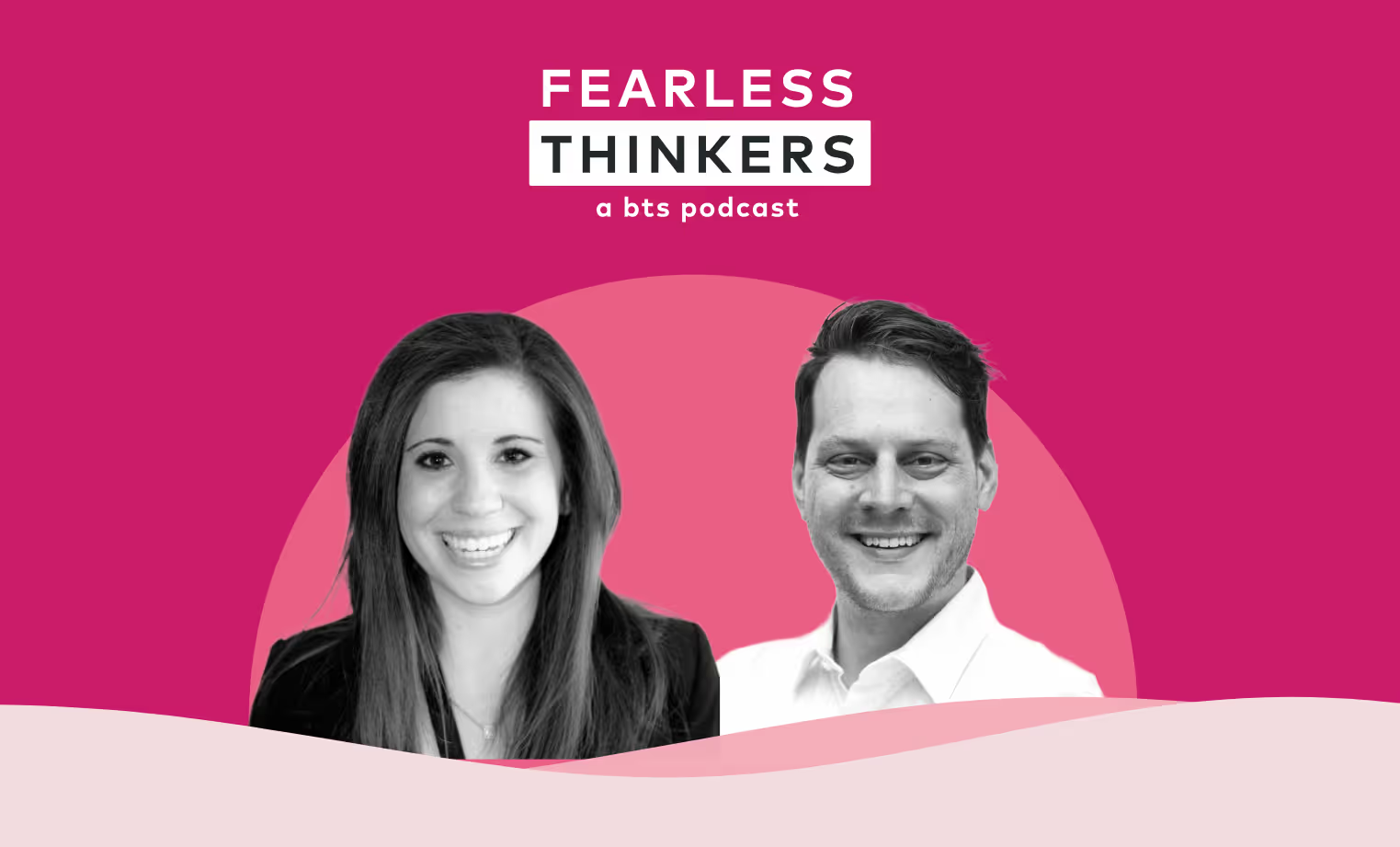
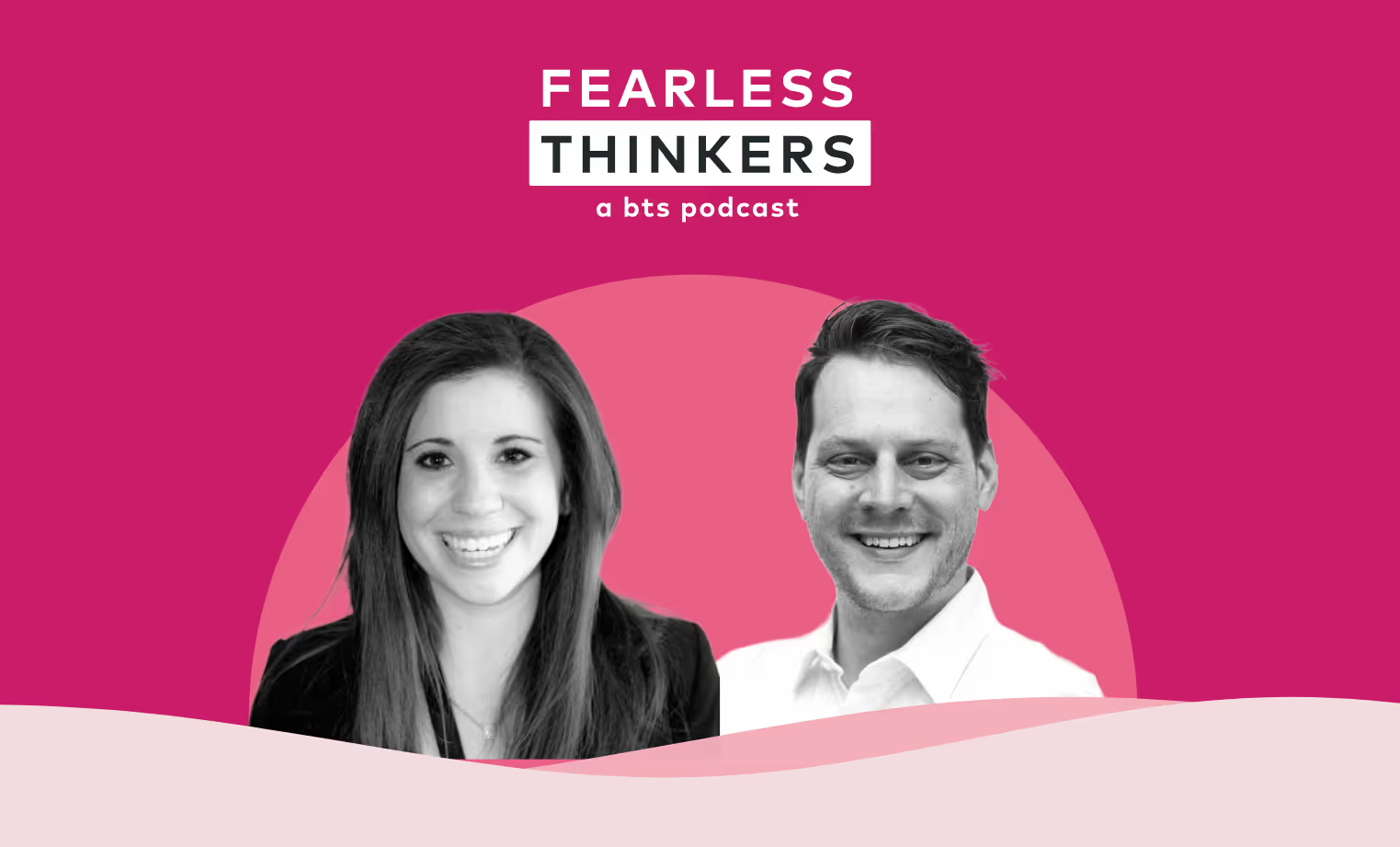
The pressure is real: move fast with AI, drive transformation, and keep your team aligned, often without a clear playbook. Nicole Gams and Victor Steeb join host Rick Cheatham for a candid conversation about the leadership challenges defining this moment, from building judgment around what to automate vs. keep human, to defining the right risks, to aligning teams at the speed AI makes necessary.
In Part 2, Nicole, Rick, and Victor will continue the conversation on what they're hearing from leaders today band the challenges they're facing in their own work.
Read their latest research on the three human intelligences that will define the AI era.

Most of us want to lead in a way that matters; to lift others up and build something people want to be part of. But too often, we’re socialized (explicitly or not) to lead a certain way: play it safe, stick to what’s proven, and avoid the questions that really need asking.
This podcast is about the people and ideas changing that story. We call them fearless thinkers.
Our guests are boundary-pushers, system challengers, and curious minds who look at today’s challenges and ask, “What if there is a better way?” If that’s the energy you’re looking for, you’ve come to the right place.
Find this episode on:


.svg)
Rick Cheatham: We've gotta hold at the same time, not clinging too deeply to what wasand not changing without a direction.
Nicole Gams: Leaders, including myself, are being forced to unlearn the way we'vealways done things. And it's not just relearning, it's unlearning. That'sactually a little bit harder than relearning, and it takes a lot of humility.
Victor Steeb: We hear all the time that companies are saying, go AI first. I want AIeverywhere, and I see leaders and teams saying, what does that mean?
Rick Cheatham: Has AI changed how you think about your own leadership strengths andblind spots?
Nicole Gams: Yes.
Victor Steeb: A hundred percent.
Rick Cheatham: Welcome to Fearless Thinkers: The BTS Podcast. I'm your host, RickCheatham, and today I've got two great guests, Nicole Gams and Victor Steeb.
Rick Cheatham: They live kind of at that amazing intersection, especially for this timeright now, where we're looking at leadership in an AI world. So Nicole, Victor, welcome.
Nicole Gams: Thanks, Rick. Happy to be here.
Victor Steeb: Yeah. Very happy.
Rick Cheatham: Great. Well, we're starting off today with something that I call theFast Five. Rules are simple. I'm gonna ask you five questions. I expect eachone of you to respond, when possible with one word, when not possible with oneword, in one sentence max. That work?
Nicole Gams: Generous, yeah.
Rick Cheatham: Generous. Yeah, well, I'm a caring guy by nature.
Rick Cheatham: All right, let's go. So what is a leadership skill that has become moreimportant in an AI world?
Nicole Gams: Creativity.
Victor Steeb: Uh, discernment.
Rick Cheatham: And how has AI changed how you think about your own leadership strengthsand blind spots?
Nicole Gams: Yes.
Victor Steeb: A hundred percent.
Rick Cheatham: I, I wasn't expecting a no, but I figured I'd at least ask. And thenis... Tell me about a time that you've maybe deliberately kept something asuniquely human, and it could have been done by AI.
Nicole Gams: Constructing feedback.
Victor Steeb: I'm a, I'm a coach, and so I keep that a hundred percent human.
Rick Cheatham: Great. And then is leadership significantly different than it was abouttwo years ago?
Victor Steeb: I would say yes, um, but I think that the fundamentals are still reallycore to how a leader shows up.
Nicole Gams: Yes and no. So I agree—
Rick Cheatham: Very consulting answer. Um, so what's a big way that AI helps you makebetter decisions?
Nicole Gams: I use AI to help me challenge my assumptions a lot, and that's veryhelpful. Holds me accountable.
Victor Steeb: Yeah. I think similar, but, I would say just with the sheer amount ofsynthesizing of data that I have to do, it really helps me get clear on theanswers and the patterns.
Rick Cheatham: Great. This is the last one. It's a toughie. We get to work with some ofthe smartest people in the world, some of the most successful companies. Areyou more concerned for those that are moving too fast with AI or those that aremoving too slow?
Victor Steeb: I'd say too fast.
Nicole Gams: I'd say too slow.
Rick Cheatham: Oh. All right, now we're to the meat of it. Let's go. Let's go. Allright, uh, Victor, why do you say too fast?
Victor Steeb: Hmm. Hmm. I think maybe it's a, a bit of a cop-out, but I would say I'mworried about people moving too fast to just using AI. I'd want them to slowdown and make sure, do they actually know where they're headed? Are theyactually thinking about, you know, what the outcomes are gonna be before justdiving in?
And so when Isay, uh, moving too fast, I don't want them just to be, you know, using AIsystems or their tools or agents to just do the work for them. I want them toactually still hold on to those core pieces. And especially as a leader, youneed to know, like, what is that human element that you're holding on to.
So you need toset that up so that you can then, once you have your goal in mind, you can movefast as a team. Hmm.
Rick Cheatham: Makes sense. And what about you, Nicole? Why too slow?
Nicole Gams: I just have concern for both companies and leaders being disrupted bynot moving. Basically the risk that comes along with that around relevance andcreating new value. And what's interesting about this too is, by the way,Victor is way more progressive at AI than I am. And so he's concerned withmoving too fast.
I'm concernedabout moving too slow. And so there could be some of our own experiences thatmeans we're all handling this very differently and at different points in ourunderstanding of it. And then Victor, your comment on discernment and[unclear], raw creativity — it really... I don't know that there really is aright answer to it.
But I do thinknot moving and not learning is a big risk.
Rick Cheatham: Yeah, I guess what I'm trying to hear — what I — the balance I wouldhear between what both of you are saying is, we've got to hold at the sametime, not clinging too deeply to what was, and not changing without adirection. Like not sprinting in — without knowing where you're going.
Am I getting it?
Nicole Gams: Yeah. Uh,
Victor Steeb: I—
Nicole Gams: I mean, Rick, what are you — what are you experiencing for yourself andfor your clients?
Rick Cheatham: Gosh. Um, we've got too fast, too slow. How about just right? Uh, no, Ithink the thing that organizations are doing, in my experience, really well andfast is actually helping people develop superpowers. So me being able to dothings that I couldn't do myself before, or that would have taken five handoffsto get done — I think that should be moving as fast as it can through everyorganization.
The too fast sideof it is — how many stories have we all seen of company X laying off hundredsor thousands of people, and then finding out that, "Oh, whoops, actuallythe app or the agent we built doesn't work like we thought it would, and we'regonna have to hire people back."
So obviously thatis the most extreme too fast. But when I think about it in individual ways ofworking and allowing people to experiment and learn, I think companies can't dothat fast enough. Pushing the reset button without having clear purpose and direction— every time I hear about it, it makes my teeth hurt. Scares me to death.
Victor Steeb: I appreciate that, Rick. And I also think that there's that layer around— yes, you need to move fast as a company, but also how are you going to makesure that you're actually moving fast on the right areas? And I think that, youknow, we hear all the time that companies are saying, "Go AI first. I wantAI everywhere." And I see leaders and teams saying: "What does thatmean? Does that mean using my LLM to help me write emails? Does that mean goingthere first to really push any project forward?"
And that's why Ireally brought in discernment — I think that's the big piece that I see,especially for leaders. When you hear that, where do you actually want toimplement shifts? Where are the areas that are gonna really alleviate pains foryour team, make them work better, smarter, together? But also think about —well, what is still truly gonna be human-led? And I love, Nicole, that youmentioned feedback. I a hundred percent agree with you. That should behuman-centered. That should be a conversation.
And I think thatkind of discernment is what's going to help companies work at the speed thatthey need to.
Nicole Gams: Absolutely. And I think, Victor, you said it well earlier too. There'sso many things that will stay the same, so many things that will change, andwe're seeing a lot of this. We're experiencing it for ourselves at BTS everysingle day as well, right? There's not an answer. It's a constant learningprocess.
I think there arereally kind of three key things that we're seeing. One is leaders — um,including myself — are trying to, or being forced to, unlearn the way we'vealways done things. And it's not just relearning, it's unlearning. That'sactually a little bit harder than relearning, and it takes a lot of humility, alot of demonstration of being creative, being willing to take risks in theright ways — in the ways that the organization can tolerate, Victor, to yourpoint, or is willing to tolerate.
But it also takesholding on to the thinking and the processing and the strategic nature ofcreating value that's so important for organizations to have in order todifferentiate — when AI has lots of knowledge and knowledge is more shared thanit ever has been before. So that's a real shift: we want to lean into theknowledge still, but it's more about the way we think rather than what we knowthat's key.
Rick Cheatham: And I guess I wanna go deeper into both of those in different waysbecause, you know, just again, thinking of myself — one of my superpowers Ialways felt like was: I can take different pieces of information and find thepatterns in that information and help people see a potential path forward.
Now that there'sa tool out there that can do it five times faster — or with a million timesmore information — it's had me sit back in my chair and say, "Okay, wait aminute. If this was my superpower, if this is how I add the most value to notonly people in my professional life but even people in my personal life, thenI'm losing part of my identity."
So I guess,Nicole, to go deeper into something you said about unlearning things — I thinksometimes people are going, "Wait a minute. If I'm not that, who amI?"
Nicole Gams: Yeah.
Victor Steeb: Yeah.
Rick Cheatham: And I'm wondering — I mean, I appreciate that you're both so quick tosay yeah, but what does that mean for organizations? What does it mean forthose of us who have responsibility not only for ourselves and how we show upas leaders, but for inspiring teams and helping them move forward?
Nicole Gams: I mean, one of the questions, Rick, that comes to my mind — for yourcircumstance, if we just take you for a moment here and dive a little bit—
Rick Cheatham: [unclear]
Nicole Gams: That's right. That's right. Um, is how might you separate the task fromthe value that you add to the task?
Rick Cheatham: Hmm.
Nicole Gams: Can you think about that work in a slightly different dimension and thenlean more clearly into — I spend my time with the value I add to it versus thetask itself?
Rick Cheatham: That actually makes a ton of sense. So if I were to say that back, itisn't that I've necessarily lost my superpower — it's how could I potentiallycreate more value with the things that are uniquely me?
Nicole Gams: Does that land with you?
Victor Steeb: Yeah. I was thinking kind of a similar shift approach to that — youknow, if that's your superpower, that's what you're known for, you could sayit's like your expertise, right? And what I think we're saying is, and what wesee a lot of times, is that leaders that show up really well using AI areshifting from leaning on, "This is my expertise, this is what I'm knownfor," and moving toward, "This is how I explore with thatpower."
And so I think —you even said that, you know, you're using it to expand that potential. And Ithink that not only using it on your own work and how you think about things,but then demonstrating that to the people you work with and the teams is goingto help them upskill and see where their expertise is also being expanded.
And I think thatopportunity to really demonstrate that is one of the key pieces that AI reallyhelps us — you know, reform what it is to be a leader. Not just leading becauseof what knowledge you have, but being able to demonstrate how you got to the rightquestion or the right framing, or how you pushed what the output was becauseyou have this idea of where you know and you think it can go.
Nicole Gams: And Victor, you bring up a really important point. The question thatRick asked with a lot of vulnerability is one that most people are asking orare afraid to ask, right? And leaders are not only asking this for themselves,but they also have to help their teammates answer it. And that goes back,Victor, to what you said earlier — core coaching.
It goes back topurpose, it goes back to value creation. And that part of leadership has beenimportant, and it just continues to get amplified — it's more important thanever before. And that's the thing I don't know. I reflect on my own experience.I think I need to be more vulnerable about what I know and what I don't and howI'm rethinking my role, and also ask and check in with others.
Victor Steeb: Yeah. I—
Rick Cheatham: That's such a hard thing to do — to take those moments of reflection andask others, "How are you doing? What are you doing? What do you thinkabout the way that you and I should interact together or how we proceed?"Victor, what were you gonna say?
Victor Steeb: I was just gonna say it kind of brings me back to the point you asked atthe beginning — my thought that we need to actually slow down. By leaders beingable to demonstrate and show what they're doing, it can feel like they'reslowing down the process of work. But in reality, what they're doing isdemonstrating what the skill is and where their team can really go and how theycan support each other.
And that I thinkis the key that's going to unlock the speed that so many organizations want towork at.
Nicole Gams: It's the systems part of it, Victor, too, right? So many people areworking with AI — with themselves in AI, or even with teams in AI — but how arewe actually leveraging it at the organizational level? How are we drivingcontinuous alignment? Victor, you and I talk about this — how do we align atthe speed of AI, or even ahead of AI?
A huge questionhas to be answered, right? And AI can maybe answer that for us. Who knows? ButAI is going to answer that for us only if humans are the ones to create thatpossibility in the first place.
Rick Cheatham: That makes good sense. So I actually wanna stick with this kind ofidentity thing for a little bit more — not just about me, 'cause it doesn'thave to be all about me. But I always think about most leaders in mostorganizations — you both know I spend most of my time with commercial teamswhere you tend to rise in the ranks. So much of what makes a great leader isbeing able to do it better than your direct reports yourself.
And one thingthat I think pops up for some leaders right now is: oh wait, this relativelynew person on my team is better at this than I am. And so I'm wondering, haveyou seen that? 'Cause that tends to be an assumption that most organizationsmake, even if they don't wanna say it out loud — that the leader should bebetter at doing the job than the people doing the job. And so first, maybe youdisagree with that whole concept, but then second — how do we cope with that asleaders if we're not better at it than our team?
Nicole Gams: It — who knows more than I do, who does it faster than I do, who does itbetter than I do on my team. Victor probably gets to hear me say a lot of,"Help me," or, "Catch me up," or, "I feelbehind," because we have the relationship where I can say that. And Iprobably think it more than I even tell Victor.
But the otherthing I don't tell Victor that I probably should — which is how I'm justhelping myself through this — is: as Victor is flying and doing things thatVictor can uniquely do in comparison to where I'm at, what else can I say yesto taking on or doing because Victor is flying? And it's hard to ask thatquestion, but I find asking myself that question very helpful — to help createnew relevance in new ways and new areas and to capture the brilliance that isVictor. So that is how I navigate, but it's not a linear road, and I havemoments. Victor knows I called the other day saying I was mad at my wonderfulAI tool, and he's like, "Are you getting along yet?" Uh, so—
Rick Cheatham: Maybe wanna grab a cup of coffee.
Nicole Gams: That's right. I mean, Victor, how do you experience it?
Victor Steeb: Yeah, no, I — Nicole, thank you for the vulnerability and sharing that.I think what I can say is, as a report to someone that is vulnerable in thisway and representing that — it does let me feel like I can take on more, andshare and really experience where this can take us.
It lets me havethe freedom then to dream and bring Nicole great ideas that she can challengeme on. And I think that that's part of that human element as well — that westill can have that back and forth and recognize that, even though AI might beleveling the playing field or in some ways letting intelligence — as we callit, information — just be there at our fingertips, we don't lose track of thathuman element of how do we actually support each other and build each other up.
And that thenlets us continue to move at light speed, it feels like — to see places wherethere might be brand-new opportunities that we've never done before. And Ithink that's where I am right now — I'm able to actually think in that waybecause Nicole is vulnerable enough to say, "This is where I'm willing toexplore," not leaning on her expertise.
And I think thathas let myself and the team really be able to explore with her where we can gowith AI.
Rick Cheatham: Well, and it actually brings home to me a thing that I've always sostrongly believed — which is I'm looking for people that can make our entireteam better. I used to always say, "I'm not trying to hire more me, I'mtrying to hire the Super Friends." If I'm Aquaman, we don't need everybodybeing Aquaman, 'cause if we're away from the water, it's gonna be a hard day.
And so I wasn'tnecessarily thinking about it in that context, but when I do, it's like it goesfrom a thing that maybe was a little bit scary to me before, to a thing thatactually makes a lot of sense and is a little bit more to my core. Which makesme think about something else — what are some leadership qualities orperspectives that you think people aren't necessarily thinking about in an AIworld that actually really have served them well, and that they should bebringing into this time of change and uncertainty for so many organizations?
Victor Steeb: Yeah. I mean, I can speak from experience. One of the things that Ididn't realize starting to work with AI systems and agents was that ability tolook ahead and see where we might be going with a project — allowing myself tozoom out to the two-thousand-foot level to say, "Where do we want togo?"
And then push uspast that point. That's something that I've always seen in my work and how Iapproach projects — going back to your word, my superpower. And I now see thatability lets me start a conversation, start a prompt, right? If I'm using myLLM or my agent to really — I get clear really quickly early on, so that whenit starts to deliver information or a product, I can say, "You're on theright track." I can use it to really tweak it and have that back and forthto expand even what that possibility that I was seeing is.
But it wouldn'tbe possible without me actually having that ability — and spending that upfronttime to get clear on where I think we can go and then letting the possibilitytake me forward.
Nicole Gams: I will echo everything that Victor said and just add a couple things. Imean, I think we're starting to talk about them, and these are things that arenot new but become more helpful: vulnerability, curiosity, trusting your team —but validating along the way, because there is a lot more that can be done in,um, a black box, if you will, that might cause more risk than reward, or mightbe less competitive, or might be more legally challenging.
So there's a lotmore that we have to do around validation and checking and supporting andchecking in more frequently as things move faster — rather than just at the endof the outcome. And then the other thing I just want to bring to the surface isthe conversation around risk. We talk about the big R and the small r — thecapital R and the lowercase r.
And there's a lotmore that actually needs to happen to be able to capture the value of this. Andso I think leaders really have to focus on defining the risks we want — theones we want to tolerate, the ones we want to learn from — versus the ones wedon't. Because I think we still get a little bit stagnant in: don't take risk,risk isn't good. The question we have to ask is what risk do we want? Andthat's actually a reward versus what risk can we not tolerate. So those are allthings that stand out to me that just still always have been, and continue tobe, important.
Rick Cheatham: Man, I think that's one of those things that is both so exciting aboutthe time that we're in and so challenging about the time that we're in. Becausewhen major shifts like this happened before, there were teams of people, therewere swim lanes, there were days spent in windowless conference rooms to arriveat something that we're gonna test and slowly change.
But even where Ithink people need to move fast, it's figuring out that window of risk you'rewilling to tolerate — and setting your people free and letting them explore andfeel empowered instead of terrified that AI's coming for their job.
Nicole Gams: And celebrating the learnings, right, that come from it — and scalingthe learnings. Celebrating and scaling the learnings is so key.
Victor Steeb: Yeah. Opening the opportunities for team members to really explore anddiscover new things that even the leader can't predict where they're gonna go.Yeah.
Rick Cheatham: Very cool. Well, hey, as always, it seems in this crazy world, there'sabsolutely never enough time. I love just starting to chat with you a littlebit on this, but what I'd really love even more — and I'm sure our audiencewould greatly appreciate — is if you wouldn't mind coming back, maybe in aslightly more structured format, and share with us some of the research thatyou've done and some of the client work that you're doing that solves for someof the challenges and opportunities we were just talking about today.
So you mindcoming back?
Nicole Gams: Anytime. Thanks for having us.
Victor Steeb: Yeah. Thank you.
Rick Cheatham: And thank you for joining us on Fearless Thinkers. Look forward tocontinuing the conversation with you soon.
Related Content






.png)